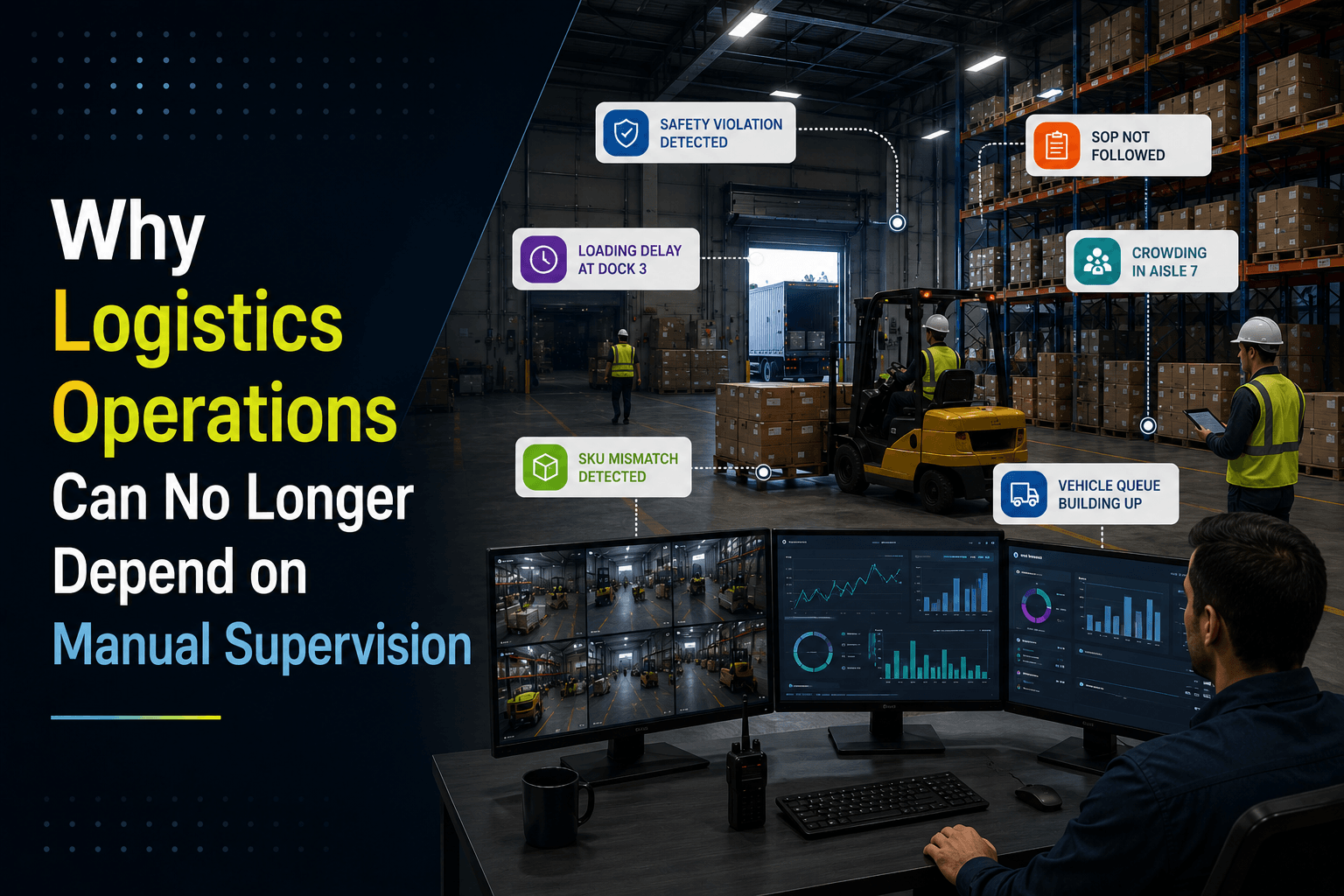
Every warehouse generates a constant flow of operational activity- receiving goods, moving inventory, picking orders, loading shipments. Most of it happens fast, and much of it happens without anyone watching closely enough. When businesses lack real-time visibility, small inefficiencies continue unnoticed until they become expensive.
Delayed shipments, customer disputes, and inventory discrepancies rarely appear without warning; the warning signs were just invisible. Supply chain visibility software gives logistics teams the ability to see what’s actually happening, identify hidden inefficiencies, and build more reliable operations before the costs compound.
Why Do Warehouse Inefficiencies Often Go Unnoticed?
Today’s warehouses handle thousands of individual activities on a daily basis. Products go through a number of stages, teams work on different workflows in different shifts, and shipments go through a number of checkpoints before they reach the customer.
Traditional monitoring methods struggle to keep up. Reports might confirm that a shipment was delayed or that inventory is missing, but they rarely reveal where the problem actually started. By the time a supervisor identifies what went wrong, the operational cost has already been paid.
Manual inspections and periodic checks create the same problem. No supervisor can monitor every loading area, storage zone, and picking station simultaneously. The gaps between inspections are where inefficiencies live, and where they quietly grow.
Where Does Invisible Warehouse Waste Actually Come From?
Shipment Errors That Become Expensive Problems
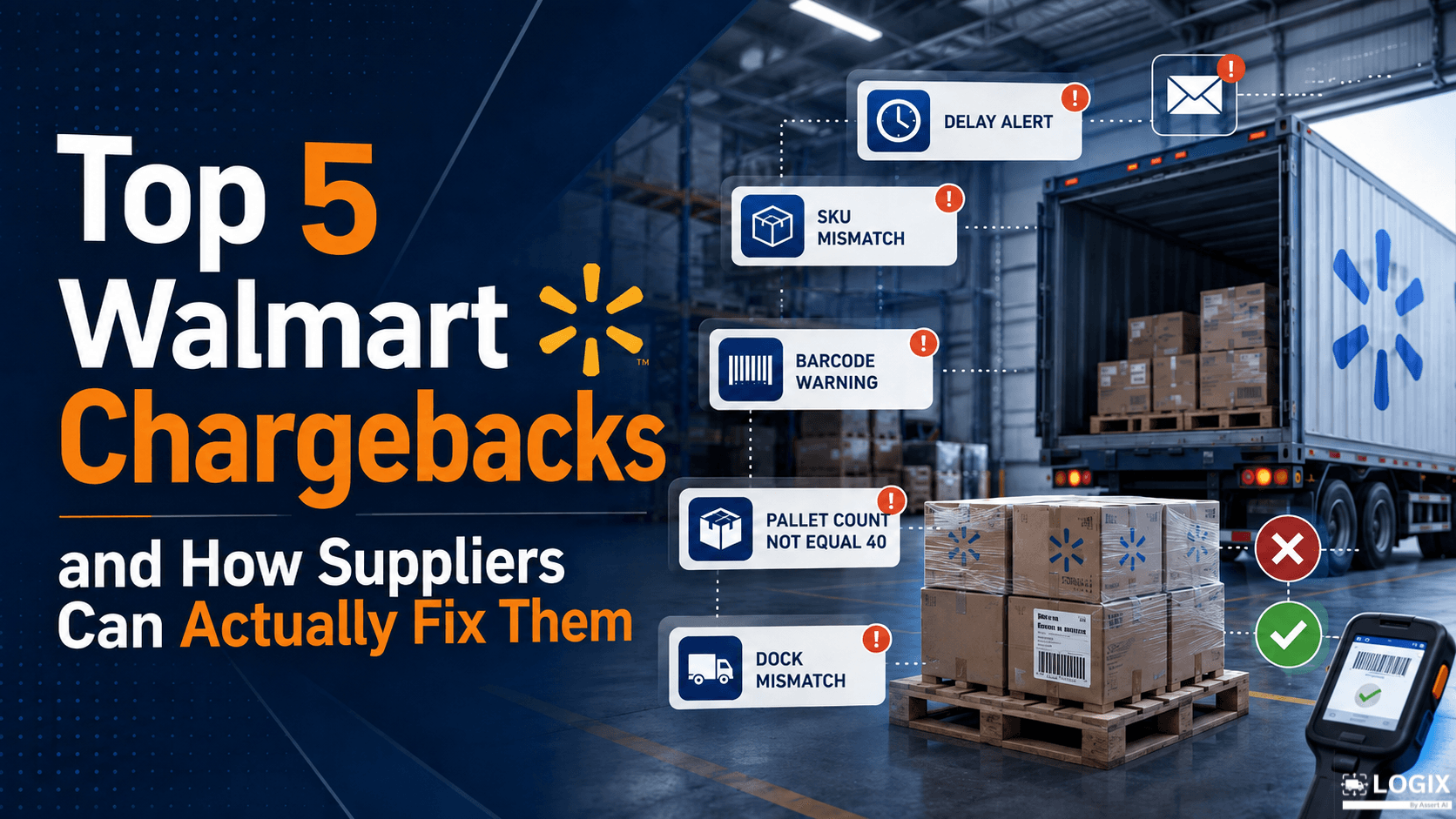
A shipment shortage is rarely just an inventory mismatch. It triggers replacement shipments, customer complaints, additional transport costs, and hours spent investigating what went wrong- often without a clear answer. Without visibility into warehouse activities, teams struggle to determine whether the issue started during picking, packing, staging or loading.
Claims Shortfall Takes Time to Settle
Lack of valid proof of a shortage makes a claim burdensome for businesses to operate. Teams review multiple records, coordinate across departments and manually track shipment details, slowing resolution and pulling focus away from day-to-day operations.
Loading Delays That Reduce Throughput
A single delayed loading process looks manageable. Repeated across shifts, it creates dock congestion, longer truck waiting times, and missed dispatch schedules that ripple through the entire operation. Identifying where the delay originates is the first step toward fixing it; and that requires visibility.
Picking and Packing Mistakes
Order errors affect accuracy and customer satisfaction in ways that are disproportionate to how they occur. Rushed workflows, lack of clarity, and inconsistent handling practices all contribute. If teams don’t know where mistakes are occurring, they end up treating the symptoms, not the root causes.
Poor Inventory Movement Visibility
Inventory doesn’t always move as planned. Items get misplaced, handled multiple times or stored in the wrong locations. Without clarity on movement patterns, differences accumulate, fulfillment slows, and operational effort increases without any apparent explanation.
Process Deviations During Daily Operations
Teams follow standard operating procedures- until they don’t. During busy periods or across shift changes, small deviations occur. When those deviations go unnoticed, they become habits, and habits become recurring inefficiencies that are difficult to trace and harder to correct.
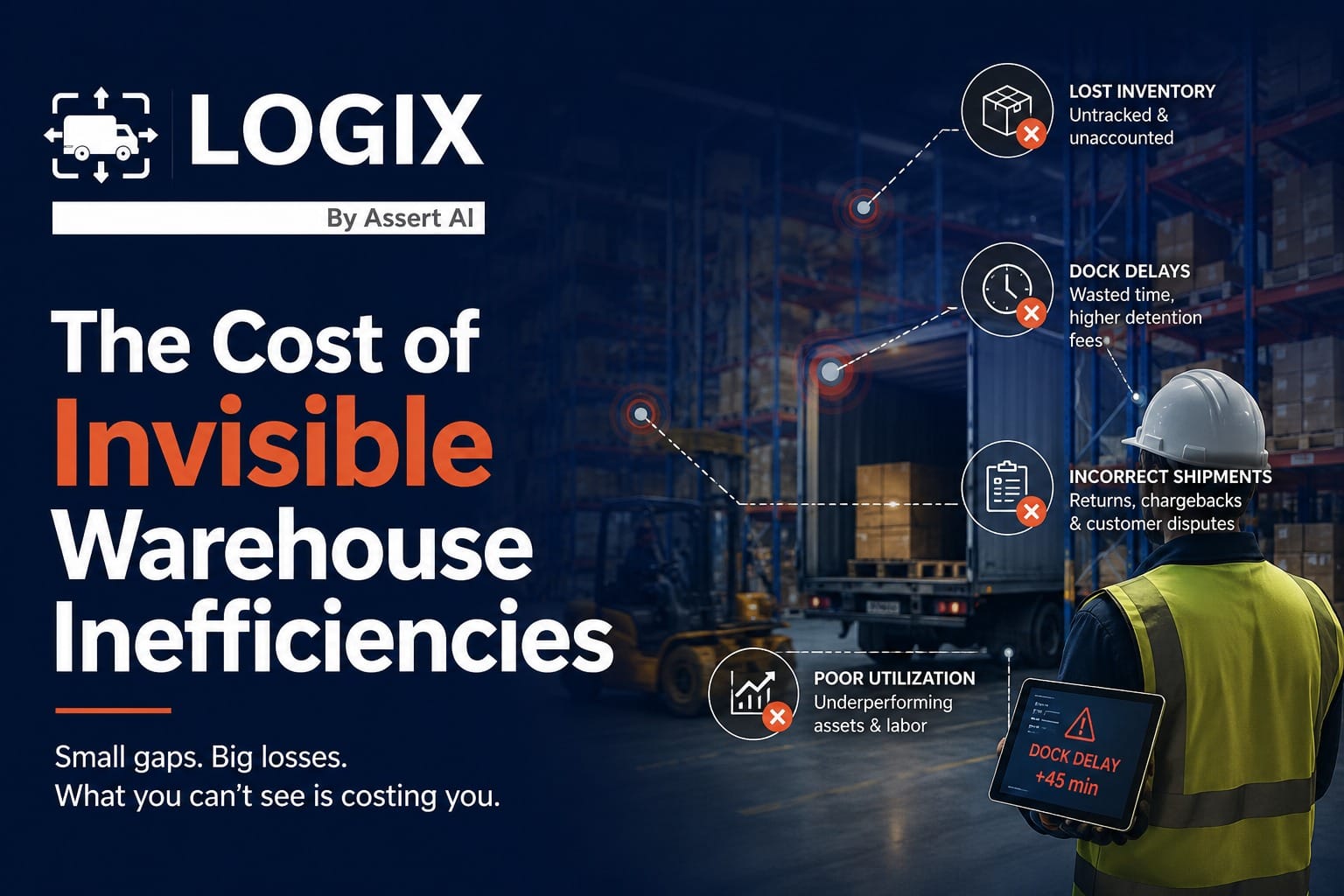
How Much Do Hidden Warehouse Inefficiencies Cost Over Time?
Individual issues may seem manageable in isolation. Repeated across daily operations, they create costs that are significant and difficult to account for cleanly.
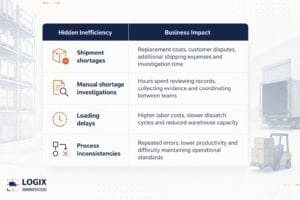
| Hidden Inefficiency | Business Impact |
| Shipment shortages | Replacement costs, customer disputes, additional shipping expenses and investigation time |
| Manual shortage investigations | Hours spent reviewing records, collecting evidence and coordinating between teams |
| Loading delays | Higher labor costs, slower dispatch cycles and reduced warehouse capacity |
| Process inconsistencies | Repeated errors, lower productivity and difficulty maintaining operational standards |
The deeper problem is that these costs rarely land in one place. Visibility connects those events and makes it possible to act on the pattern rather than the outcome.
 Why Traditional Warehouse Monitoring Is Not Enough
 Why Traditional Warehouse Monitoring Is Not Enough
Traditional monitoring- manual checks, periodic reports, supervisor observations has genuine value. The problem is that it’s almost entirely reactive.
Teams discover that a shipment has been delayed after it’s already late. Inventory goes missing before anyone investigates. A customer raises a complaint before the warehouse knows there was a problem. By the time the issue surfaces, the cost is already locked in.
Modern warehouse operations need a more proactive approach- the ability to identify unusual patterns early, monitor activity across the full facility, and respond before small deviations become expensive disruptions.
How Supply Chain Visibility Software Can Help Cut Operational Losses
Supply chain visibility software converts operational data into actionable insights, from periodic reports to continuous awareness of what’s happening across the facility.
Teams have real-time visibility rather than manual investigations after the fact:
- Trends in warehouse workflows and activities
- Operational bottlenecks as they occur
- Stage-wise shipment handling processes
- Intra-shift repeat inefficiencies
- Adherence to standard operating procedures
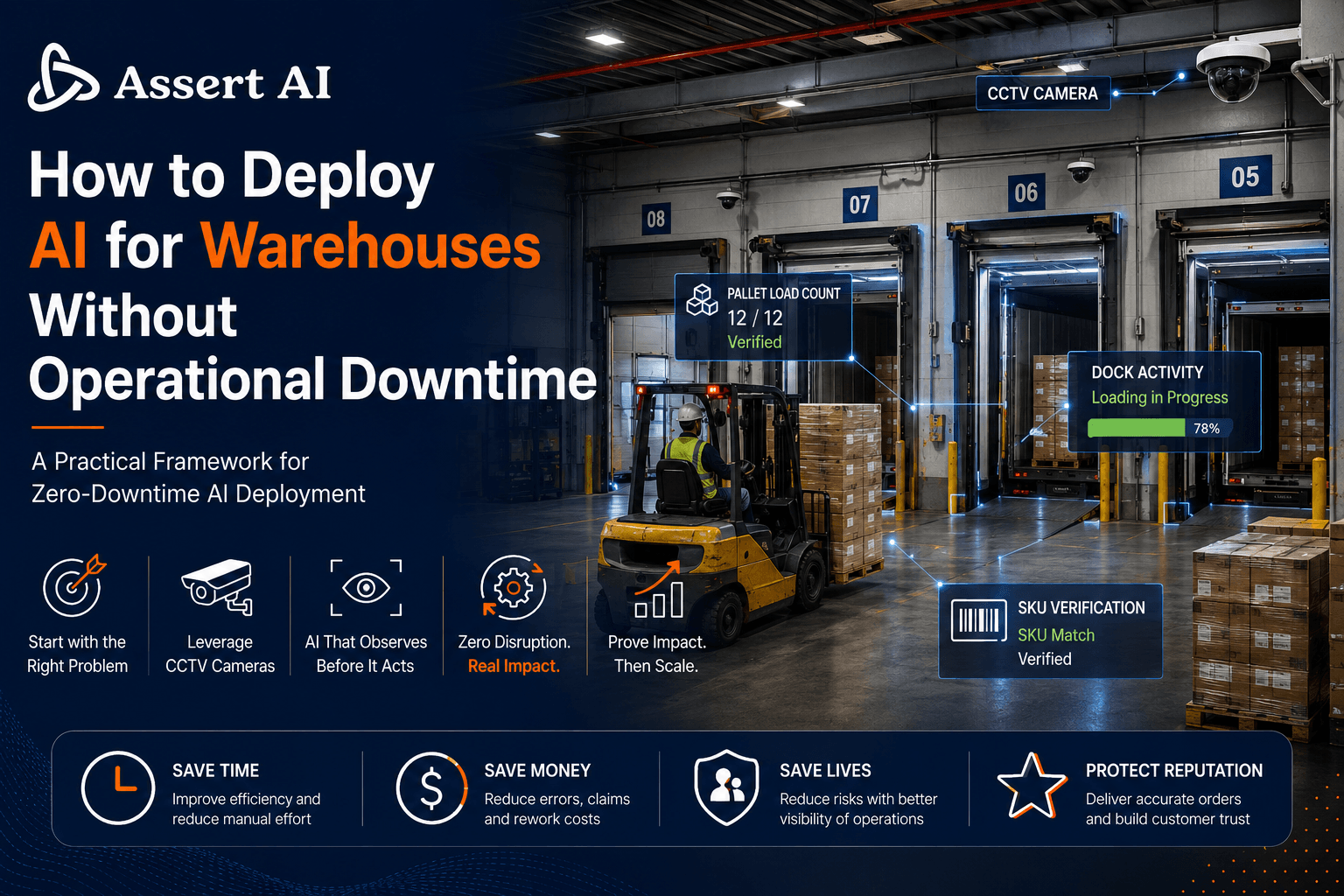
Solutions like Assert AI leverage general purpose CCTV camera infrastructure, increasing operational visibility without changing existing workflows. Teams can react to issues more quickly, with better information, and make decisions.
How Warehouse Vision Boosts Warehouse Accuracy
Warehouse computer vision analyses operational activity through intelligent monitoring systems- giving teams visibility into what’s happening throughout different areas of the facility, not just what is manually recorded.
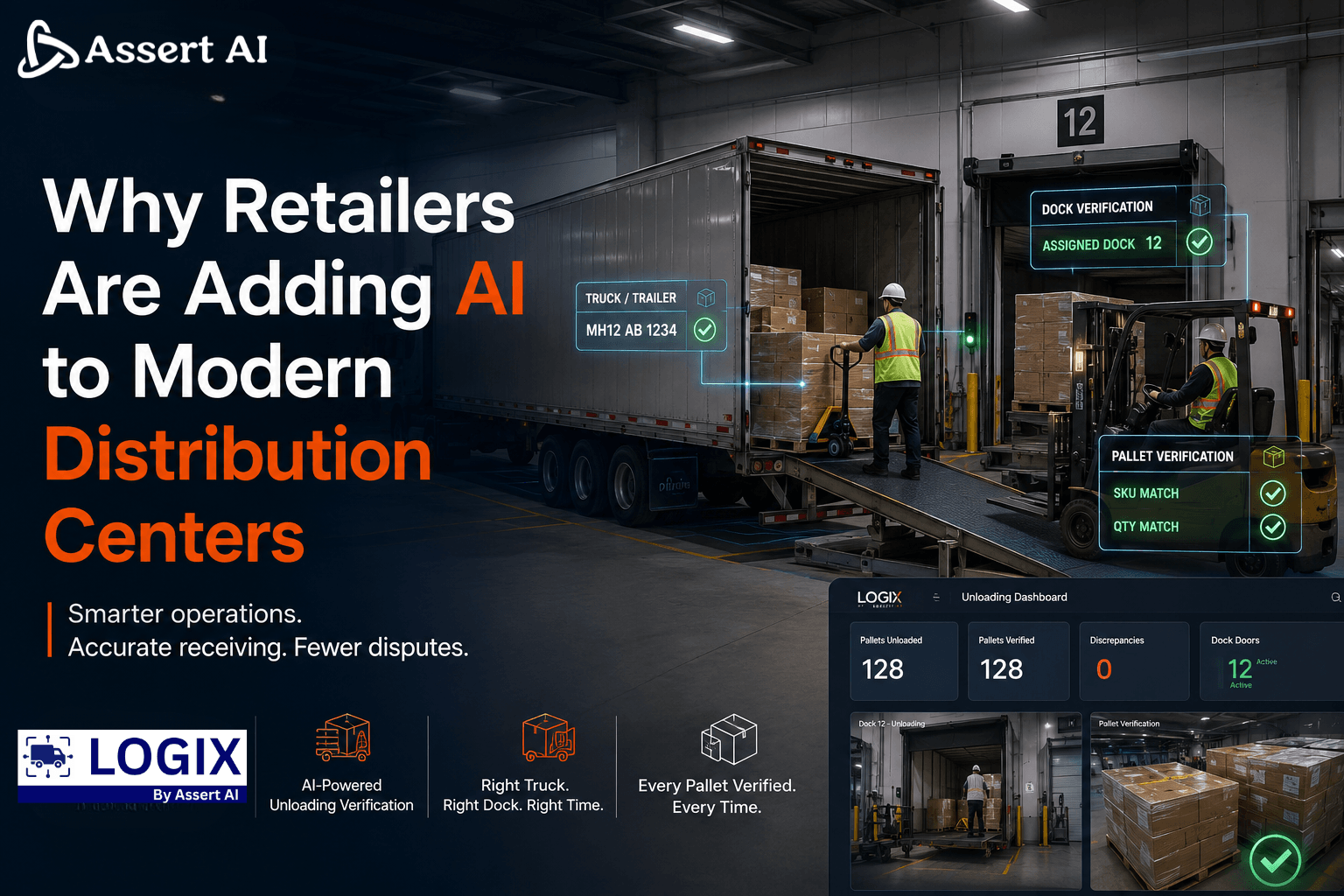
Computer vision allows for accountability (e.g., tracking loading activity) and assists with shortage investigations, enabling businesses to maintain consistency across shifts and locations. Assert AI applies this technology to help organizations identify operational issues faster, close process gaps, and improve overall warehouse efficiency.
Why Better Warehouse Visibility Leads to Smarter Decisions
Warehouse inefficiencies are rarely caused by a single failure. They come from small problems repeated across hundreds of daily interactions- each one manageable in isolation, expensive in aggregate.
Better visibility changes that dynamic. It reduces operational blind spots, accelerates investigation, and prevents recurring issues from becoming embedded in the workflow.
Supply chain visibility software enables logistics teams to go from reactive problem solving to proactive improvement – and with solutions like Assert AI, that transition doesn’t require replacing existing infrastructure to get started.
FAQs
1. What leads to invisible inefficiencies in warehouses?
Shipment discrepancies, deviation from processes, difficulties in moving inventory, and loading delays – problems that build up unnoticed without real-time operational visibility.
2. How can organizations minimize shipment shortages?
By keeping track of the handling processes in the picking, packing, and loading phases and discovering from the operational data where the gaps occur regularly.
3. How can supply chain visibility solutions optimize operations?
They convert operational activities into actionable insights, reducing the dependence on manual reporting and providing the ability to make timely decisions.
4. How can warehouse computer vision ensure accuracy?
Through constant tracking of actions taken and detection of workflow discrepancies to investigate and solve them.