Everything looks right on paper, until it doesn’t!
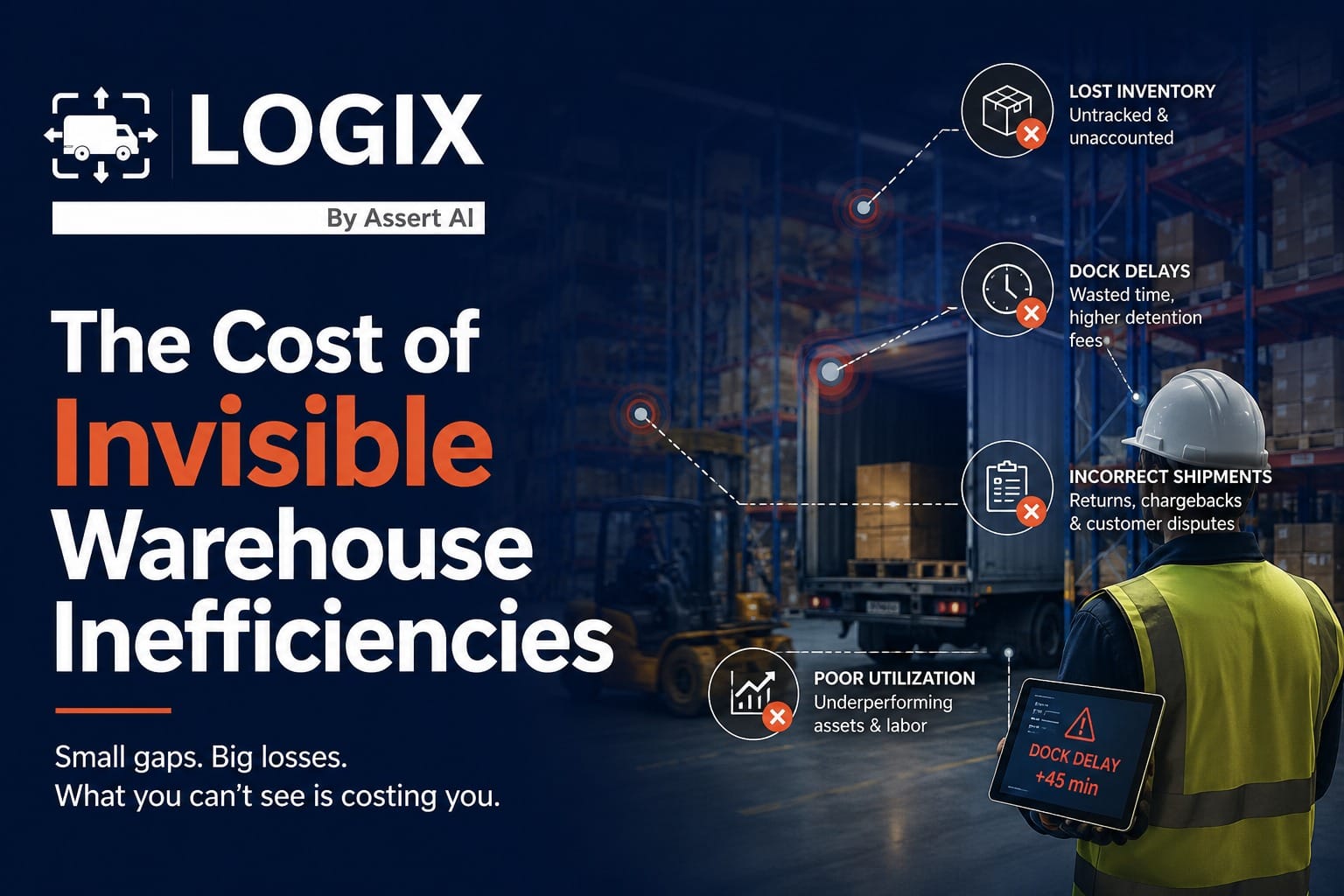
Orders are picked, invoices match, trucks leave on time. Yet, downstream, the cracks appear: shipment disputes, missing cartons, delivery delays, and claims that are nearly impossible to validate.
This is a repetitive, systemic issue caused due to lack of capability to improve dock efficiency.
Studies show that inefficiencies in logistics management can drive up total supply chain costs by as much as 15%, while persistent process gaps and human errors continue to impact accuracy at scale. At the same time, more than half of supply chain management leaders still lack end-to-end visibility, making it harder to track, verify, and resolve shipment issues.
The result? Increased operational friction, higher costs, and growing pressure to reduce warehouse errors.
For today’s supply chain leaders, improving outcomes starts at the dock. The real opportunity lies in rethinking execution at this critical control point, and taking focused steps to improve dock efficiency.
According to Gartner (2025), over 50% of supply chain leaders struggle with end-to-end visibility, making it difficult to track and resolve shipment-related issues efficiently.
Where the Real Problem in Logistics Management Lies
The warehouse dock is the last operational checkpoint before the shipment leaves your control. But it is often where logistics management processes become rushed, accountability becomes unclear, and documentation becomes inconsistent.
When something goes wrong downstream whether it’s a delay, a shortage claim, or a mismatch it becomes incredibly difficult to trace back what actually happened at the time of dispatch. Teams are left relying on memory, fragmented paperwork, and assumptions.
The scale of the problem is significant:
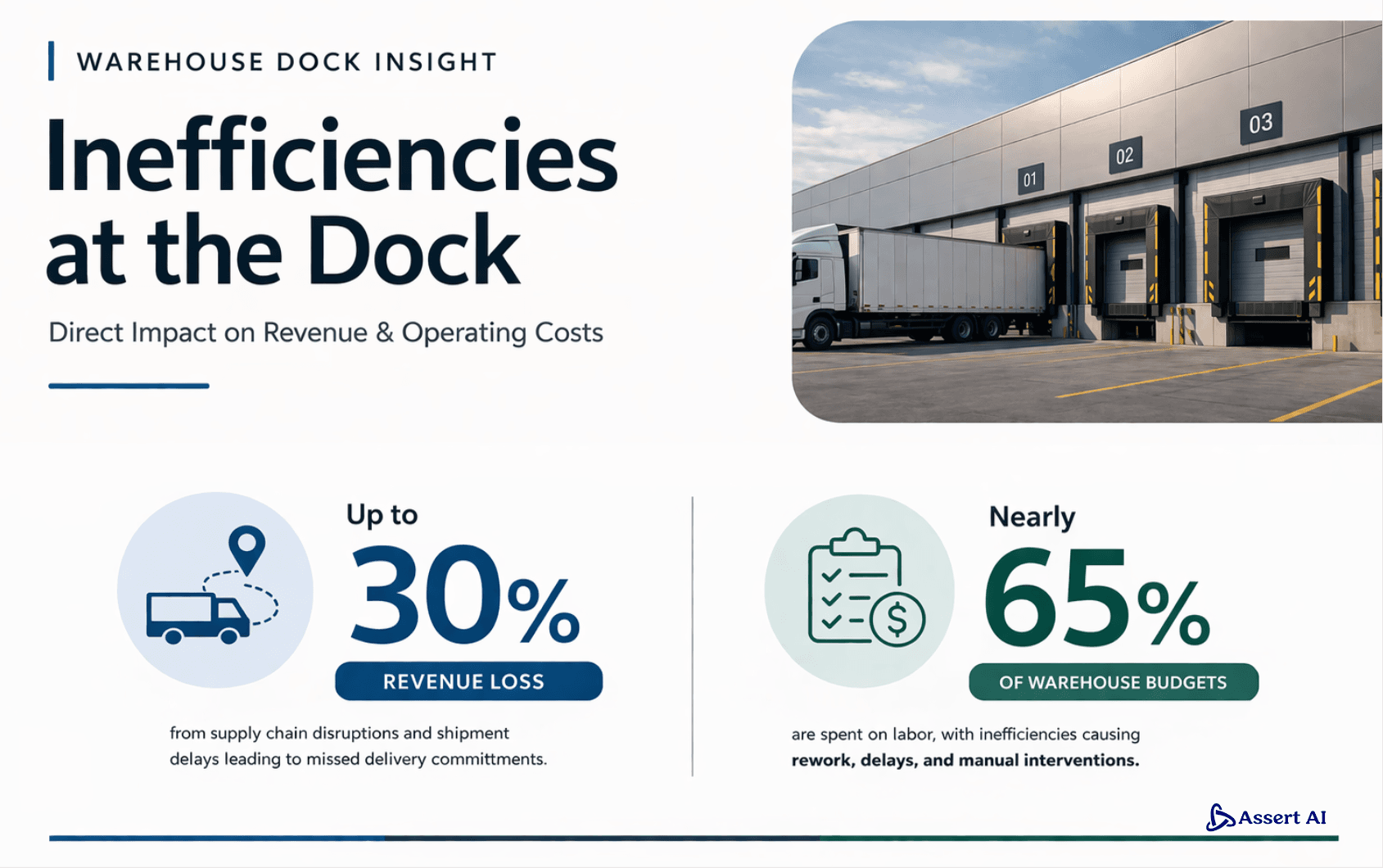
Up to 30% revenue loss can be attributed to supply chain disruptions, including shipment delays and inefficiencies that lead to missed delivery commitments.
Nearly 65% of warehouse budgets are spent on labor, and inefficiencies in execution only increase this burden through rework, delays, and manual interventions.
The result is inefficiency, and loss of confidence, both internally and with customers.
The good news is that most of these challenges are not complex. They are rooted in everyday operational practices and they can be addressed with focused, disciplined actions.
1. Increase Visibility and Control to Reduce Warehouse Errors
A large number of operational issues stem from a lack of clarity at the dock. When multiple shipments are handled simultaneously without clear staging, when ownership is not defined, or when teams are not aligned on dispatch priorities, confusion becomes inevitable. This confusion often leads to wrong loading, missed items, or delays that could have been avoided.
Improving visibility at the dock starts with organizing the basics. Shipments should be clearly staged and separated before loading begins, with defined ownership for each dispatch. Teams must have a shared understanding of what is being loaded, where it is going, and what checks need to be completed before the truck leaves. When operations are structured and visible, it becomes significantly easier to reduce warehouse errors and ensure smoother execution.
2. Standardize Dock Processes for Consistent Supply Chain Management
In many warehouses, outcomes depend heavily on the experience of individuals rather than on consistent supply chain management processes. This creates variability across shifts and teams, making operations unpredictable. What works well in one shift may fail in another simply because the approach differs.
Standardizing dock processes ensures that every shipment follows the same sequence of steps from verification and staging to loading and final confirmation. When teams rely on structured procedures instead of memory, the chances of missing critical checks reduce significantly. Over time, this consistency not only improves accuracy but also builds confidence in operations, both internally and externally.
3. Identify and Eliminate Warehouse Errors that Cause Operational Losses
Operational losses rarely appear as one big issue; they show up as small, recurring warehouse errors that gradually impact performance. Retailer deductions are one visible outcome, but they are often linked to deeper issues such as short shipments, damaged goods, labeling errors, returns, and billing mismatches. These are not isolated incidents but repeated gaps in execution at the dock.
Instead of treating each issue separately, leaders need to look for patterns and trace them back to their source and reduce warehouse errors. Most discrepancies originate from simple process breakdowns during staging, verification, or loading. When these gaps are not addressed, they continue to create delays, disputes, and additional workload for teams.
Focusing on basic checks like verifying quantities, ensuring proper handling, and confirming labels before dispatch can significantly reduce these recurring issues. Over time, tightening these fundamentals improves operational reliability, reduces friction with customers, and brings greater control to day-to-day warehouse operations.
4. Build Proof of Correct Shipping
In supply chain operations, what cannot be proven often gets disputed. Many suppliers assume that if the shipment was correct at the time of dispatch, it should be accepted as such. However, in reality, without clear and consistent documentation, proving that correctness becomes extremely difficult.
Building proof of correct shipping is about creating a reliable trail of verification at the time of dispatch itself. This includes standardized checklists, supervisor sign-offs, and documented confirmation of quantities and condition before the truck leaves the dock. When these practices are followed consistently, suppliers are shipping goods with confidence, knowing they can defend their position if a dispute arises.
Final Thought
The warehouse dock is a critical control point that directly shapes delivery reliability, traceability, and customer confidence. Organizations that bring structure, consistency, and accountability into dock operations improve efficiency, strengthen their ability to deliver on commitments, resolve issues with clarity, and build long-term trust with their customers.
In an environment where expectations are rising for supply chain management and margins are under pressure, operational discipline at the dock is no longer optional; it is a competitive advantage.
Looking Ahead
While these actions can significantly improve logistics management and strengthen dock operations, maintaining consistency across teams, shifts, and locations remains a challenge for many organizations.
This is where technologies like computer vision can support operations by bringing greater visibility, traceability, and process control into the dock environment.
If you’re looking to improve dock efficiency and build stronger operational reliability, and a stronger control at your warehouse dock, connect with us to explore how this can be implemented in your operations.
Frequently Asked Questions
1. What are the most common causes of warehouse errors at the dock?
The most common causes include:
- Poor visibility of shipments during staging and loading
- Lack of standardized processes across teams
- Manual documentation and verification gaps
- Miscommunication between warehouse staff
- Absence of real-time tracking or validation systems
Addressing these issues is key to reducing warehouse errors and improving operational control.
2. How can supply chain leaders reduce warehouse errors at the dock?
Supply chain leaders can reduce warehouse errors by:
- Implementing clear staging and dispatch ownership
- Standardizing loading and verification processes
- Conducting pre-dispatch checks for quantity and labeling
- Using structured documentation and audit trails
- Leveraging data and technology for real-time visibility
These steps help improve dock efficiency and ensure consistent execution.
3. How does lack of visibility impact logistics management?
Lack of visibility in logistics management makes it difficult to track shipments, verify dispatch accuracy, and resolve disputes. Without real-time data, teams rely on assumptions and manual records, which increases the risk of errors, delays, and financial losses across the supply chain.
4. What is proof of correct shipping and why does it matter?
Proof of correct shipping is documented evidence that verifies a shipment was accurate at the time of dispatch. It includes load count, truck/container number, timestamps, pallet IDs/SKU or barcodes, snapshots or loading video clips and inventory condition verification. This is essential in supply chain management to defend against disputes, reduce claims, and maintain accountability.
5. How can technology help improve dock efficiency?
Technologies like computer vision, AI, and real-time analytics can:
- Provide end-to-end visibility of dock operations
- Automatically verify shipments and detect errors
- Create digital audit trails for proof of dispatch
- Reduce dependency on manual processes
- Enable faster and more accurate decision-making
This helps organizations improve dock efficiency while reducing warehouse errors at scale.
6. What role does data-driven decision-making play in supply chain management?
Data-driven decision-making allows supply chain leaders to identify inefficiencies, track performance, and optimize processes. By using real-time insights, organizations can proactively address issues, improve dock efficiency, and enhance overall logistics management outcomes.
7. What are quick wins to improve dock efficiency today?
Some immediate actions include:
- Organizing shipment staging areas
- Defining clear ownership for each dispatch
- Standardizing loading and verification steps
- Implementing pre-dispatch checklists
- Tracking common errors and addressing root causes
These practical steps can quickly improve dock efficiency without major investments.
8. How can AI reduce warehouse errors in logistics operations?
AI-powered solutions can monitor dock activities in real time, detect anomalies, and validate processes automatically. This reduces human dependency, improves accuracy, and ensures consistent execution across shifts, helping significantly reduce warehouse errors.
9. What KPIs should be tracked to measure dock efficiency?
Key metrics include:
- Loading and unloading turnaround time
- Shipment accuracy rate
- Number of dispatch errors or discrepancies
- Dock utilization rate
- Labor productivity
Tracking these KPIs helps improve logistics management and identify areas for optimization.