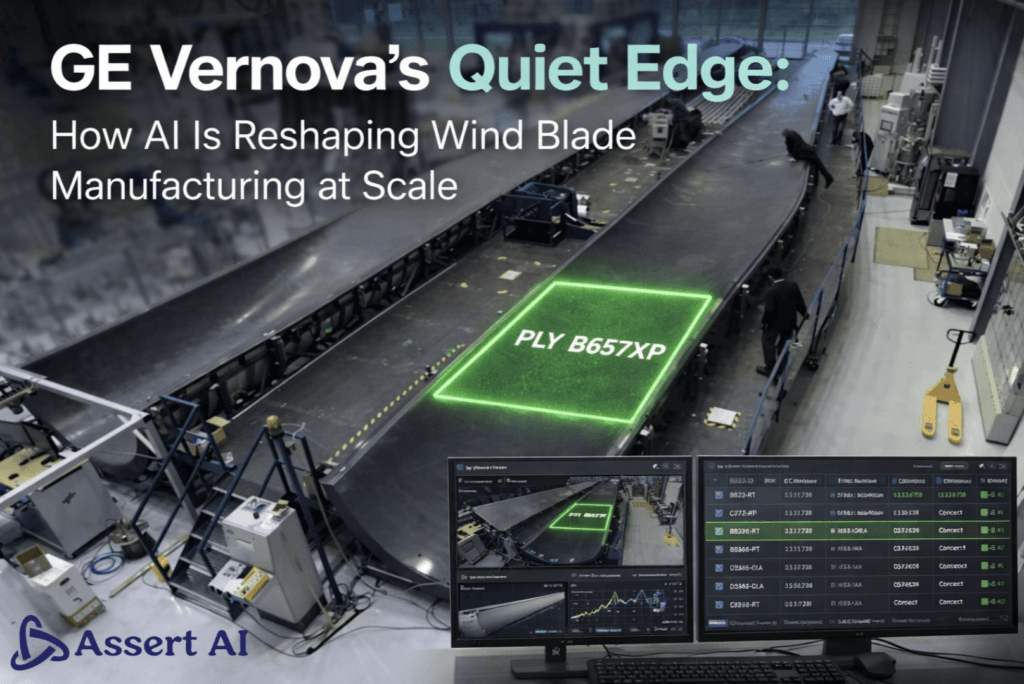
As the global energy transition accelerates, most industry conversations remain fixated on scale- larger wind farms, higher output, faster installations. But at GE Vernova, teams build the competitive advantage elsewhere- inside factories, at the level of execution.
Not in how many blades are produced, but in how each one is built, moment by moment, with intelligence embedded into the process through computer vision for manufacturing.
Because as CEO Scott Strazik puts it:

That philosophy is shaping how the company approaches manufacturing where ambition is meaningless without precision, and precision is no longer possible without visibility.
Where Manufacturing Complexity Becomes a Competitive Differentiator
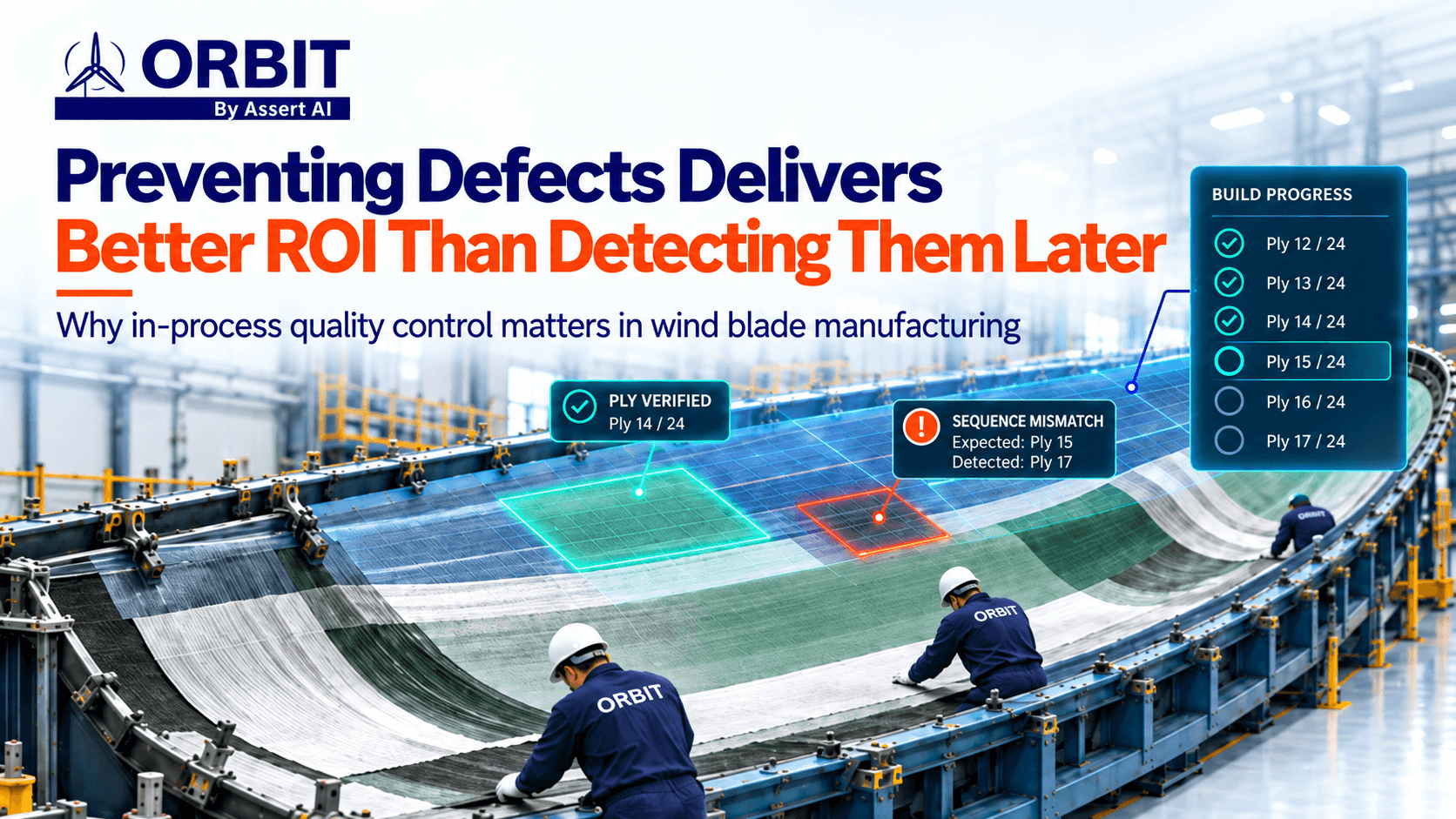
Inside a wind blade factory, the reality challenges the idea of automation. Manufacturers are building blades the size of a football field through a highly manual, precision-driven process- layering fiberglass, carbon fiber, and resin step by step.
“It’s a very labor-intensive process that goes into making these football-field-size combinations of carbon and glass,” says Veronica Barner, Wind Energy Product Executive at GE Vernova.
Each layer influences structural integrity. Each step carries risk.
And the challenge is universal:
“All blade suppliers have the same challenge – trying to find a needle in a haystack,” explains Barner, who’s been with GE Vernova for 15+ years.
That analogy might be generous. In reality, it’s more like finding a needle while the haystack is still being built.
This is precisely where manufacturing computer vision is changing the equation. Instead of relying on end-stage inspection, computer vision in production enables continuous observation- transforming invisible micro-deviations into actionable signals while the process is still underway.
From Inspection to Continuous Awareness
Traditional manufacturing has long followed a reactive model: build, inspect, then fix—or reject.
GE Vernova is moving beyond that paradigm.
At its wind plant in Salzbergen, Germany, the focus is on making deviations impossible to ignore.
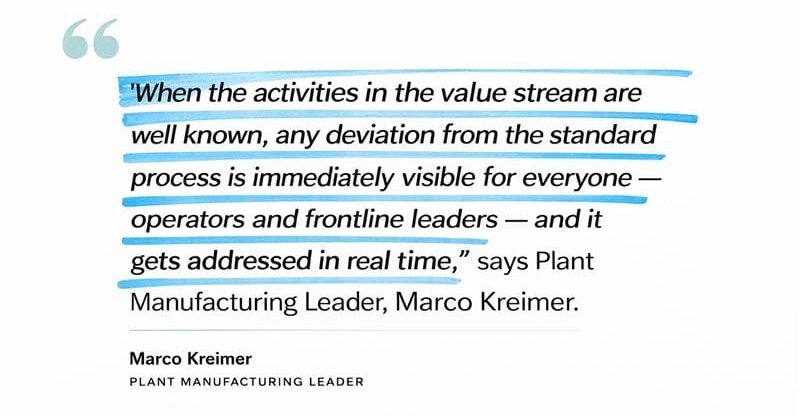
This shift is powered by computer vision solutions for manufacturing, where systems continuously monitor workflows, compare them against defined standards, and flag inconsistencies instantly.
“Operators can keep their focus on the work they do best and not on navigating the complexities that come with manufacturing planning, while frontline leaders know exactly when to step in if help is needed,” Kreimer adds.
The philosophy is simple but powerful: human expertise drives execution, while machine intelligence ensures nothing goes unseen.
Embedding Intelligence Into the DNA of Production
What sets GE Vernova apart is not just adopting AI, but how deeply teams integrate it into operations.
Through computer vision in production, systems are trained on vast datasets of annotated images and videos, enabling them to understand not just what is happening, but whether it aligns with design intent.
These systems:
Detect anomalies with high precision
Validate structural and geometric consistency
Ensure materials are applied exactly as required
Identify deviations before they escalate into defects
Barner describes the scale of this integration:
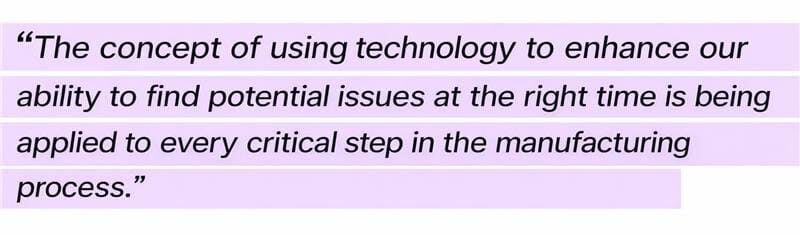
The ambition extends beyond individual facilities.
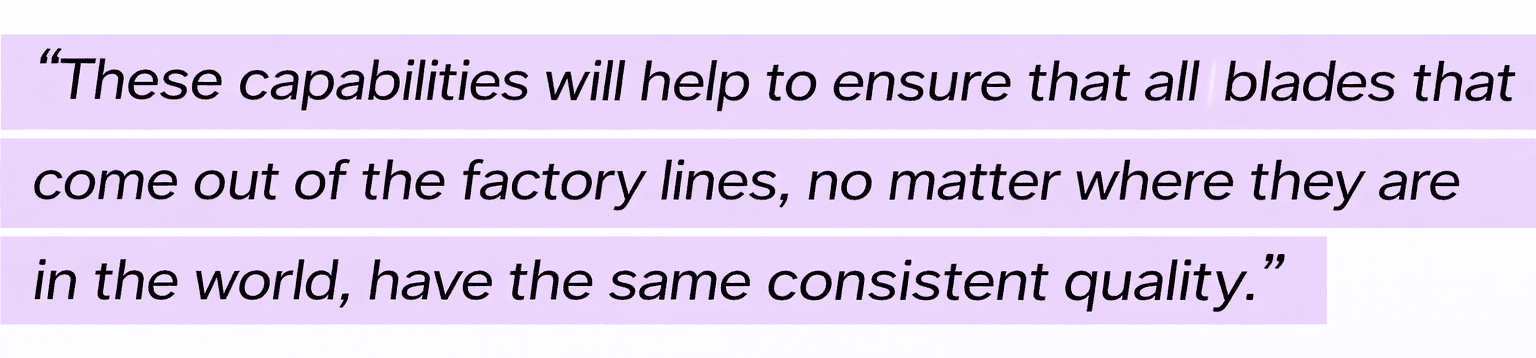
This is where computer vision for manufacturing becomes a strategic lever—not just improving quality, but standardizing it globally.
Why Timing Is the Real Breakthrough
Detection alone is not the differentiator. Timing is.
The analogy reflects a deeper shift in manufacturing thinking.
In practice, this means:
- Teams continuously monitor every stage
- Teams flag every deviation in real time
- Teams correct issues before they become costly
With computer vision solutions for manufacturing, the goal is no longer to detect defects, but to prevent them from fully forming.
A Different Approach to AI in Manufacturing
Across industries, AI adoption often centers on cost reduction, automation, or speed.
GE Vernova’s approach is fundamentally different.
It prioritizes:
End-to-end visibility across production
Consistency across global manufacturing lines
Confidence in every unit produced
This is where manufacturing computer vision moves beyond efficiency gains and becomes a foundation for operational control.
The outcomes are tangible:
Reduced rework and material waste
Faster, more informed decision-making on the shop floor
Standardized quality across geographies
Greater predictability in output
More importantly, it redefines what “quality” means- not as an outcome to be verified, but as a condition continuously maintained.
Setting the Benchmark for the Industry
There is a reason GE Vernova continues to set the pace in wind blade manufacturing.
The company is not treating AI as an add-on. It is embedding intelligence into the core of how manufacturing operates.
Because in a world where wind energy must scale dramatically, teams cannot inspect quality into existence at the end of the process. They must build it into every layer, every second.
And that is what computer vision for manufacturing enables:
Every blade aligns with design intent
Every process executes correctly
Every deviation is addressed early
Every facility operates at a consistent standard
The result is more reliable energy infrastructure.
The Bigger Picture
The most important shifts in industrial technology rarely make headlines.
They happen quietly inside factories, within processes, across thousands of micro-decisions that determine final outcomes.
Through computer vision in production, GE Vernova is turning manufacturing into an intelligent, responsive system- one that sees, understands, and acts in real time.
And in doing so, it is demonstrating a broader truth for the industry:
The future of manufacturing is not just automated. It is aware.
This article is based on publicly available information, including content sourced from GE Vernova’s official publication:
https://www.gevernova.com/news/articles/blade-runners-ge-vernova-deploying-ai-enabled-machines-boost-wind-turbine-blade-quality, along with other industry sources. We attribute all quotes and references to their respective speakers.