Why Is Wind Turbine Blade Quality Inspection No Longer Enough?
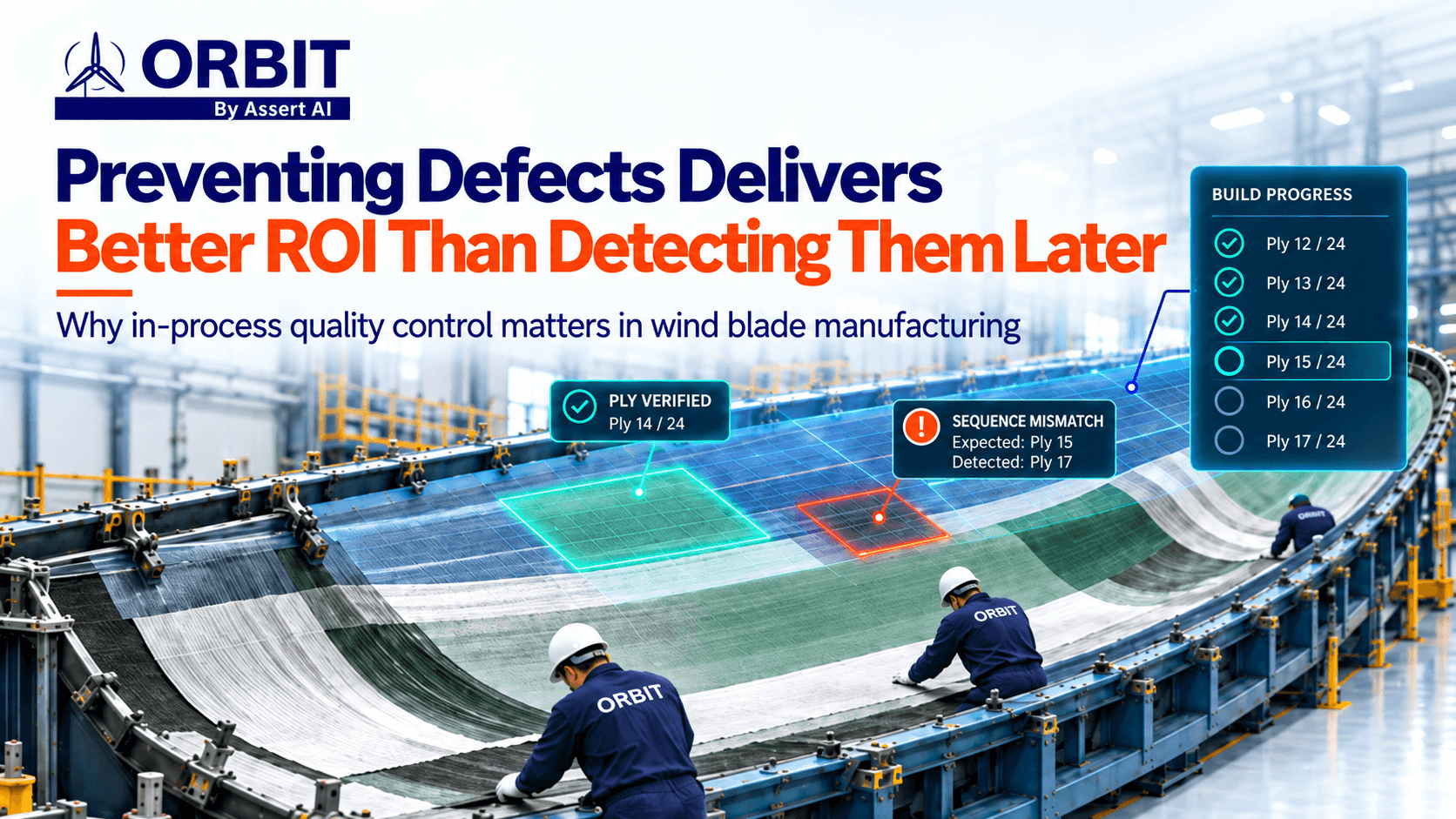
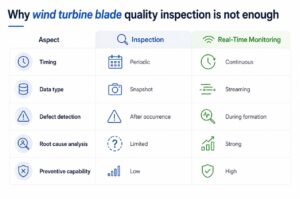
Wind turbine blade quality inspection is no longer sufficient because it detects defects after they occur, rather than preventing them during manufacturing.
For decades, wind turbine blade quality inspection has been the backbone of quality assurance in wind energy manufacturing. But with increasing blade sizes, higher load demands, and tighter performance expectations, this approach is showing clear limitations.
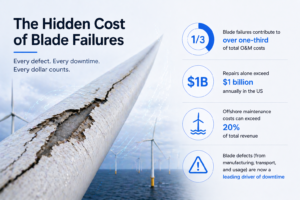
Industry data highlights the scale of the problem: blade-related failures contribute to over one-third of total O&M costs, while repair costs exceed billions annually. Offshore maintenance alone can consume more than 20% of total revenue.
“Inspection was designed for a different era of manufacturing. Today’s blade complexity and scale demand continuous visibility, not periodic checks. By the time a defect is found, the cost has already compounded.”
— Nitin Jain, Co-Founder, Assert AI
Where Do Blade Failures Actually Begin?
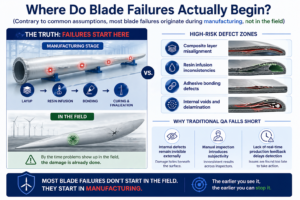
Most blade failures don’t start in the field. They originate during manufacturing, often due to defects like poor bonding, voids, or material inconsistencies. Research shows that these manufacturing defects play a critical role in blade failure mechanisms and can significantly reduce structural strength from the outset.
A recent investigation linked blade failure to improper adhesive application during production.
High-risk defect zones:
- Composite layer misalignment
- Resin infusion inconsistencies
- Adhesive bonding defects
- Internal voids and delamination
Why traditional QA falls short:
- Internal defects remain invisible externally
- Manual inspection introduces subjectivity
- Lack of real-time production feedback delays detection
Expert Perspective
“What we consistently see across manufacturing floors is that the most critical defects are not visible externally. Without real-time production monitoring, these issues silently progress into failures.”
— Shalabh, Co-Founder, Assert AI
What Are the Limitations of Current Wind Turbine Blade Inspection Technology?
Current inspection methods can detect visible damage, but they often miss early-stage and internal defects. Most technologies are designed to identify problems after they appear, not prevent them. This means issues are usually caught too late; leading to higher repair costs, compromised quality, and potential long-term performance risks. Even advanced wind turbine blade inspection technology has fundamental gaps.
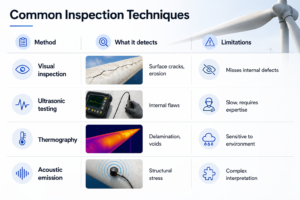
Modern wind blade inspection technology has improved detection, but not prevention. By the time inspection finds a defect, the cost is already baked in.
Expert Perspective
“Even the most advanced inspection technologies are still reactive by design. They operate outside the production loop, which limits their ability to influence outcomes in real time. We change that.”
— Shalabh, Co-Founder, Assert AI
Wind blade inspection technology for defect detection in manufacturing is limited because it provides static insights and cannot enable real-time corrective action.
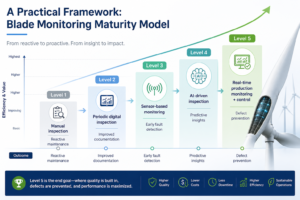
What Is Automated Visual Inspection Manufacturing And Why Is It Transforming Composite Blade Production?
To address the wind blade quality inspection gaps, leading manufacturers are adopting automated visual inspection in manufacturing.
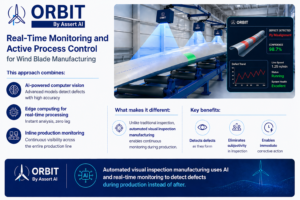
This approach integrates:
- AI-powered computer vision
- Edge computing for low-latency processing
- Continuous inline monitoring
What sets it apart:
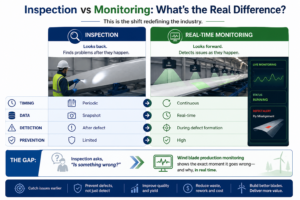
Unlike periodic inspection, automated visual inspection based manufacturing enables real-time detection during production.
Key outcomes:
- Early detection of defects such as fiber misalignment and bonding issues
- Standardized, objective quality control
- Immediate feedback loops for process optimization
The real shift is not automation, it’s immediacy. When manufacturers can identify and correct defects as they occur, they move from composite blade quality control to quality assurance by design. Automated visual inspection manufacturing uses AI and real-time monitoring to detect and correct defects during production.
Inspection vs Monitoring: What’s the Real Difference?
Why Are Manufacturing Defects the Biggest Risk?
Manufacturing defects remain one of the biggest risks in wind blade performance, with data consistently pointing to their role as a leading cause of failure. Studies indicate that nearly 25% of blades develop fatigue cracks over time, many of which trace back to issues during manufacturing or gaps in wind blade quality inspection and quality assurance. Apart from being technical concerns, these defects also carry significant business impact. Even minor flaws can reduce energy output, while more severe issues can lead to six-figure losses per incident or, in worst cases, complete turbine shutdowns.
Manufacturing defects are the leading cause of blade failure, making real-time monitoring essential for prevention.
What Are Leading Manufacturers Doing Differently?
In wind energy, the cost curve is unforgiving. A defect that costs a few dollars to fix in production can escalate into major operational and financial setbacks once deployed in the field. That’s why prevention is the real lever, not detection.
Forward-looking organizations are moving toward integrated, intelligent systems.
Key strategies:
- Deploying wind blade production monitoring across manufacturing lines
- Integrating wind turbine blade inspection technology with MES systems
- Scaling automated visual inspection manufacturing
- Building digital twins for predictive analytics
Relying solely on wind turbine blade quality inspection is no longer viable in high-performance wind manufacturing environments.
Also Read: GE Vernova’s Quiet Edge: How AI Is Reshaping Wind Blade Manufacturing at Scale
The future of blade manufacturing will be defined by those who can see problems as they emerge, not after they’ve already impacted performance. The competitive advantage lies in identifying defects at the exact moment they begin, not after they impact quality and performance.
See how real-time blade monitoring works in your plant