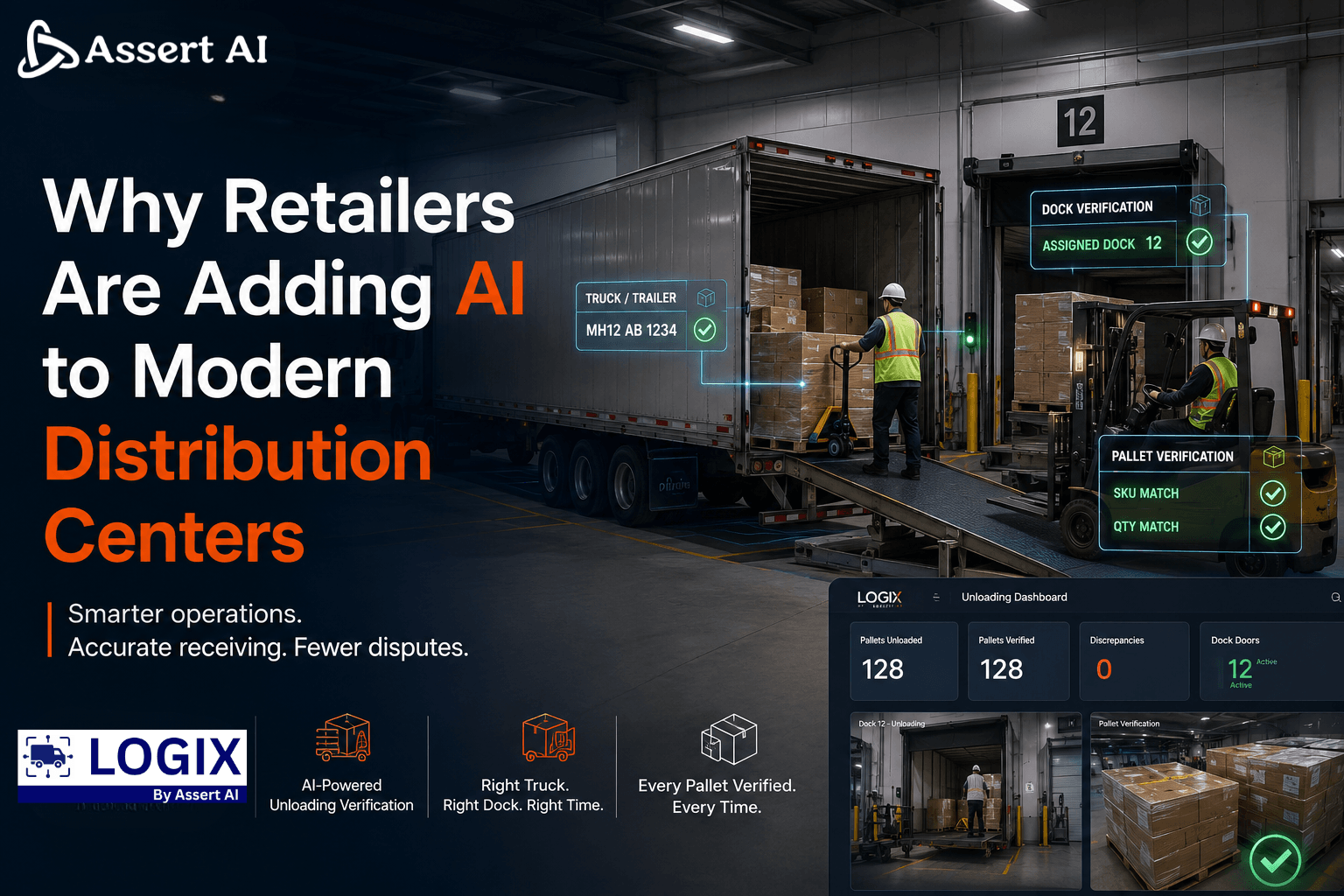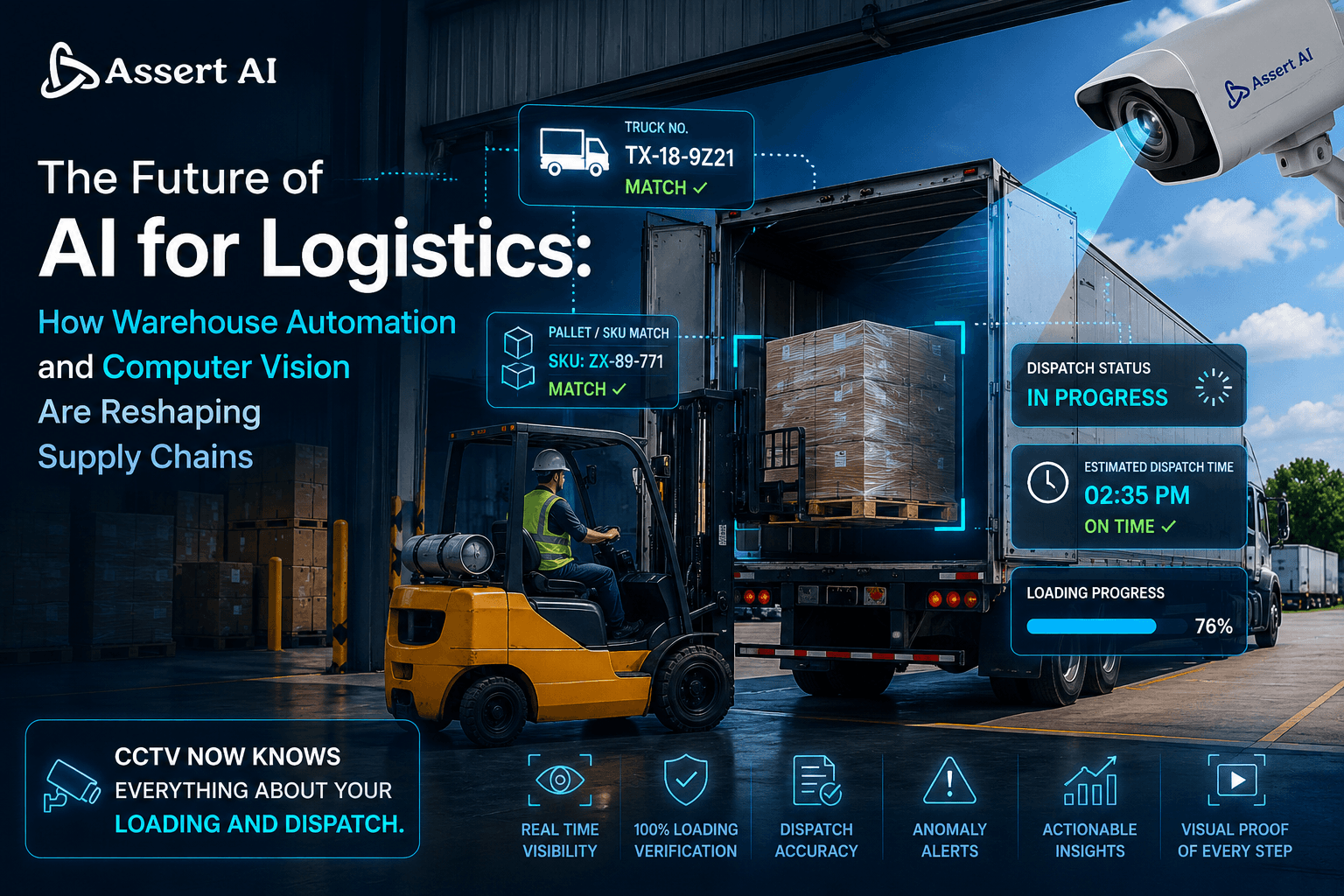
For years, logistics operations were measured by movement.
How fast can goods move from point A to point B?
But today, speed alone is no longer enough.
Modern supply chains are now being judged on visibility, accuracy, traceability, compliance, and responsiveness. Retailers want proof. Customers expect precision. Operations teams need predictability. Leadership teams want tighter margins without operational chaos.
This shift is exactly why AI for logistics is rapidly moving from innovation discussions into core warehouse operations.
The industry is entering a new phase where warehouses are no longer just storage and dispatch hubs. They are becoming intelligent operational environments capable of monitoring, validating, predicting, and optimizing activities in real time.
And at the center of this transformation is a powerful combination of warehouse automation, computer vision and real time operational intelligence.
Why AI for Logistics Is Becoming Critical
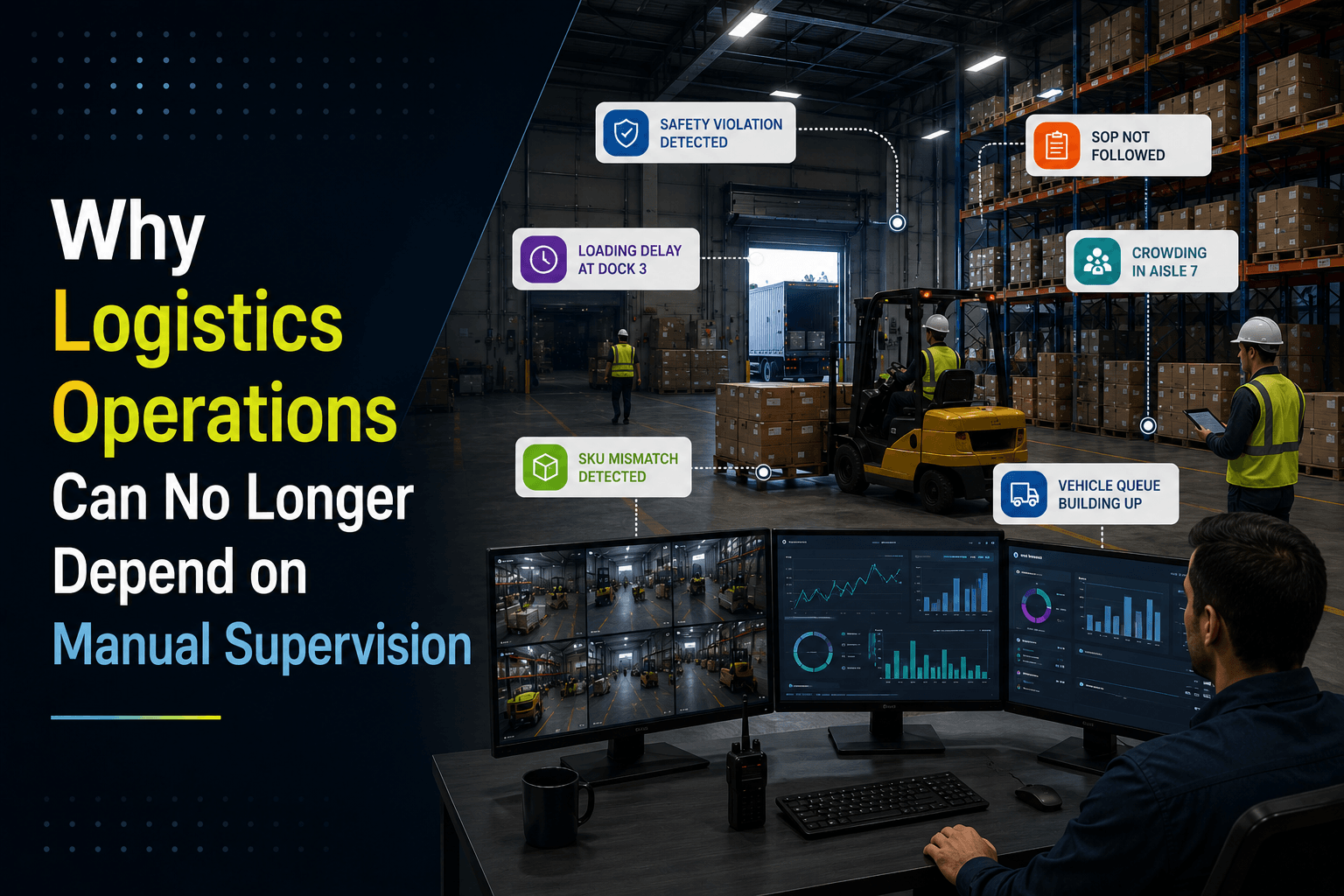
The global logistics ecosystem has become too complex for manual supervision.
Warehouses today manage:
- High SKU volumes
- Faster dispatch timelines
- Multiple handling touchpoints
- Large labor teams
- Strict retailer compliance mandates
- Rising shipment accuracy expectations
At the same time, operational margins are tightening.
A small operational gap can quickly snowball into:
- Dispatch errors
- Delayed shipments
- Inventory mismatches
- Compliance violations
- Customer disputes
- Retailer deductions
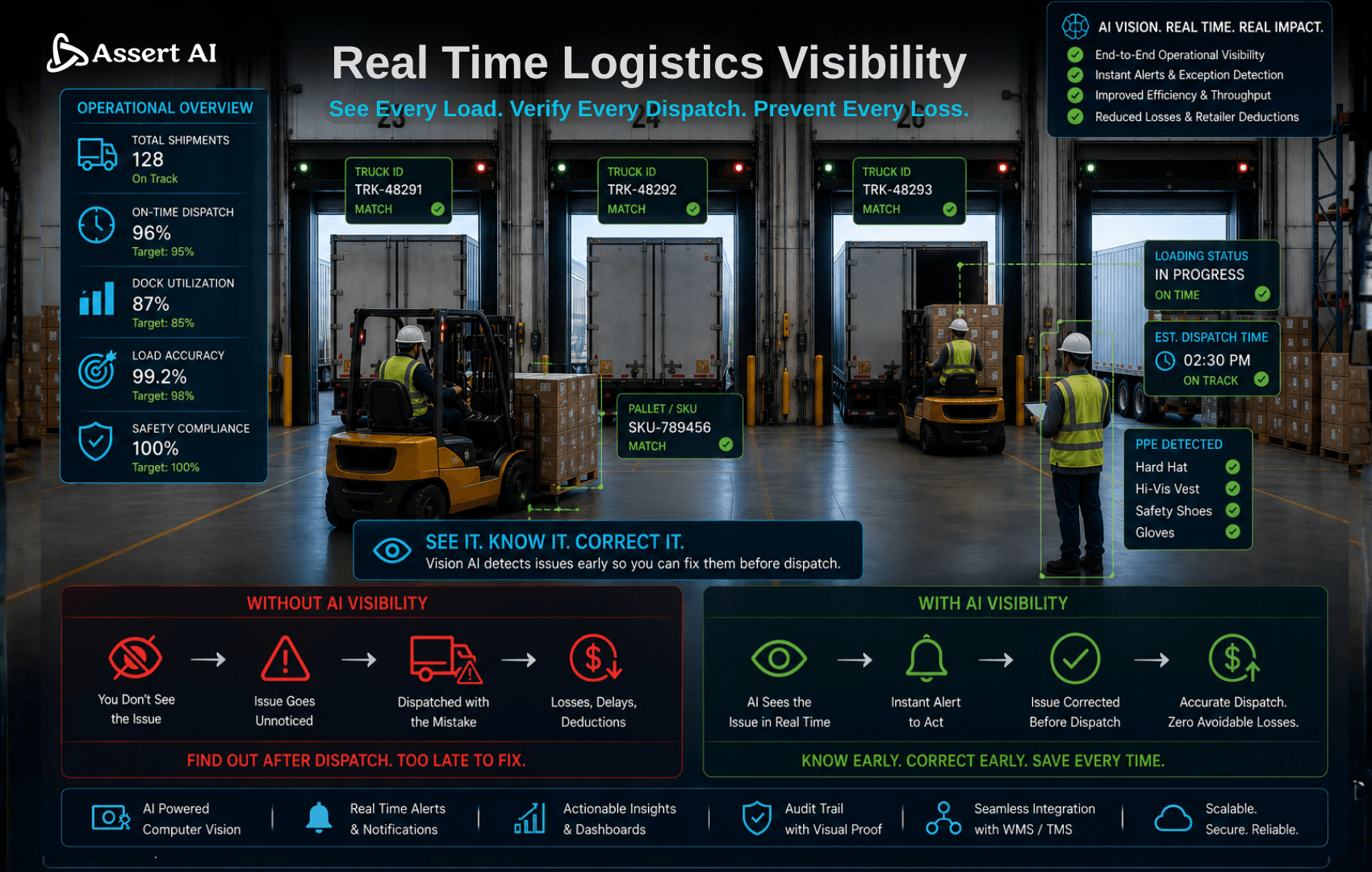
The challenge is not that warehouses lack systems. The challenge is that most operations still lack real time operational visibility. That is where AI changes the equation.
The Evolution of Warehouse Automation
Traditional warehouse automation focused heavily on mechanical systems.
Conveyors, scanners, handheld devices, and barcode based tracking improved workflows, but they are still dependent on manual execution and fragmented verification processes. Modern warehouse automation powered by AI works differently. Instead of simply recording transactions, AI systems continuously observe operations and interpret and sometimes control activities in real time.
This includes:
- Inventory movement tracking
- Dock monitoring
- Dispatch validation
- Vehicle identification
- Loading and unloading verification
- Operational anomaly detection
- Workforce movement analysis
- Compliance monitoring
The result is not just automation. It is operational intelligence.
Read more about how AI powered systems are helping warehouses improve dock visibility and operational flow:
https://www.assertai.com/improve-dock-efficiency-logistics-management/
How Warehouse Computer Vision Is Changing Logistics
One of the biggest breakthroughs in logistics AI is the rise of warehouse computer vision.
Computer vision allows AI systems to understand and analyze warehouse operations visually using low cost, general purpose CCTV security cameras. This is a major shift for the industry. Warehouses no longer need expensive specialized hardware infrastructure to generate deep operational insights.
AI powered computer vision systems can now transform standard security cameras into intelligent operational monitoring systems capable of:
- Detecting process deviations
- Monitoring dock activity
- Tracking inventory flow
- Verifying dispatch operations
- Generating real time alerts
- Identifying anomalies instantly
This creates a continuous layer of visibility across warehouse operations without disrupting existing workflows. And that visibility is becoming one of the most valuable assets in logistics.
Watch how AI powered logistics visibility works in real warehouse environments:
The Real Cost of Operational Blind Spots
Most logistics losses do not happen because teams are careless. They happen because operations move too fast to manually validate every activity.
In many warehouses, critical processes still depend on:
- Manual supervision
- Paper based verification
- Random audits
- Delayed reconciliation
- Reactive investigation after issues occur
By the time discrepancies are discovered, the operational evidence is often incomplete.
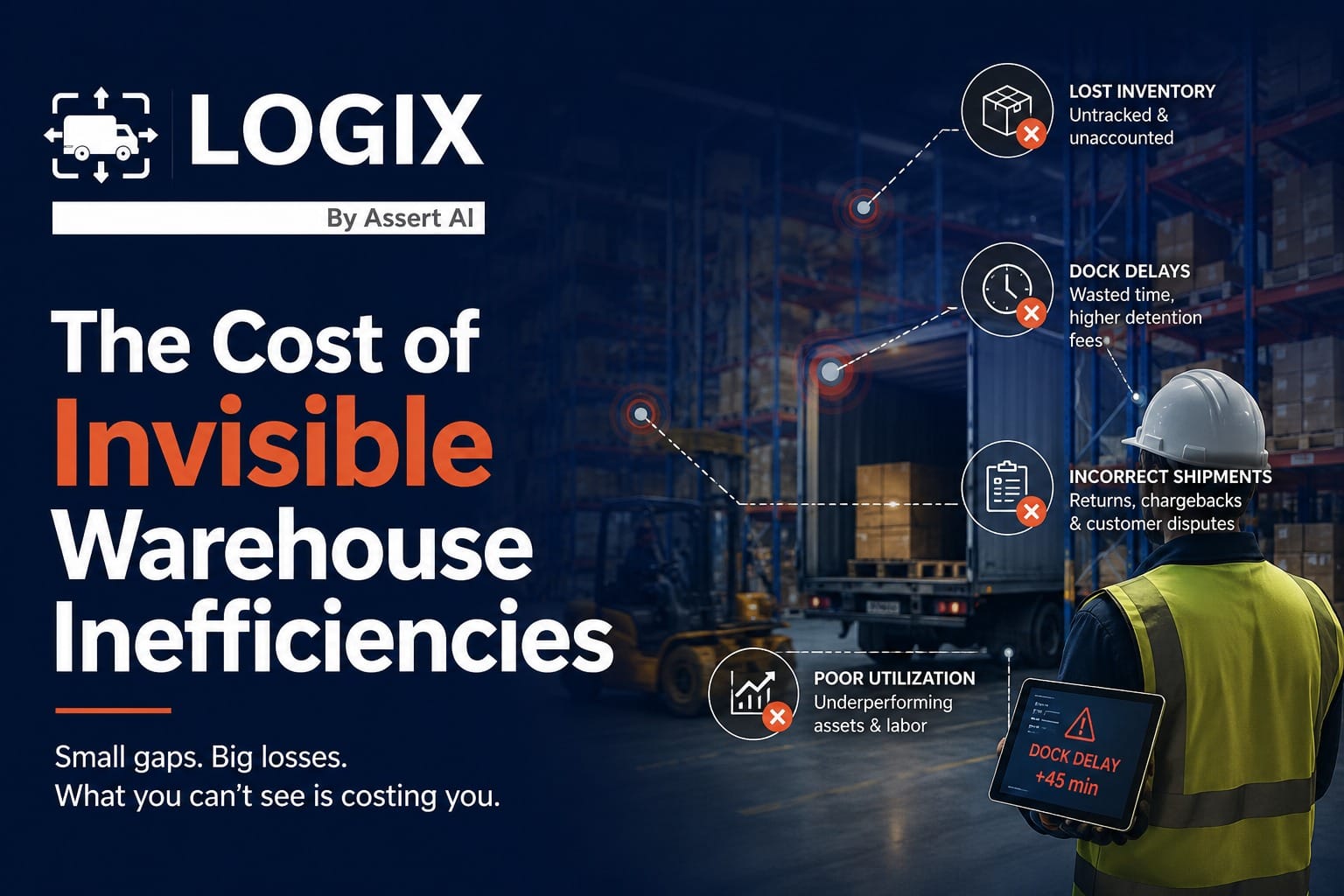
This creates expensive blind spots across:
- Inventory handling
- Shipment loading
- Dispatch accuracy
- Retail compliance
- Damage disputes
- Missing cartons
- Short shipments
Over time, businesses begin absorbing these losses as unavoidable operational realities. But increasingly, they are not unavoidable, they are visibility problems.
Where AI Delivers the Highest Value in Logistics Operations
Inventory Accuracy and Traceability
Inventory discrepancies remain one of the biggest operational challenges in warehousing.
AI powered warehouse computer vision can continuously monitor:
- Put away operations
- Inventory movement
- Rack level activities
- Carton counts
- Storage utilization
- Unusual movement patterns
This reduces manual reconciliation effort while improving inventory confidence.
Dispatch Validation and Shipment Accuracy
Dispatch operations are often the final control point before revenue impacting errors occur.
AI systems can verify:
- Correct loading sequences
- Shipment completeness
- Vehicle level dispatch activity
- Carton movement tracking
- Dispatch timelines
- Loading anomalies
This creates stronger operational accountability while reducing costly disputes later.
See how AI validates dispatch workflows and shipment movement visibility in logistics operations:
Dock and Yard Intelligence
Dock operations directly impact throughput and turnaround times.
AI driven logistics operations can improve:
- Dock utilization visibility
- Vehicle queue management
- Trailer identification
- Loading and unloading monitoring
- Vehicle turnaround analytics
These insights help warehouses improve efficiency without major infrastructure expansion.
Real Time Operational Alerts
One of the biggest advantages of AI for logistics is proactive monitoring.
Instead of discovering operational issues hours later, warehouses can receive instant alerts for:
- Delayed loading
- Missing shipment activity
- Unauthorized movement
- Idle dock operations
- Workflow bottlenecks
- Compliance deviations
This allows teams to respond before small issues become costly operational failures.
Watch how real time AI alerts help warehouses improve operational responsiveness:
Why Logistics Leaders Are Accelerating AI Investments
The AI in logistics market is growing rapidly because operational expectations are changing faster than manual systems can adapt.
Retailers today expect:
- Faster fulfillment
- Higher shipment accuracy
- Stronger traceability
- Better compliance
- Real time operational visibility
Meanwhile, logistics operators are managing:
- Rising operational complexity
- Labor shortages
- Pressure on margins
- Increasing retailer penalties
- Higher customer expectations
The gap between operational demand and manual oversight is widening. AI powered warehouse automation helps close that gap.
Organizations investing early are gaining:
- Faster operational decision making
- Reduced process leakages
- Improved shipment accuracy
- Better compliance readiness
- Lower operational losses
- Higher scalability
The Shift From Operational Efficiency to Operational Accountability
One of the biggest changes happening in logistics is the growing importance of accountability.
Retailers and enterprise customers increasingly expect logistics partners to provide:
- Proof of dispatch
- Shipment validation
- Process traceability
- Visual operational evidence
- Faster dispute resolution
This is where AI powered warehouse computer vision becomes especially valuable. Instead of relying solely on manual records, operations teams can now create verifiable visual intelligence across warehouse workflows.
And this directly impacts one of the biggest silent margin killers in logistics:
retailer deductions and shipment disputes.
Learn how AI powered logistics visibility is helping reduce retailer deductions and operational disputes:
https://www.assertai.com/retailer-deductions-ai-logistics-visibility/
Retailer Deductions Are No Longer Just a Cost of Doing Business
For years, many logistics operators quietly accepted retailer deductions as unavoidable. Short shipment claims, dispatch disputes, missing cartons, delay claims, and compliance penalties became operational write offs because proving accountability was difficult. But the economics are changing. When deductions repeat across thousands of shipments, they stop being isolated losses. They become systemic margin erosion.
AI powered logistics operations now make it possible to:
- Verify dispatch activity visually
- Validate shipment handling
- Track carton level movement
- Create time stamped operational evidence
- Detect discrepancies before dispatch
- Resolve disputes faster with proof based workflows
This fundamentally changes how warehouses approach operational losses.
Learn how visual proof based logistics workflows are helping improve shipment accountability and dispute resolution:
https://www.assertai.com/visual-proof-of-delivery-logistics/
How Logix Helps Warehouses Move From Blind Operations to Intelligent Visibility
Assert AI has built Logix to help logistics operators generate deep operational intelligence using AI powered warehouse computer vision.
Logix transforms low cost, general purpose CCTV security cameras into intelligent monitoring systems capable of delivering:
- Real time operational visibility
- Dispatch validation
- Inventory movement intelligence
- Dock monitoring
- Shipment traceability
- Automated alerts
- Operational anomaly detection
So instead of reacting to issues after losses occur, warehouse teams gain continuous visibility into operations as they happen.
This helps businesses:
- Reduce shipment disputes
- Improve dispatch accuracy
- Strengthen retailer compliance
- Minimize operational leakages
- Improve warehouse accountability
- Build more resilient logistics operations
Explore Logix and see how AI powered logistics visibility is transforming warehouse operations:
https://www.assertai.com/logix/
The Future of AI for Logistics Will Belong to Warehouses That Can See Everything
The next generation of logistics operations will not be defined only by automation. They will be defined by visibility.
Warehouses that can monitor, validate, and optimize operations in real time will outperform those relying on fragmented manual oversight. AI for logistics is no longer just chasing efficiency, it is becoming the foundation for operational accountability, traceability, and margin protection. And businesses that continue treating retailer deductions and shipment disputes as unavoidable losses may soon find themselves operating at a competitive disadvantage.