The world is entering the Physical AI era
Twenty years from now, historians may look back at generative AI as the technology that taught machines to communicate with humans, while Physical AI may be remembered as the technology that taught machines to understand the world itself.
For the last few years, public attention has been dominated by chatbots, copilots and large language models. These systems write, summarize, translate, code and answer questions with extraordinary speed. Yet away from the consumer spotlight, another branch of artificial intelligence has been advancing inside factories, warehouses, airports, highways, hospitals, resorts, power plants, construction sites and cities. This branch is not focused on language alone. It is focused on perception, movement, context, safety, quality, compliance and action.
That branch is Physical AI.
Physical AI refers to AI systems that perceive, interpret and act upon the physical world using cameras, sensors, edge devices, robotics, wearables, drones, LiDAR, radar and industrial systems. In NVIDIA’s words, physical AI includes systems that understand the real world, reason and plan actions, while the company has also described the next wave of AI as physical AI.
The important point for enterprises is simple: Physical AI is no longer only a research idea or a robotics vision. It is already solving measurable operational problems. It is verifying shipments, detecting manufacturing deviations, monitoring safety risks, tracking asset movement, improving facility management, strengthening security operations and creating digital evidence where businesses previously relied on memory, paperwork or manual review.
At the same time, physical AI still has a long way to go. Today’s systems are powerful but not universal. They can solve defined, high-ROI problems extremely well, especially when the environment, process and success criteria are clear. Over the next six years, however, the technology is likely to move far beyond enterprise operations and become part of everyday life for ordinary people: in buildings, vehicles, stores, streets, homes, hospitals, schools, public infrastructure and personal devices.
That is why the rise of the AI Camera matters. The AI Camera is not always a new piece of hardware. In many cases, it is an existing or ordinary, general-purpose camera made intelligent through computer vision, edge AI and business logic. This shift changes everything, because the world already has cameras. What it lacked was understanding.
From Computer Vision to Physical AI: A short history of machines learning to see
The journey to physical AI did not begin with ChatGPT, robotics or smart cameras. It began with a much older question in artificial intelligence: can machines perceive the world as humans do?
Computer vision emerged as the field that tried to answer that question. Early systems relied heavily on rules, geometry, edges, contours and manually engineered features. They could work in controlled environments, but they struggled in the messy physical world where lighting changes, objects overlap, people behave unpredictably and industrial processes rarely follow perfect textbook conditions.
The 2010s changed the trajectory of computer vision. Large datasets, GPUs and deep learning dramatically improved image classification and object detection. ImageNet, led by Fei-Fei Li and collaborators, became one of the most influential benchmarks in modern AI and accelerated progress in large-scale visual recognition.
Andrew Ng’s widely cited observation that “AI is the new electricity” captured the scale of the transformation: artificial intelligence would not remain one product or one industry, but would become a general-purpose technology embedded across the economy. Computer vision became one of the clearest proofs of that idea, because it gave machines access to the physical layer of business operations.
Over time, computer vision moved through four broad phases:
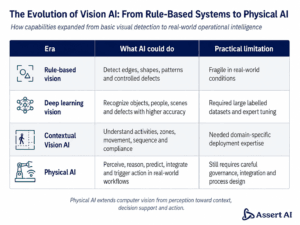
This evolution matters because enterprises do not simply need AI that can identify an object. They need AI that understands what the object means in context. A pallet on a warehouse floor is not just a pallet. It may be the wrong pallet, the delayed pallet, the unverified pallet, the pallet causing a retailer deduction, or the pallet that should not be loaded into that truck. A worker near a machine is not just a person. That worker may be safe, exposed to risk, following a process, violating a process or needing assistance.
Physical AI begins where object detection ends.
Why the AI Camera may become the most important enterprise sensor
For decades, cameras were treated as passive recording devices. They were installed for security, compliance or post-incident investigation. Something happened, footage was reviewed, and the organization tried to reconstruct the truth after the cost had already occurred.
The AI Camera changes that operating model.
An AI Camera converts video into structured operational intelligence. It detects people, products, vehicles, machines, tools, zones, workflows, anomalies, unsafe actions, process deviations and business events. It can operate at the edge, integrate with enterprise systems, trigger alerts, generate evidence and create analytics that help decision-makers understand what is actually happening on the ground.
This is a profound shift, because video is one of the largest untapped datasets inside most organizations. Every factory, warehouse, resort, facility, transport hub and city infrastructure network already produces enormous visual data every day. Traditionally, almost all of it went unused unless someone manually searched it. With computer vision and Physical AI, that visual data becomes queryable, measurable and actionable.
The most valuable AI model inside a factory is not the chatbot. It is the model watching production twenty-four hours a day.
That does not diminish the value of generative AI. Chatbots and copilots are useful for knowledge work, documentation, search, reporting and decision support. But inside industrial environments, the highest-value AI is often the system that sees whether production is happening correctly, whether a defect is emerging, whether a shipment is wrong, whether a worker is at risk, whether a machine is idle, or whether an operation is drifting from standard process.
A chatbot waits for a prompt. An AI Camera watches continuously.
That difference is why physical AI is becoming central to manufacturing, logistics, infrastructure, hospitality, public safety and smart buildings. It does not merely answer questions about operations. It observes operations as they happen, suggest actionable items, and sometimes even integrates with the core system to control operations and actions based on visual cues.
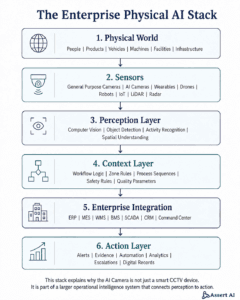
This stack explains why the AI Camera is not just a “smart CCTV” device. It is part of a larger operational intelligence system that connects perception to action.
Five years ago vs today: What changed in AI Vision
Five years ago, most computer vision deployments were narrow, expensive and highly customized. A typical solution might detect helmets, count people, identify license plates or detect a specific defect in a controlled line. These applications were useful, but they rarely created a flexible intelligence layer across the enterprise.
The constraints were practical. Models needed large amounts of labelled data. Camera placement had to be precise. Accuracy dropped when lighting, background, object orientation or process conditions changed. Many deployments were hardware-specific, and scaling the same capability across sites required repeated engineering effort.
Today, the technology landscape is substantially different. AI models are more capable, edge computing is more powerful, vision foundation models are improving, and enterprise platforms are becoming easier to configure. NVIDIA’s recent work around world foundation models and its description of physical AI systems that combine simulation, training and inference reflects how rapidly the field is moving from perception toward reasoning and action.
The change can be summarized clearly:
| Capability | Around 2020 | Today |
| Detection | Limited objects and fixed scenarios | Multiple objects, activities and workflows |
| Deployment | Heavy custom engineering | Faster configuration and model adaptation |
| Hardware | Specialized cameras often preferred | Existing IP cameras often usable |
| Compute | Cloud or high-cost GPU dependency | Edge AI increasingly practical |
| Output | Alerts and dashboards | Evidence, analytics, integrations and automation |
| Scalability | Site-by-site customization | Multi-site model rollout and centralized governance |
| Business role | Security or inspection tool | Operational intelligence layer |
This is why the phrase AI Camera should not be understood too narrowly. The future is not only about buying cameras with embedded AI chips. The bigger opportunity is to make every useful camera part of a live intelligence network.
The real breakthrough: General-purpose cameras are becoming powerful with AI
One of the most important shifts in Physical AI is economic, not technical.
Enterprises do not always need more cameras. They need a better understanding of the cameras they already have.
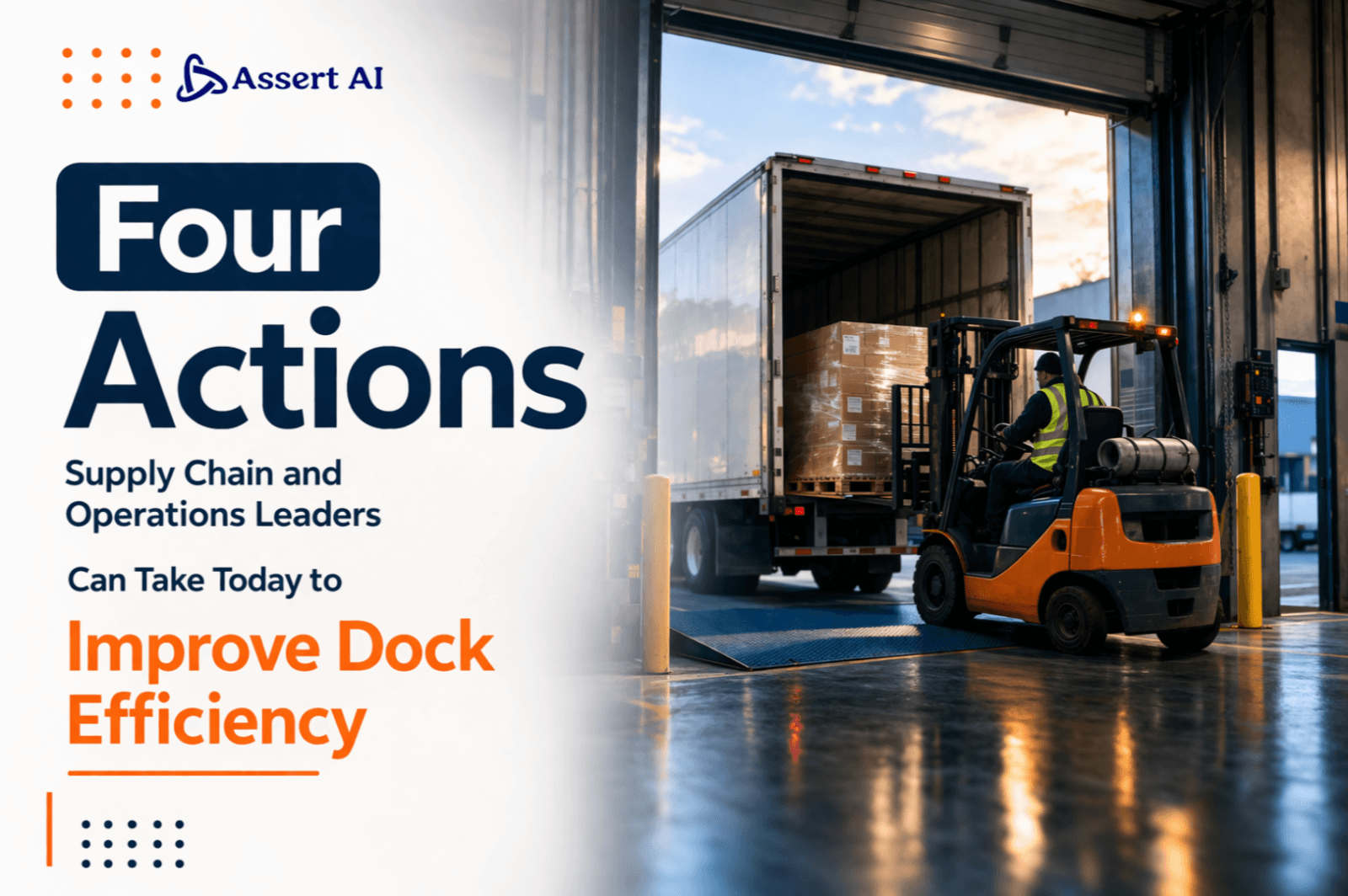
A general-purpose camera installed above a dock door, production line, building lobby, resort queue, warehouse aisle, parking gate or shopfloor workstation can become a powerful AI Camera when connected to the right computer vision models and business rules. The hardware captures visual data; the AI layer interprets what that visual data means.
Crucially, these cameras are no longer limited to simple object detection. By training models on specific visual scenarios, these cameras gain a deeper understanding of the context, moving beyond identifying objects to comprehending the entire visual scene. This intelligence allows for seamless integration into automation systems, where the camera can trigger specific operational actions based on learned visual cues, transforming passive observation into active, intelligent control.
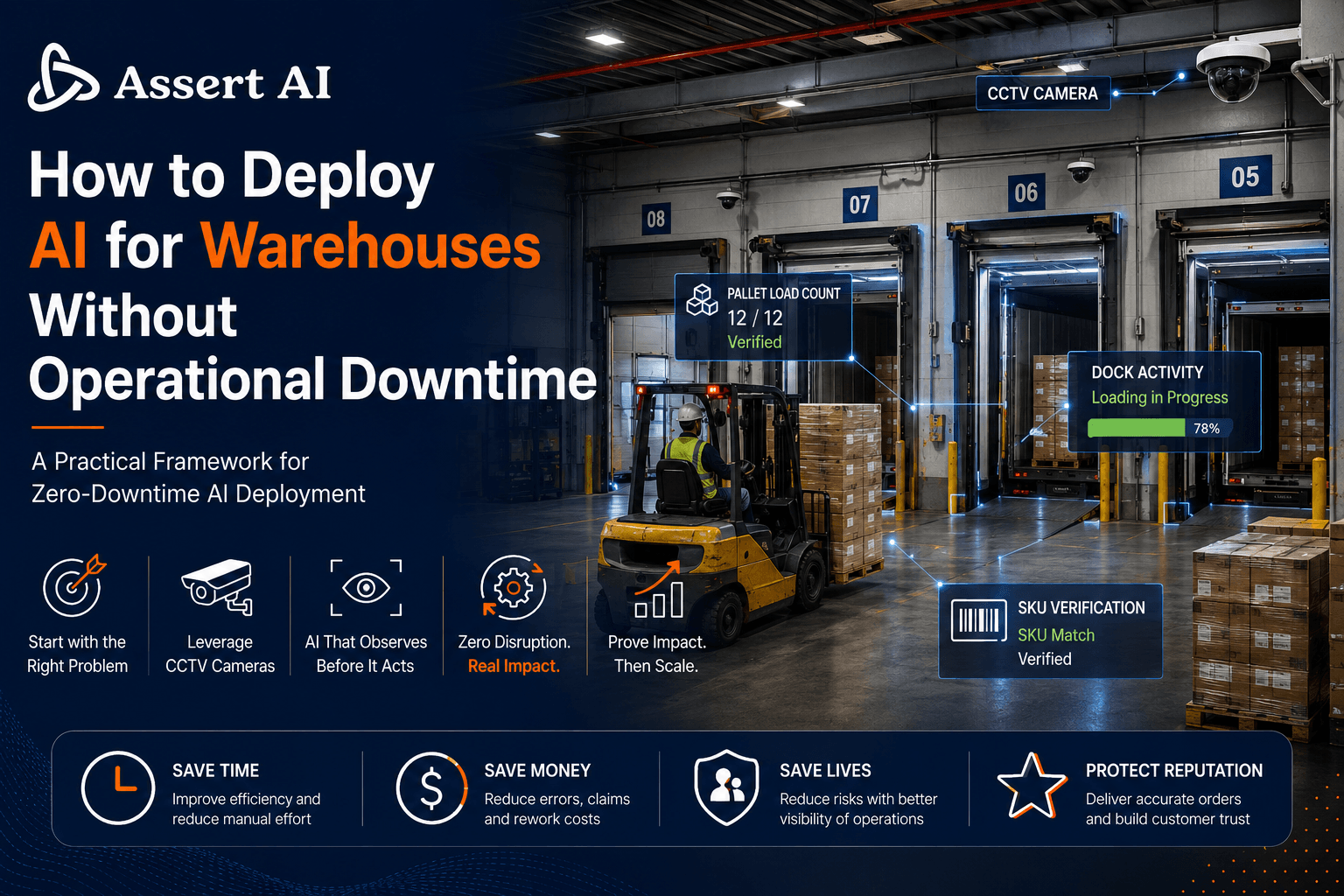
A single camera overlooking a warehouse dock can potentially monitor:
- whether the right truck arrived at the right dock;
- whether the correct pallet moved into the correct trailer;
- whether loading was delayed or interrupted;
- whether safety protocols were followed;
- whether forklifts crossed unsafe zones;
- whether turnaround time exceeded defined thresholds.
The same principle applies to manufacturing. A camera that observes an assembly station can verify whether the correct component was placed, whether a sequence was followed, whether a defect could have been formed, whether an operator skipped a step, whether material is missing, or whether production is idle.
The camera stays the same. Intelligence changes.
That is the scalable promise of Physical AI.
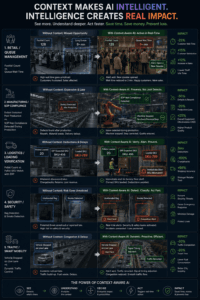
Most common applications vs critical applications
Many organizations first encounter computer vision through common applications such as people counting, queue monitoring, PPE detection, facial recognition, vehicle counting or intrusion alerts. These use cases are valuable, especially when they reduce manual monitoring or strengthen compliance.
However, the highest ROI often comes from critical applications where a missed event has immediate financial, safety or operational consequences.The difference is not that common applications are unimportant. It is that critical applications are tied to measurable business outcomes. If AI prevents a defective product, avoids a wrong shipment, reduces a deduction, detects a safety risk or identifies machine downtime early, its value is direct and defensible.
This is also where many enterprises should begin. Instead of asking, “Where can we use AI?” leaders should ask, “Where does the absence of visibility create cost, risk or delay?”
Physical AI in manufacturing
Manufacturing has always depended on observation. Supervisors observe operators. Quality teams inspect products. Safety teams monitor risky zones. Engineers review process deviations. Maintenance teams watch for machine failures. The problem is that human observation does not scale continuously across every shift, station and site.
Physical AI gives manufacturing leaders a new capability: persistent process visibility.
In a factory, an AI Camera can verify whether the correct part has been installed, whether a worker followed the right sequence, whether a component is missing, whether a machine is idle, whether a conveyor is blocked, whether a product has visible defects, whether a package is empty or whether an unsafe action occurred. When connected to MES, ERP or SCADA systems, the AI layer can compare what should happen with what actually happened.
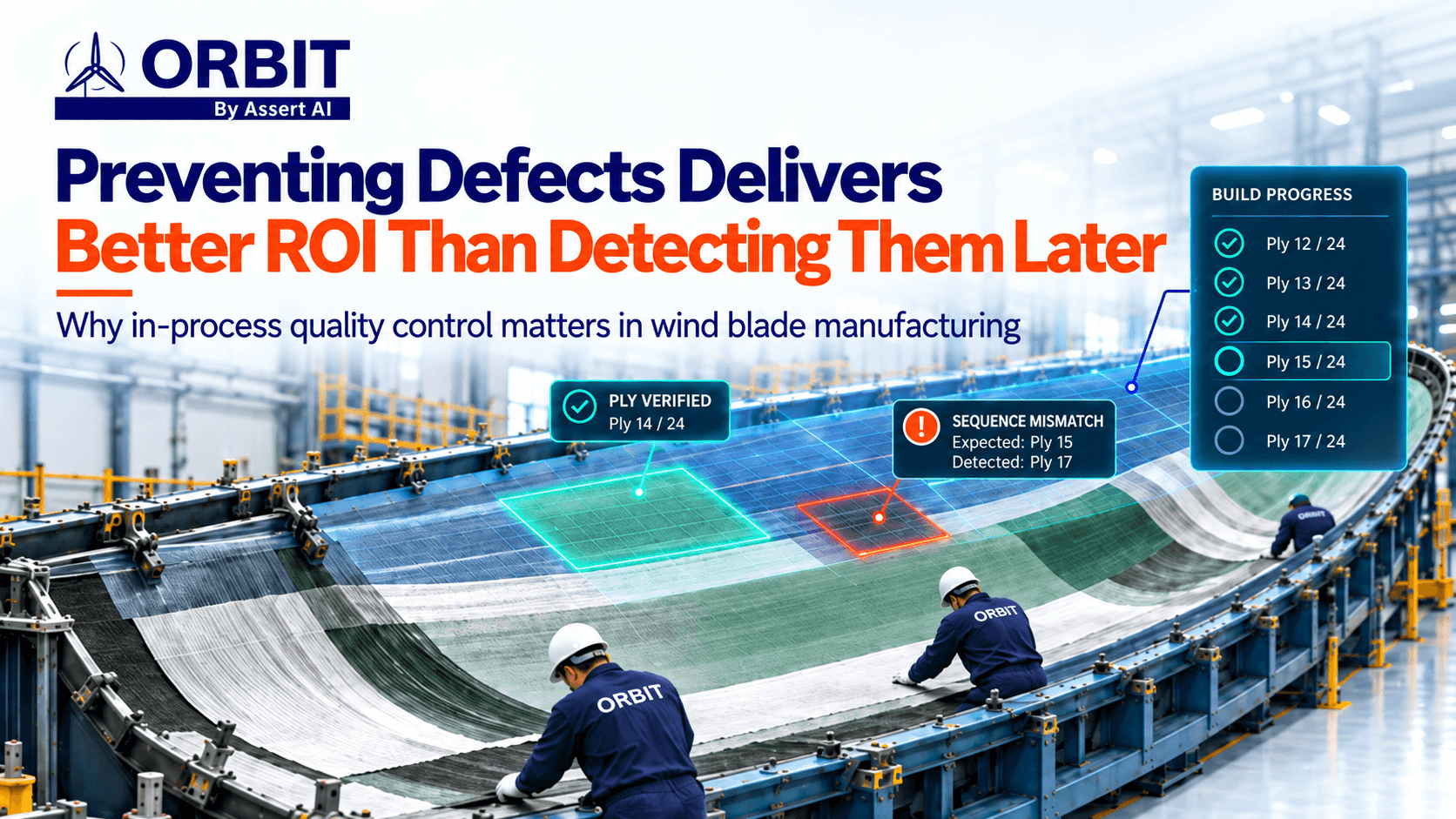
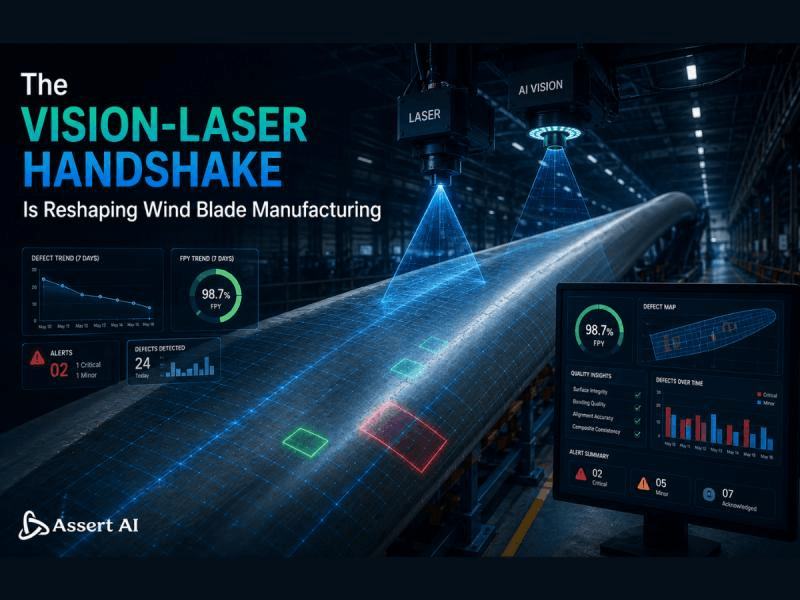
This is especially powerful in industries where defects are expensive to fix later. In wind blade manufacturing, for example, quality does not only entail final inspection. It also entails validating process execution during layup, infusion, curing, gluing and finishing. In food and beverage, bottling, cement, steel and other process-heavy plants, the cost of missed deviations can appear as rework, rejection, downtime, customer complaints or safety events.
In manufacturing environments, Physical AI is increasingly being used for product quality monitoring and FPY improvement, helping teams detect process deviations, reduce rework, improve first-pass yield and strengthen traceability before defects travel further downstream.
The strategic shift is from inspection after production to intelligence during production.
Physical AI in logistics and warehouses
Warehouses and distribution centers are full of digital systems, but many of them still depend on human-entered data. A WMS may know what should be picked, packed, loaded and shipped, yet it may not independently prove what physically happened at the dock.
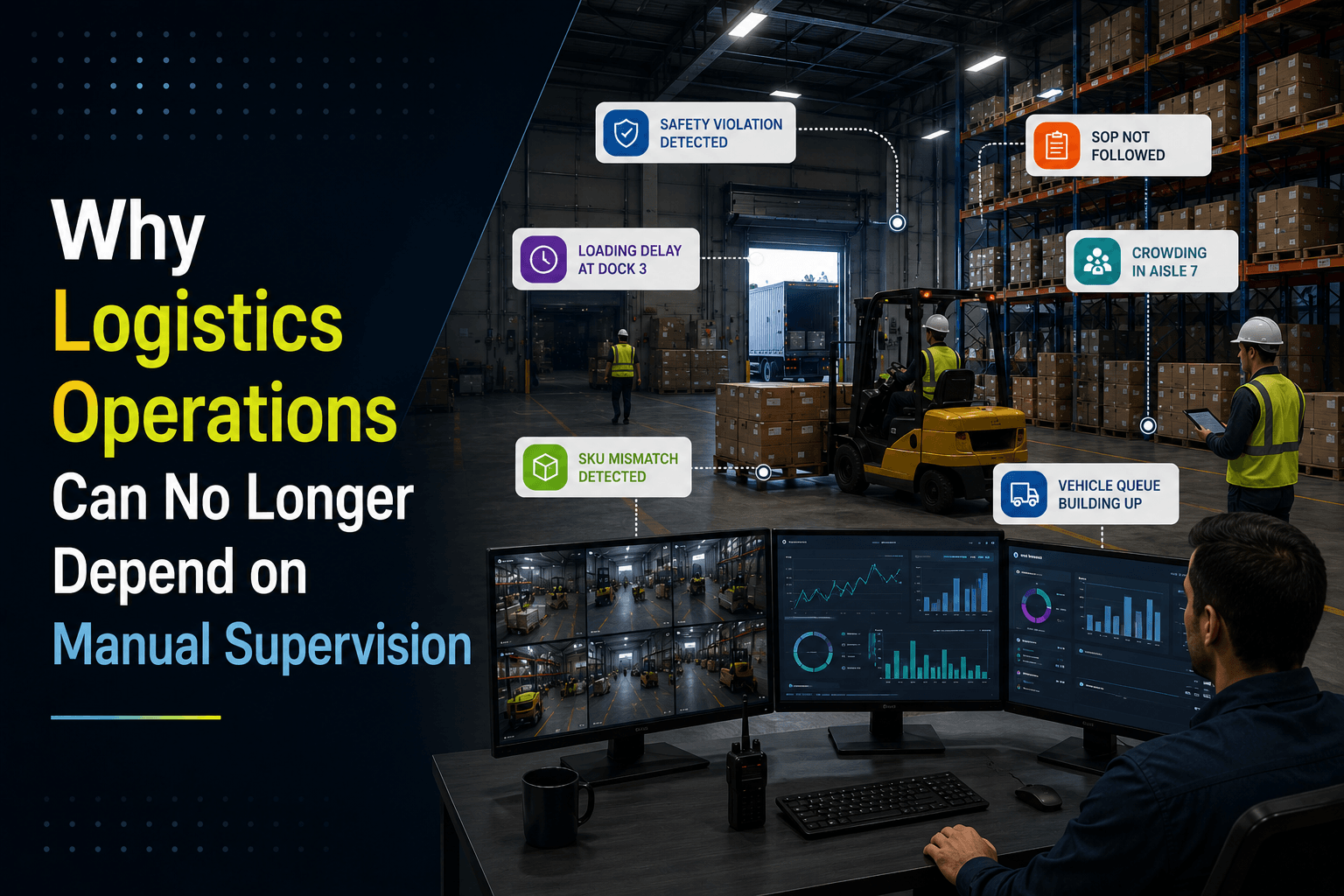
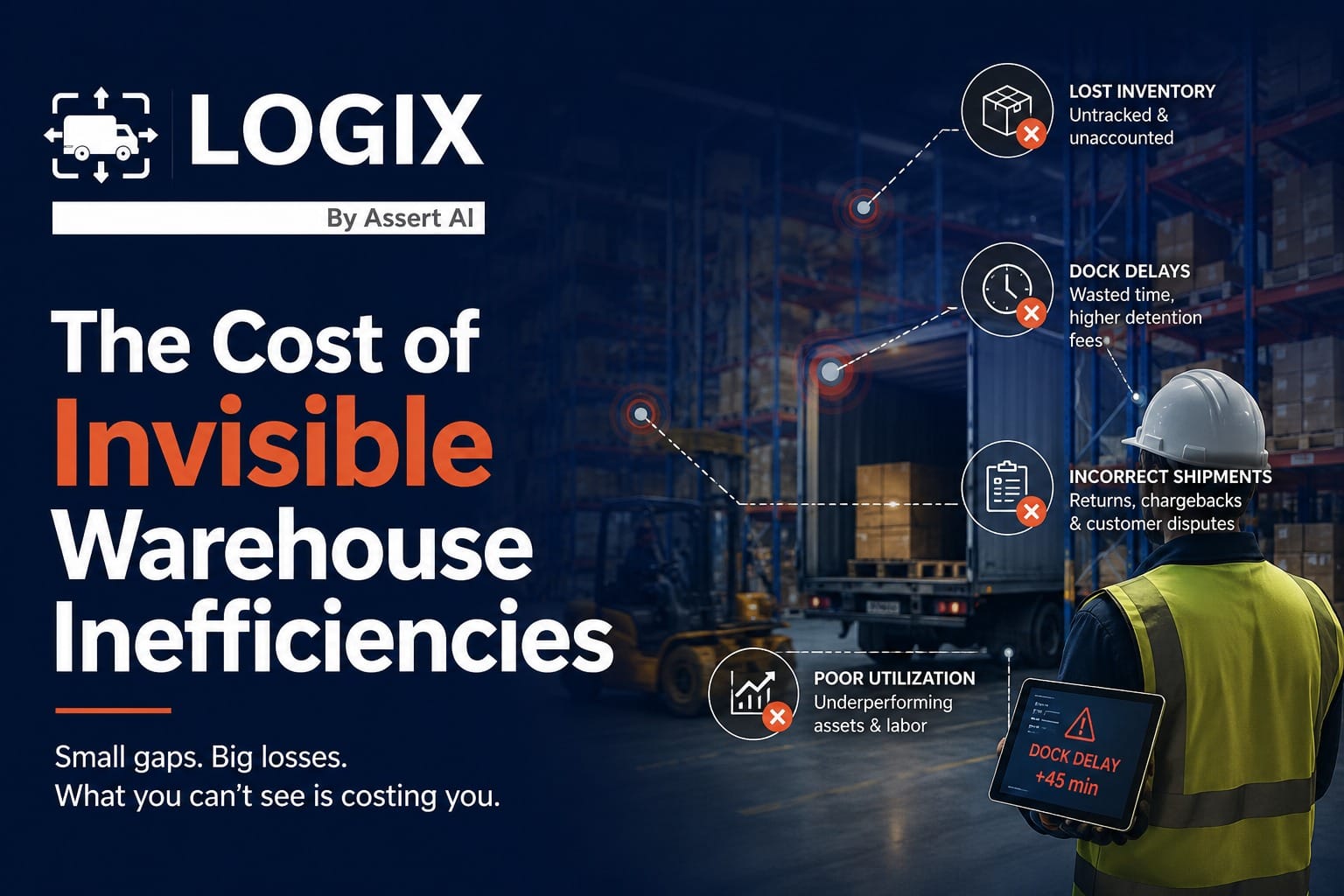
This gap creates real business pain. Incorrect loading, wrong pallets, missing items, delayed trucks, dock congestion, manual investigation and retailer deductions are not merely operational irritants. They affect revenue, customer trust, finance teams, supplier relationships and working capital.
Physical AI closes the gap between system records and physical reality.
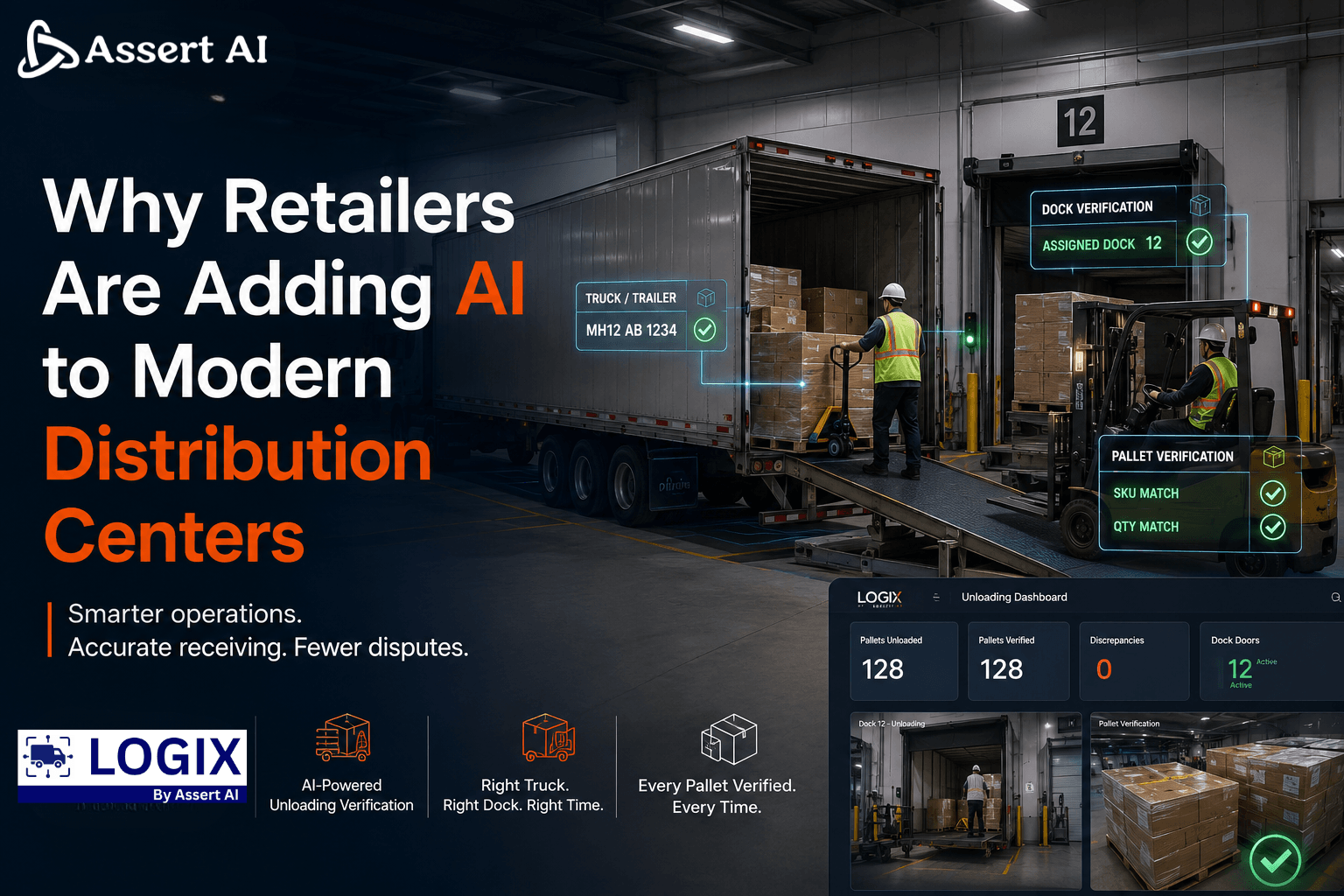
In a large distribution center or warehouse, AI-powered vision can monitor gate entry, dock assignment, pallet movement, loading sequence, SKU movement, forklift activity, truck turnaround time and shipment evidence. When integrated with ERP or WMS data, it can identify whether the physical operation matches the digital plan.
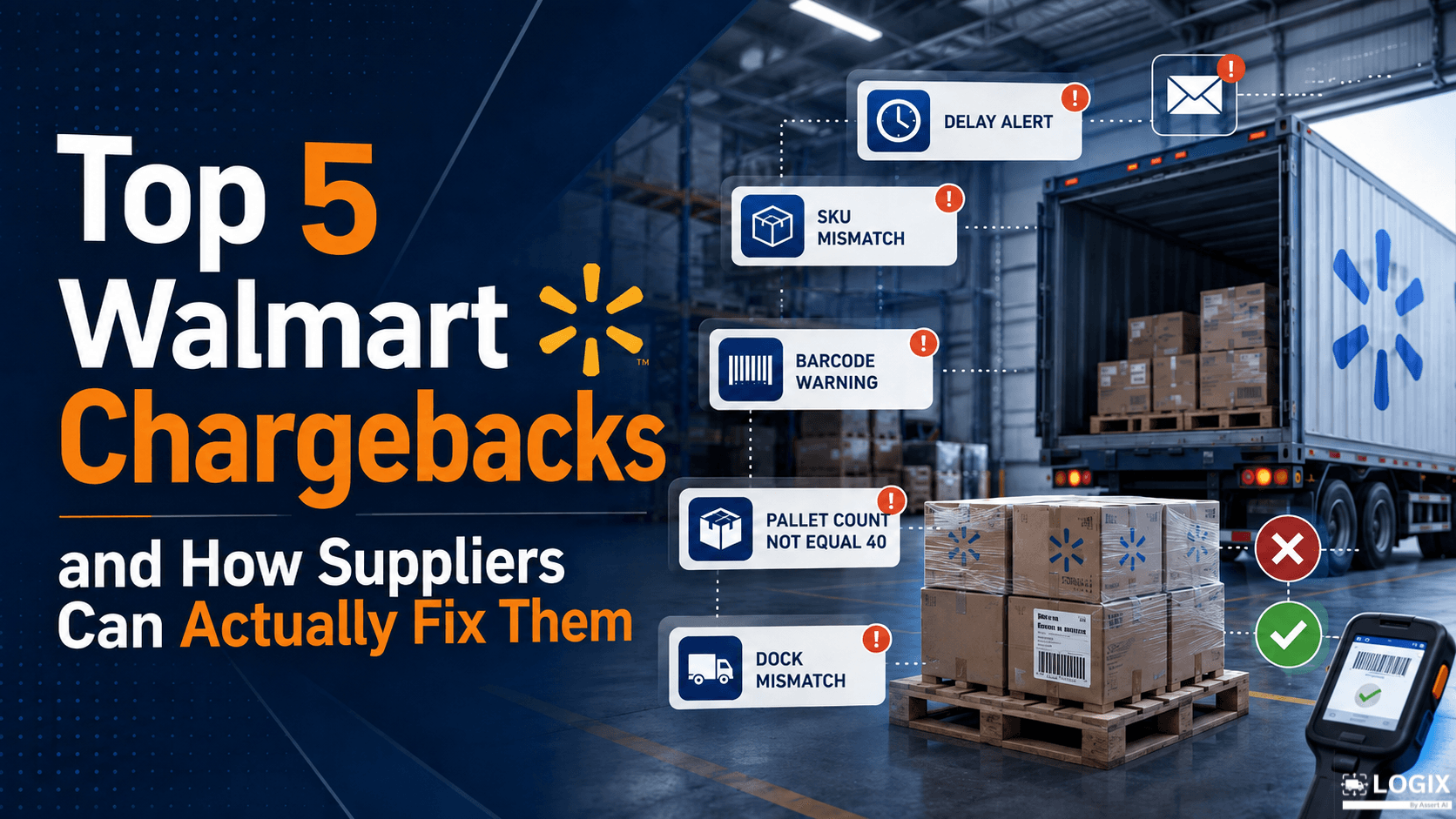
A practical example is the digital shipping certificate: visual proof that the right pallet, SKU or shipment moved into the right truck at the right time. For suppliers and distributors dealing with retailer chargebacks or deductions, this kind of evidence can transform dispute resolution from subjective argument into documented fact.
With this, the logistics value of Physical AI has shifted from visibility to verifiability.
Physical AI in infrastructure, government and smart cities
Governments and infrastructure operators face a different scale of complexity. They manage roads, railways, public facilities, utilities, traffic networks, civic spaces, airports, public safety systems and high-density urban environments. These environments are too large and dynamic for manual monitoring alone.
Computer vision and cameras can support traffic flow analysis, incident detection, crowd monitoring, illegal parking detection, public asset monitoring, waste dumping detection, perimeter protection, construction safety and emergency response. When combined with command centers and GIS systems, AI-powered visual intelligence helps authorities understand what is happening across distributed assets.
The governance challenge is equally important. Public-sector AI must be designed with privacy, accountability, transparency and proportionality. Not every use case requires identity recognition. Many high-value applications can operate on object, activity, vehicle, zone or event-level intelligence without identifying individuals.
For governments, the power of Physical AI lies in moving from reactive administration to proactive infrastructure intelligence.
Physical AI in hospitality, resorts and facility management
Hospitality and facility management may not appear as industrial as manufacturing or logistics, but they are highly physical operations. Service quality depends on queues, crowding, response times, safety, access control, cleaning cycles, maintenance, visitor movement and staff deployment.
In resorts and water parks, computer vision can monitor queue length, crowd density, safety zones, unattended areas, service delays and operational bottlenecks. Corporate and residential real estate, AI-powered cameras can strengthen access control, improve visitor tracking, detect unusual crowd formation, monitor parking, support emergency response and help facility teams deploy resources more effectively.
In resorts, water parks, corporate campuses and residential facilities, AI-powered visual intelligence can support guest experience and NPS improvement by monitoring queues, crowding, service delays, access points and safety-sensitive areas in real time.
The value here is not surveillance for its own sake. It is service intelligence. If residents, visitors, employees or guests experience delays, unsafe conditions or poor response times, facility teams need live visibility rather than after-the-fact complaints. This is where Physical AI or computer vision can quietly improve human experience.
Beyond cameras: Wearables, drones, robots and sensor fusion
While this article focuses on the AI Camera, the broader Physical AI ecosystem extends well beyond cameras.
Wearables can monitor worker location, posture, fatigue, exposure, falls and environmental risk. Drones can inspect wind turbines, rooftops, solar farms, pipelines, warehouses, rail yards and construction sites. Robots can perform repetitive movement, inspection, handling and cleaning tasks. LiDAR and radar can improve spatial understanding, especially in mobility and infrastructure applications. Thermal cameras can detect overheating, fire risk or equipment failure. IoT sensors can measure vibration, temperature, pressure, humidity and machine state.
The future will not belong to one sensor. It will belong to sensor fusion.
However, cameras have a unique advantage: they are already widely deployed, intuitive to interpret and rich in contextual information. A temperature sensor may detect heat, but a camera can show what is happening around the heat. A barcode scan may confirm a point event, but video can show the full sequence. A wearable may detect a fall, but an AI Camera can help understand surrounding conditions.
In the next phase, Physical AI systems will combine visual intelligence with other signals to create more complete situational awareness.
The Four Levels of Physical AI Maturity
Level 1: Observe
The system records what happened.
Level 2: Understand
The system identifies people, objects, movement, zones and events.
Level 3: Reason
The system understands workflow, sequence, risk, exception and business context.
Level 4: Act
The system triggers alerts, evidence, escalations, machine actions or enterprise workflows.
Most organizations are currently somewhere between Level 1 and Level 2. High-ROI enterprise deployments are increasingly moving into Level 3. The future of Physical AI will be defined by Level 4, where AI not only sees and understands the physical world but safely participates in operational decisions.
Physical AI vs Generative AI
Generative AI and Physical AI are not competing categories. They are complementary. One works primarily with digital knowledge; the other works with real-world events.
| Generative AI | Physical AI |
| Works with text, code, images and documents | Works with people, objects, vehicles, machines and spaces |
| Responds to prompts | Responds to real-world events |
| Improves knowledge work | Improves operational work |
| Generates content | Generates action, evidence and operational intelligence |
| Lives mainly in software interfaces | Lives in factories, warehouses, buildings, cities and machines |
| Helps people think and communicate | Helps organizations see, verify and act |
As more organizations adopt AI, the next challenge is embedding AI inside real workflows instead of simply access to models. This is exactly where Physical AI becomes important. It is not another tool sitting outside operations but embedded inside the workflow itself.
Why edge AI matters for Physical AI
Physical-world intelligence often requires low latency, reliability, privacy and cost control. Sending every video stream to the cloud is not always practical, desirable or compliant. Edge AI addresses this by processing data close to where it is generated: inside the facility, on a local server, on an edge GPU or directly on a device.
For AI Camera deployments, edge processing can support:
- faster real-time alerts;
- reduced bandwidth costs;
- improved privacy and data control;
- local resilience during network disruption;
- easier compliance for sensitive environments;
- scalable multi-site rollout.
This is why the future of Physical AI will likely be hybrid: training and management may use cloud infrastructure, while inference often happens at the edge.
What Assert AI has learned from real deployments
Across deployments in wind blade manufacturing, large distribution centers and warehouses, resorts and water parks, facility management for corporate and residential real estate, food and beverage plants, cement facilities, steel operations and bottling lines, one lesson is consistent: Physical AI delivers ROI when it is tied to a clearly defined operational problem.
The strongest deployments usually share five characteristics:
- The process is visible. Cameras or sensors can reliably observe the activity that matters.
- The problem is measurable. The business can quantify cost, delay, error, rejection, downtime, deduction, risk or manual effort.
- The environment is bounded. A dock, line, station, gate, lobby, turbine blade area or production zone offers defined context.
- The action is clear. The system knows whether to alert, escalate, block, record, verify, count, compare or report.
- The AI integrates with operations. Value increases when vision intelligence connects with ERP, MES, WMS, BMS or command center workflows.
This is why Physical AI should be deployed as operational infrastructure.
The next six years: From enterprise advantage to everyday infrastructure
The next six years will likely define how Physical AI moves from enterprise deployments into everyday life. Cameras, sensors and AI models will become embedded in vehicles, homes, hospitals, retail stores, schools, public transport, eldercare, airports, sports venues, industrial sites and civic infrastructure.
The transition will not happen evenly. Some use cases will move faster because ROI is obvious: safety, logistics, quality, energy, traffic and infrastructure. Other use cases will require more careful public debate around privacy, governance and consent. The technology will become more capable, but trust will determine adoption.
The most important developments are likely to include:
- more powerful vision foundation models;
- better spatial intelligence and world models;
- safer edge AI deployment;
- lower cost of inference;
- stronger privacy-preserving video analytics;
- greater integration with enterprise software;
- AI agents that can coordinate physical workflows;
- robotics systems that perceive, reason and act more reliably.
Yet the practical future of Physical AI will not be built only by humanoid robots. It will be built by everyday cameras, sensors, machines and systems that become progressively more intelligent.
FAQ: Physical AI and AI Cameras
What is Physical AI?
Physical AI is artificial intelligence that perceives, understands and acts upon the physical world using cameras, sensors, robots, drones, wearables, edge devices and enterprise systems. It moves AI from purely digital tasks into real-world environments such as factories, warehouses, buildings, cities and infrastructure.
What is an AI Camera?
An AI Camera is a camera system that uses computer vision and AI models to interpret visual data. It can detect objects, people, movement, actions, risks, process deviations and business events. In many deployments, an existing general-purpose camera can become an AI Camera when connected to the right AI layer.
How is Physical AI different from Generative AI?
Generative AI creates content and answers prompts, while Physical AI understands real-world events and supports action. Generative AI is strongest in knowledge work; Physical AI is strongest in operations, safety, logistics, infrastructure and manufacturing.
Where is Physical AI used today?
Physical AI is used in manufacturing quality, warehouse automation, shipment verification, safety monitoring, traffic management, facility management, hospitality operations, infrastructure monitoring, energy, healthcare and smart city systems.
Why are general-purpose cameras important for Physical AI?
General-purpose cameras are important because they are already installed in many facilities. By adding computer vision and edge AI, organizations can convert existing visual infrastructure into operational intelligence without replacing every device.
How can Physical AI improve manufacturing quality?
Physical AI can improve manufacturing quality by monitoring production processes in real time, detecting defects, identifying missing components, verifying process steps, supporting first-pass yield improvement and creating visual traceability for quality teams.
How can AI Cameras improve guest experience in hospitality and facility management?
AI Cameras can improve guest experience by monitoring queues, crowd density, service delays, access points, safety-sensitive areas and facility operations in real time. This helps hospitality and facility teams respond faster, allocate staff better and improve visitor or resident experience.
The future of AI will be seen before it is spoken
Generative AI made artificial intelligence visible to the public because it could talk. Physical AI will make artificial intelligence indispensable to the real world because it can see, understand and act.
The next wave of AI will not be confined to chat windows, dashboards or documents. It will operate across production lines, loading docks, buildings, roads, resorts, hospitals, utilities, machines and cities. It will help organizations detect what humans miss, verify what systems assume, and act before small problems become expensive failures.
For enterprises, governments and industrial leaders, the message is clear: the camera network is no longer just a security asset. It is becoming an intelligence layer for the physical world.
At Assert AI, this belief has shaped deployments across manufacturing, logistics, facility management, hospitality, infrastructure and industrial operations. The lesson is not that every problem needs AI. The lesson is sharper: where physical processes create measurable risk, cost or delay, Physical AI can convert visibility into action.
The future of AI will not only be generated in text.
It will be seen through cameras that finally understand what they are looking at.