For decades, Warehouse Management Systems (WMS) transformed warehouses from paper-based operations into digital ones. They centralized inventory, orders, receiving, picking, shipping, and replenishment, making modern retail supply chains possible.
Yet despite investments in Warehouse Management Systems, warehouse automation, robotics, RFID, and Transportation Management Systems (TMS), one costly challenge remains:
Warehouses know what should have happened. They often struggle to prove what actually happened.
That gap sits behind supplier disputes, inventory inaccuracies, retailer deductions, delayed replenishment, and countless hours spent investigating receiving exceptions. This is why leading retailers are adding Vision AI – not to replace existing systems, but to validate physical warehouse operations in real time.
Modern Warehouses Generate Data, But Not Physical Truth
Today’s distribution centers are filled with technology. ERP systems manage purchase orders, Advanced Shipping Notices (ASNs) tell receiving teams what to expect, Warehouse Management Systems record inventory transactions, while warehouse automation moves products faster than ever.
The problem is that nearly every system depends on someone recording an event correctly. WMS knows a pallet was scanned. It cannot verify whether the correct pallet was actually unloaded. An ERP knows what the supplier intended to ship. It cannot confirm whether the shipment physically arrived intact. A dock scheduling system knows Truck 27 was assigned to Door 14. It cannot determine whether the truck arrived on time, docked correctly, or completed unloading, unless a person changes the status manually on the software, and that cannot always be reliable or verified information.
Enterprise software manages digital transactions, while warehouses operate in the physical world. The gap between the two is where operational costs begin.
Why Receiving Is Retail’s Biggest Operational Blind Spot
Receiving appears simple: unload a trailer, verify quantities, update inventory, and move products into storage. In reality, it is one of the most labor-intensive and error-prone warehouse processes.
Receiving teams regularly encounter:
- Incorrect quantities
- Missing or extra pallets
- Wrong SKUs
- Mixed pallets
- Damaged products
- Incorrect labels
- Undocumented substitutions
When discrepancies occur, teams manually review paperwork, barcode scans, CCTV footage, supplier documentation, and employee recollections before determining responsibility.
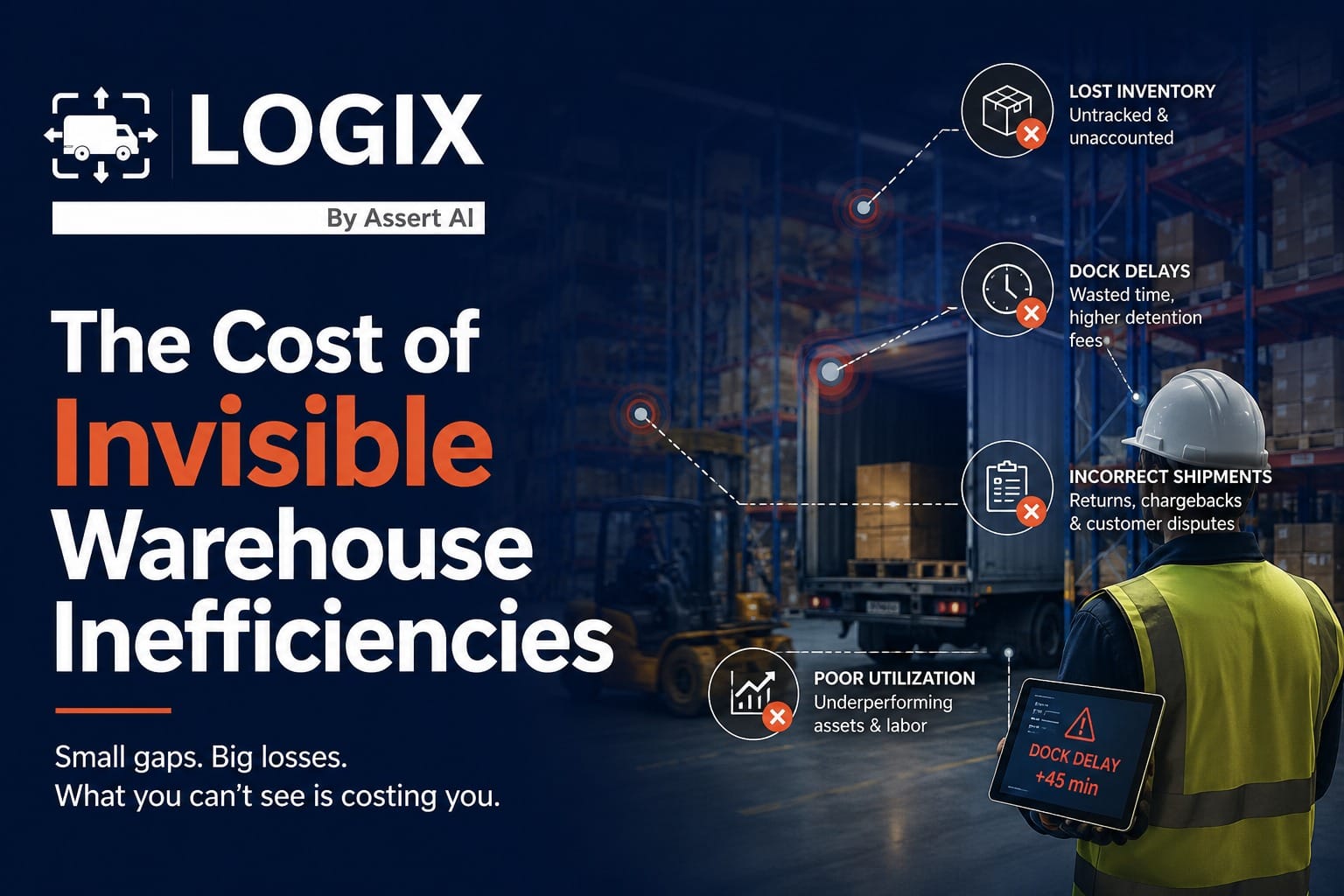
The operational fallout of receiving errors extends far beyond the loading dock, creating a ripple effect of inefficiency that compromises the entire retail supply chain. When inventory records become inaccurate at the point of entry, store replenishment cycles are inevitably disrupted, leading to potential stockouts and lost sales. This lack of data integrity forces procurement and finance teams into a reactive cycle of manual labor, where they must painstakingly reconcile invoices and process supplier deductions based on flawed evidence. Ultimately, these systemic failures drain management productivity, as operations leaders are pulled away from high-value throughput optimization to spend hours reconstructively investigating historical exceptions.
Warehouse Management Systems Record Transactions. Vision AI Verifies Reality.
One of the biggest misconceptions is that Vision AI replaces Warehouse Management Systems. A Warehouse Management System records what warehouse personnel scan or enter. Vision AI, on the other hand, independently verifies whether those activities actually occurred. For example, an ASN may state that 24 pallets are arriving. WMS records the pallets that were scanned.
Vision AI answers the questions WMS software cannot:
- Were all 24 pallets actually unloaded?
- Did every pallet belong to the correct purchase order?
- Was a pallet left inside the trailer?
- Was an unexpected pallet received?
- Were damaged cartons identified before inventory acceptance?
- Did unloading occur at the assigned dock within the scheduled appointment?
These are physical execution questions, and they require physical observation.
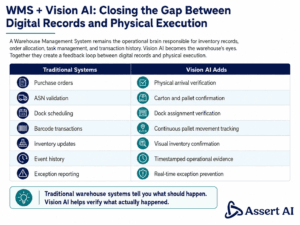
Instead of replacing enterprise software, Vision AI increases confidence in the information those systems already contain. For warehouse leaders, this distinction is critical. Existing technology investments continue delivering value while gaining an entirely new layer of warehouse visibility.
Why Leading Retailers Are Investing in AI for Logistics
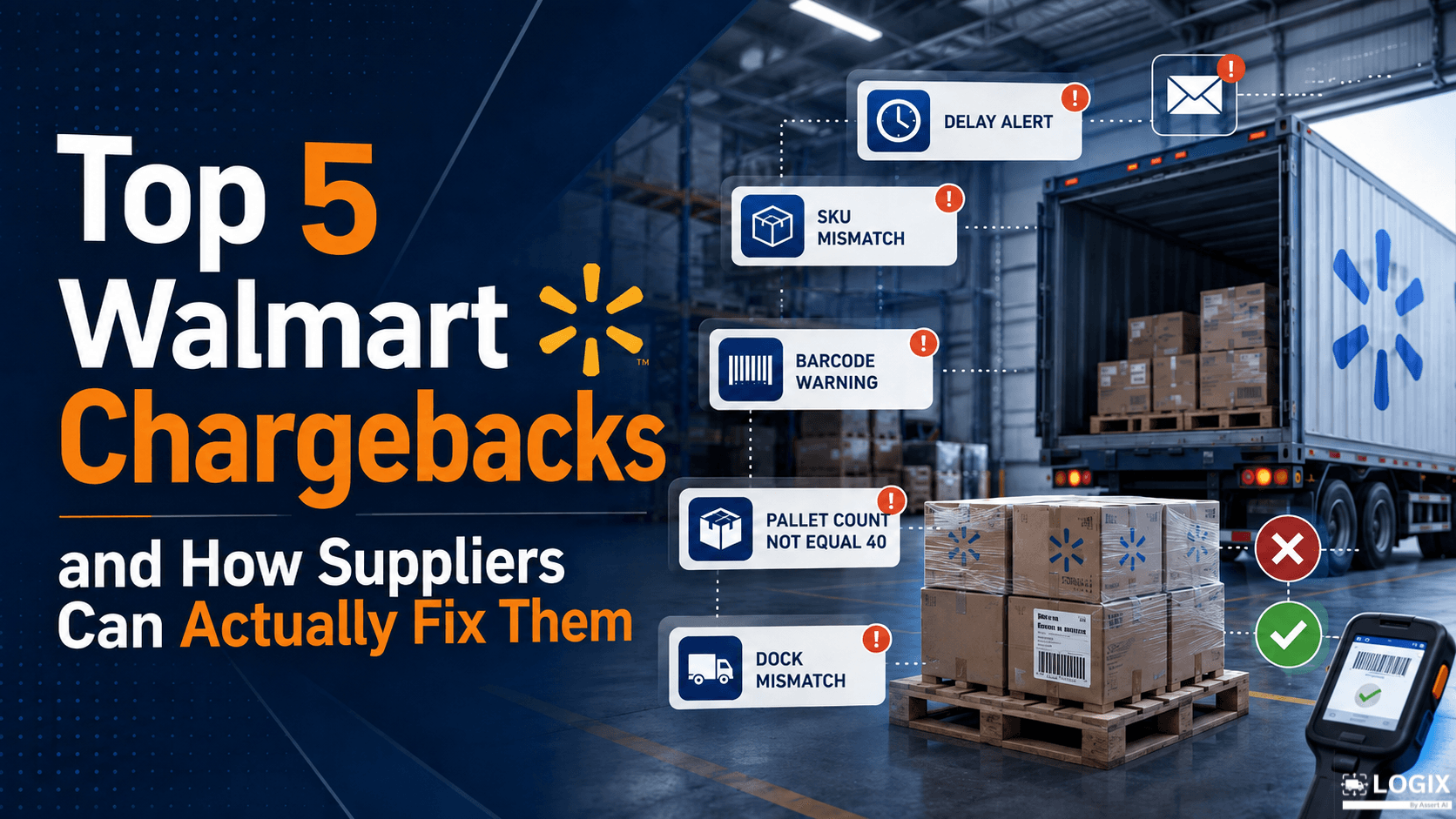
Retailers don’t issue deductions because they want to recover money from suppliers. They issue deductions because receiving errors create downstream operational costs. Every discrepancy can trigger investigations involving warehouse operations, inventory control, procurement, finance, supplier management, and customer service.
Industry estimates suggest retail returns alone exceed $800 billion annually in the United States, while inventory inaccuracies and receiving errors continue to cost retailers billions more through stockouts, excess inventory, and labor-intensive investigations. Instead of discovering issues after inventory has entered the warehouse, retailers are trying to use Vision AI to identify exceptions while receiving is still in progress.
Where Retailers Are Deploying AI Across Modern Logistics Operations
The direction of the industry is becoming increasingly clear.
Walmart has publicly shared how artificial intelligence now supports nearly every part of its supply chain—from intelligent pallet building and AI inspection tunnels to robotics, digital twins, and computer vision-assisted warehouse operations. The company’s newest distribution centers use AI to significantly reduce unloading time while improving inventory flow and operational efficiency.
Target has similarly expanded its investment in AI-driven inventory planning and supply chain decision-making, while retailers including Amazon, Kroger, Costco, and The Home Depot continue investing heavily in technologies that improve warehouse visibility, forecasting, and fulfillment accuracy.
Although each retailer approaches AI differently, the underlying objective remains remarkably consistent- to create distribution centers that don’t simply execute work, they understand what is happening inside them.
Where Assert AI Fits
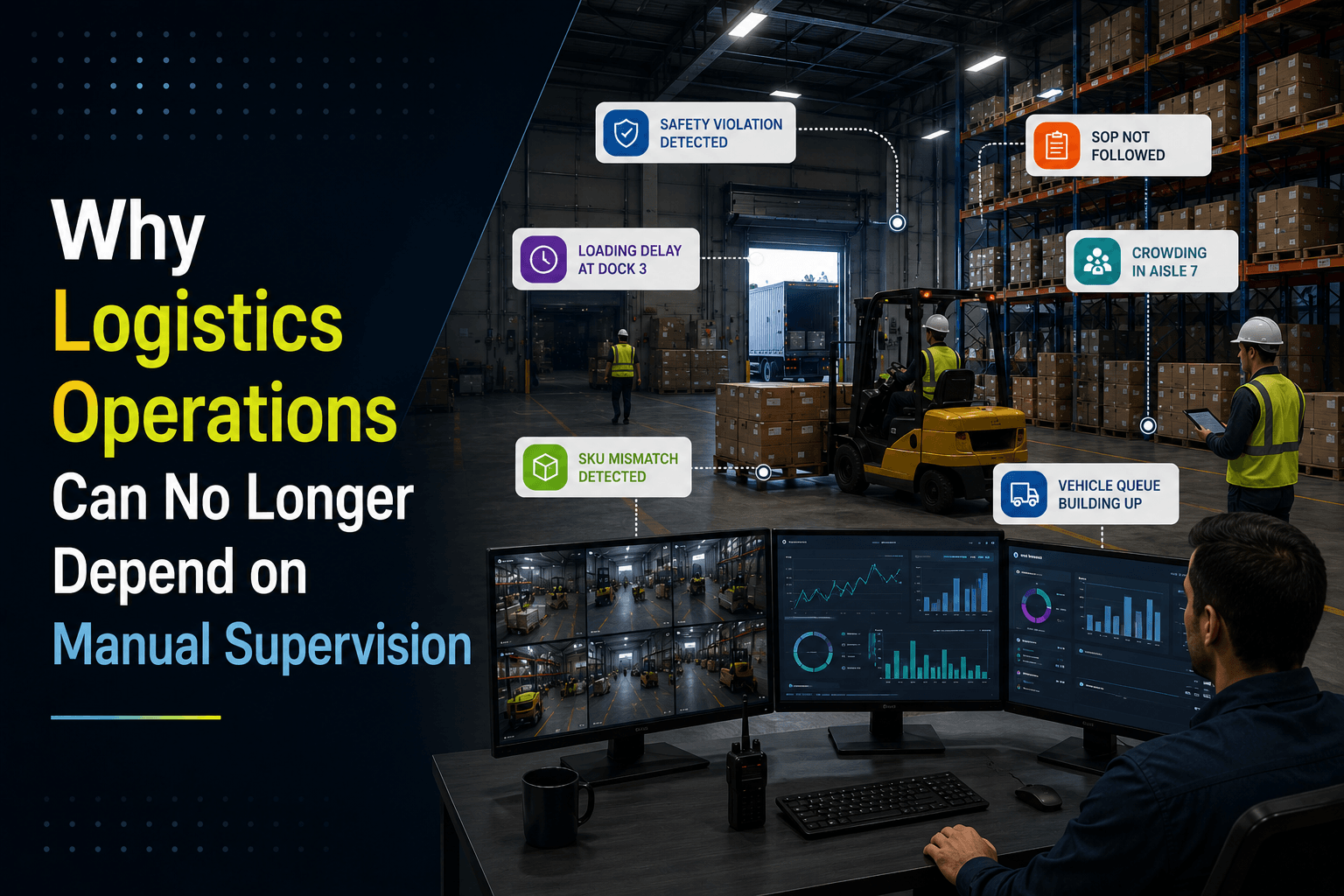
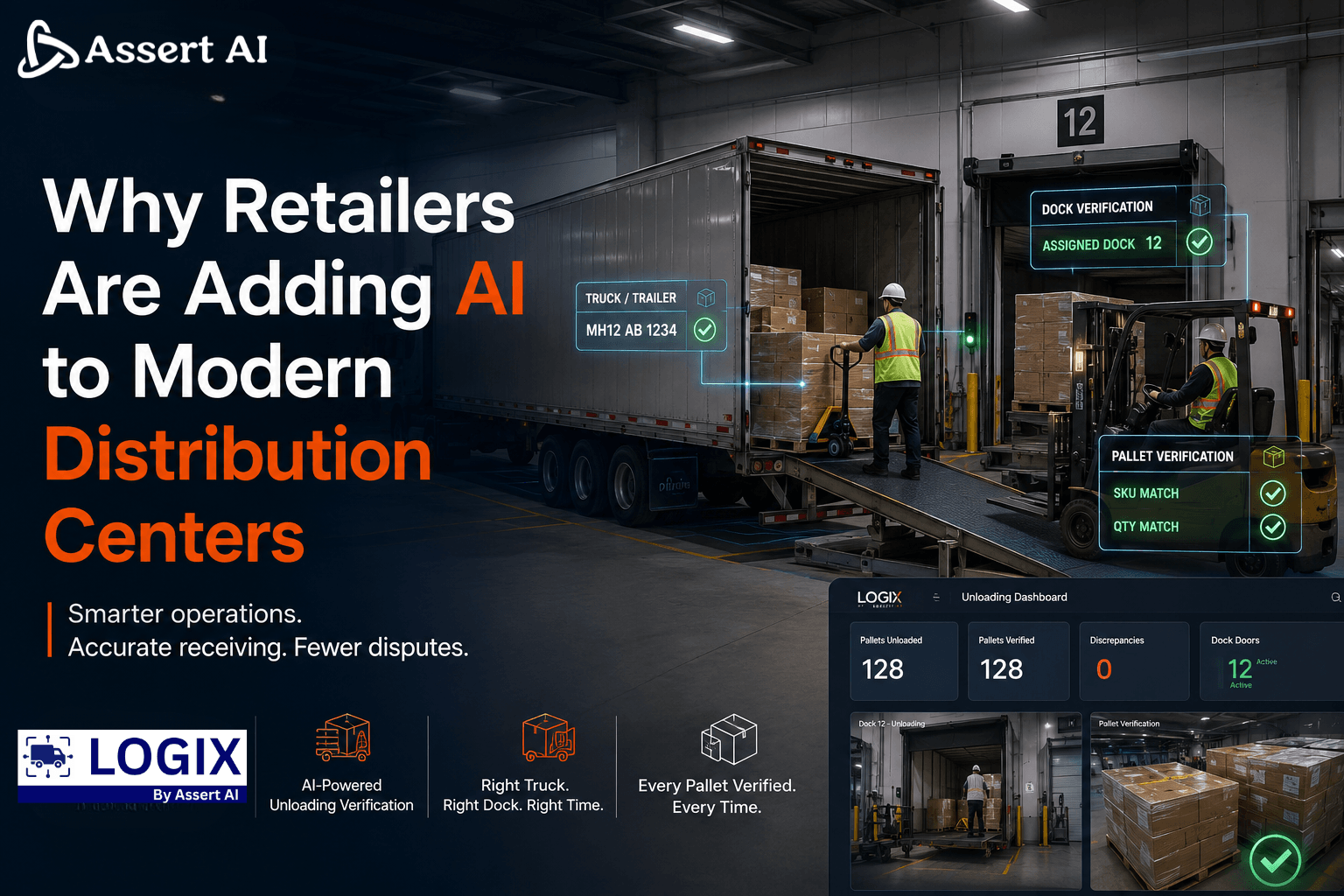
Most large retailers already operate hundreds or thousands of security cameras across their distribution centers. Assert AI transforms those cameras into an operational intelligence layer. Rather than replacing Warehouse Management Systems, Assert AI adds warehouse automation by continuously validating physical warehouse operations against digital records.
The platform enables retailers to:
- Verify inbound shipments automatically
- Detect receiving discrepancies in real time
- Improve inventory accuracy from the receiving dock
- Reduce supplier disputes with visual evidence
- Measure dock productivity and turnaround times
- Generate a complete digital audit trail for every inbound shipment
Instead of reviewing security footage after a problem occurs, warehouse teams receive immediate visibility into operational exceptions.
Smart Distribution Centers are Verifying Every Movement
Retailers have already invested heavily in Warehouse Management Systems, warehouse automation, robotics, and enterprise software. The next phase of warehouse innovation is not replacing those investments, it is making them more trustworthy. Vision AI provides the missing layer between digital intent and physical execution. ERP determines what should happen.
Warehouse Management Systems coordinate inventory. Warehouse automation moves products. Vision AI verifies that every movement actually occurred as expected. As distribution centers continue handling higher order volumes with tighter delivery windows, the ability to continuously reconcile physical operations with digital records will become a competitive advantage.
The warehouses of the future will not simply record transactions. They will understand, verify, and continuously improve the physical operations taking place inside them. That is why Vision AI is rapidly becoming an essential layer in modern retail distribution, not replacing existing warehouse technologies, but making every one of them smarter, more accurate, and more accountable.