Modern warehouses are under more pressure than ever before. Faster dispatch timelines, rising retailer deductions, labor inefficiencies, shipment disputes, operational leakages, and increasing customer expectations are forcing logistics leaders to rethink how warehouse operations are monitored and controlled. For years, traditional logistics technology focused heavily on visibility. WMS platforms improved inventory records, RFID improved asset tracking, and dashboards improved reporting. Yet operational failures continued because visibility alone could not guarantee correct execution. The wrong cartons still got loaded, loading sequences still broke down, shipments still reached customers with damage, and dispatch delays still disrupted supply chains. This is where warehouse computer vision is fundamentally changing logistics operations. Instead of simply helping warehouses see what happened, AI-powered computer vision is now being used to ensure the right operational actions happen consistently, correctly, and in real time.
For more than six years, Assert AI has been deploying warehouse computer vision solutions across logistics and warehousing environments to strengthen safety and operational discipline using existing CCTV infrastructure. Initially, adoption focused on high-frequency operational risks where ROI was immediate and measurable.
Warehouses began using computer vision for:
- PPE compliance monitoring
- MHE activity monitoring
- Forklift overspeeding alerts
- Human and MHE proximity alerts
- Unsafe zone detection
- Dock door open/shut monitoring
- Fire and smoke alerts
- Worker activity monitoring
- Equipment utilization tracking
These deployments solved important operational challenges while proving that AI systems could continuously monitor warehouse environments more consistently than manual supervision ever could. But as the technology matured and warehouse expectations evolved, logistics leaders realized something much bigger.
If AI can continuously monitor safety behavior, it can also continuously validate operational execution.
That realization is now driving the next phase of AI adoption in logistics.
The Real Problem in Warehousing Is Not Visibility. It Is Execution Deviation.
Most warehouse inefficiencies are not caused by a complete operational breakdown. They are caused by small process deviations that quietly accumulate across loading docks, staging zones, dispatch operations, pallet movement, and warehouse workflows.
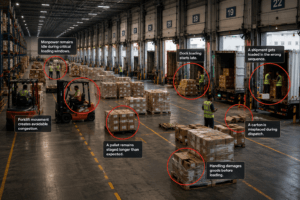
A shipment gets loaded in the wrong sequence.
A carton is misplaced during dispatch.
A pallet remains staged longer than expected.
Handling damages goods before loading.
Dock loading starts late.
Forklift movement creates avoidable congestion.
Manpower remains idle during critical loading windows.
Individually, these incidents appear minor. At scale, they become margin leakage, retailer penalties, delayed dispatches, SLA failures, and customer dissatisfaction.
Traditional logistics technology systems were never designed to control these operational gaps in real time. A WMS can confirm that a scan happened. RFID can confirm where a tagged object is. ERP systems can define workflows and expected processes. But none of these systems can continuously verify whether warehouse execution physically happened correctly on the ground.
That is where AI in logistics is evolving rapidly.
Warehouses are no longer deploying computer vision simply to improve awareness. They are deploying it to enforce operational correctness continuously across logistics workflows.
Warehouse Computer Vision Is Becoming an Execution Assurance Layer
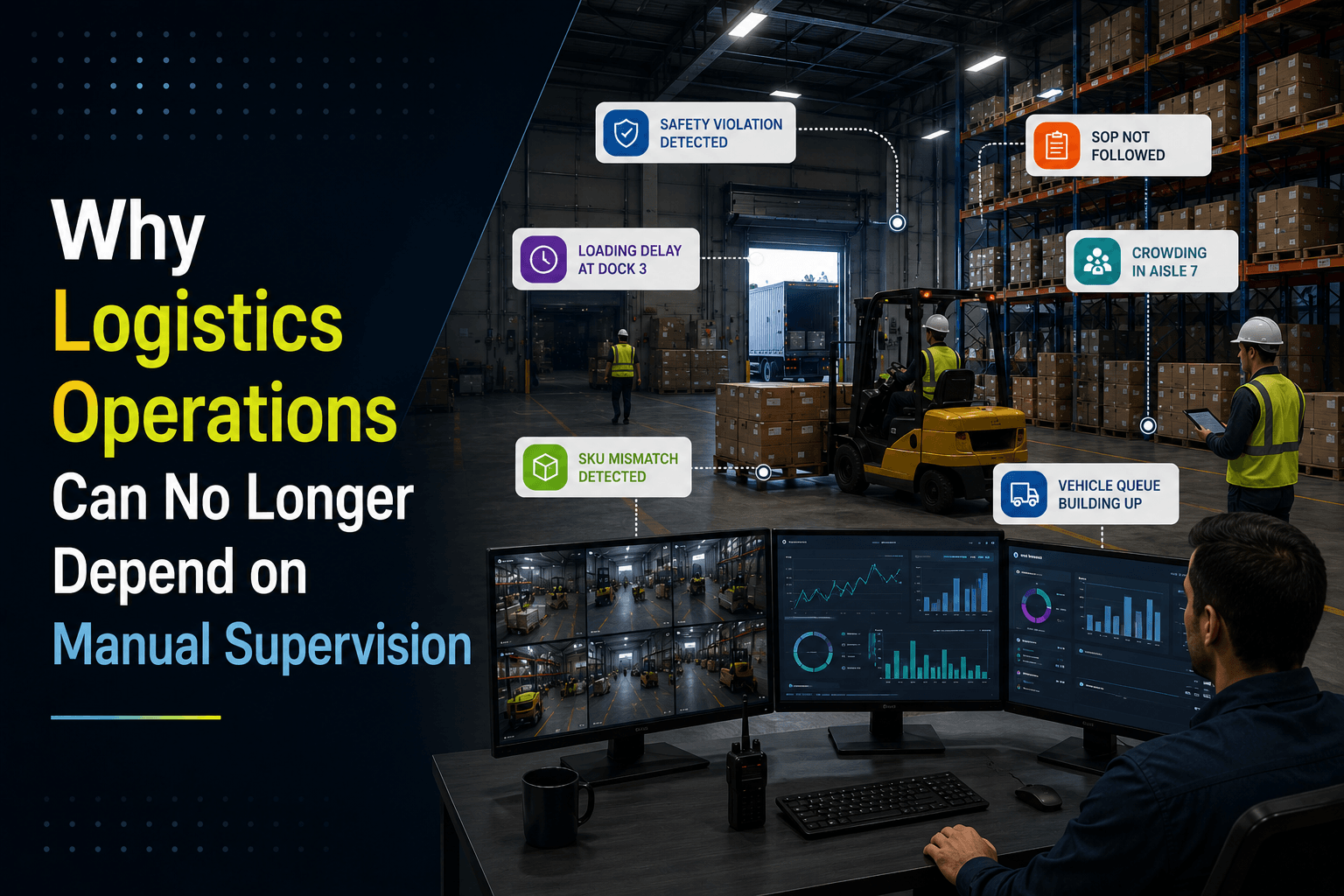
Modern warehouse computer vision systems are increasingly being used as an operational enforcement layer that continuously validates whether warehouse processes are being followed correctly while execution is happening.
This changes the objective completely.
The goal is no longer:
“Identify problems later.”
The goal is:
“Prevent incorrect execution before it affects shipments, customers, or revenue.”
Instead of reviewing incidents after dispatch, operations teams can now intervene during execution itself. That means ensuring:
- the correct carton is loaded every time
- loading sequence is followed correctly
- handling complies with SOP
- staging delays are identified before dispatch impact occurs
- shipments are not damaged before dispatch
- dock operations remain synchronized
- manpower utilization remains efficient
- MHE movement follows operational rules
- loading activity begins within expected timelines
- dispatch compliance is continuously maintained
This is one of the most important shifts happening inside modern logistics technology today.
Warehouses are moving from reactive supervision toward continuously validated operations.
Real-Time Loading Verification Is Becoming Critical for Warehouse Operations
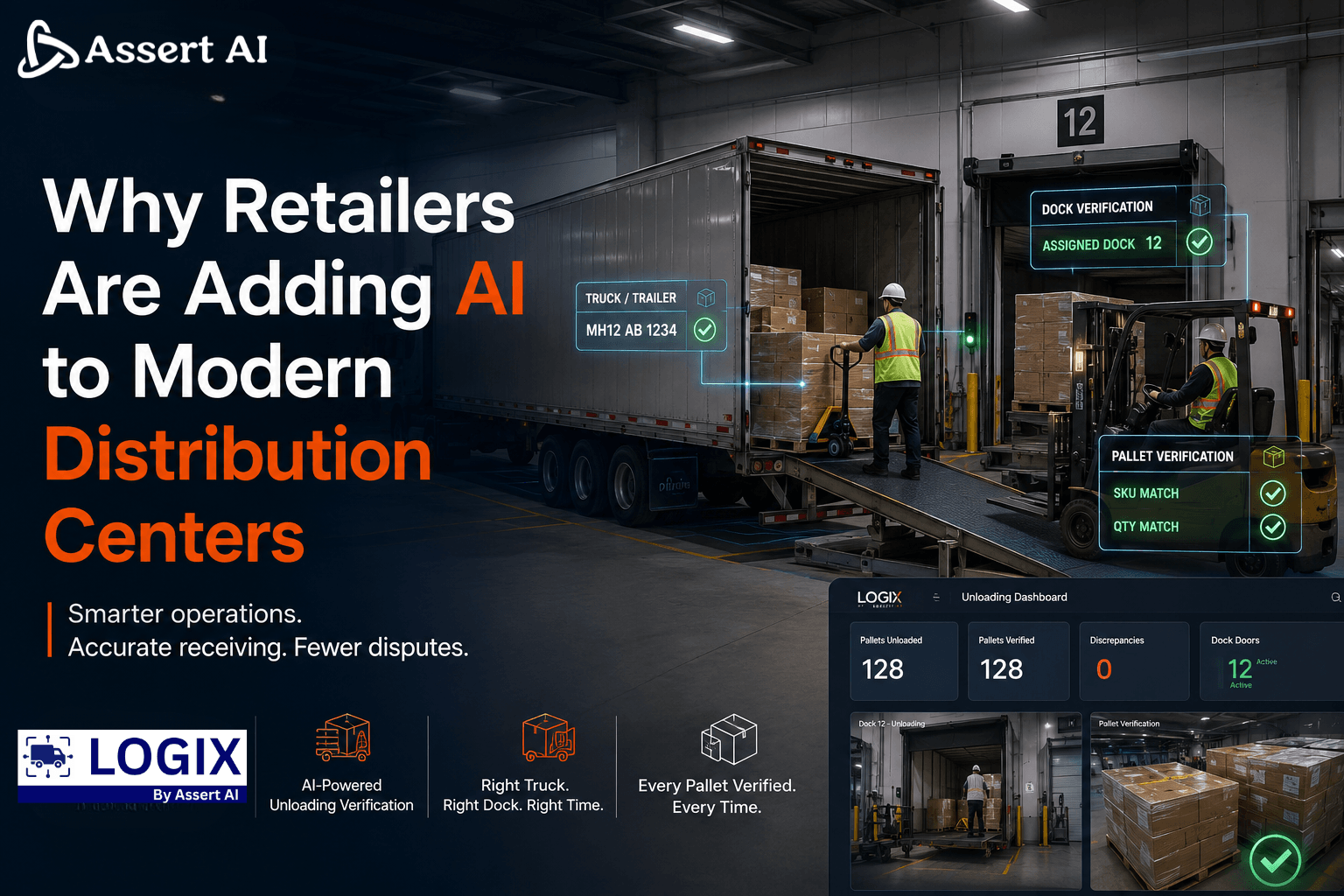
One of the most valuable applications of AI in logistics today is real-time loading verification.
Historically, loading operations depended heavily on manual supervision, paperwork checks, scan confirmation, and post-dispatch reconciliation. But these systems still left operational blind spots because they could not continuously validate physical execution.
A shipment may exist correctly inside the system. But was the correct shipment physically loaded?
Was the loading sequence followed?
Did handling remain compliant throughout loading?
Did unauthorized activity happen near outbound inventory?
Was the shipment already damaged before dispatch?
Did loading delays create downstream dispatch bottlenecks?
Computer vision enables warehouses to answer these questions in real time while corrective action is still possible.
This is particularly important for operations facing:
- retailer deductions
- shipment disputes
- proof-of-shipment challenges
- dispatch inconsistencies
- operational leakage
- customer SLA penalties
Because once a shipment leaves the warehouse, correction becomes expensive and often impossible. Execution assurance during loading is significantly more valuable than post-event investigation.
Inventory Tracking With Computer Vision Goes Beyond Location Tracking
Traditional inventory tracking systems rely heavily on barcode scans, RFID tags, handheld workflows, and manual process discipline. These systems remain extremely useful, but they primarily answer one question:
“Where is the object?”
Computer vision answers something operationally far more important:
“Did the process happen correctly?”
This distinction is becoming increasingly important inside modern warehousing and logistics operations.
With RFID, a warehouse may know that a tagged pallet reached the dock.
With warehouse computer vision, operations teams can validate:
- whether the pallet was handled correctly
- whether loading sequence was maintained
- whether staging exceeded expected timelines
- whether loading activity followed SOP
- whether shipment handling introduced visible damage
- whether dispatch execution aligned with expected workflows
The operational value comes from contextual understanding. The system is no longer only tracking movement. It is validating execution behavior continuously. That is why many logistics operators are now viewing computer vision not as another monitoring tool, but as an operational intelligence layer sitting on top of warehouse workflows.
AI in Logistics Is Now Expanding Into Revenue Protection
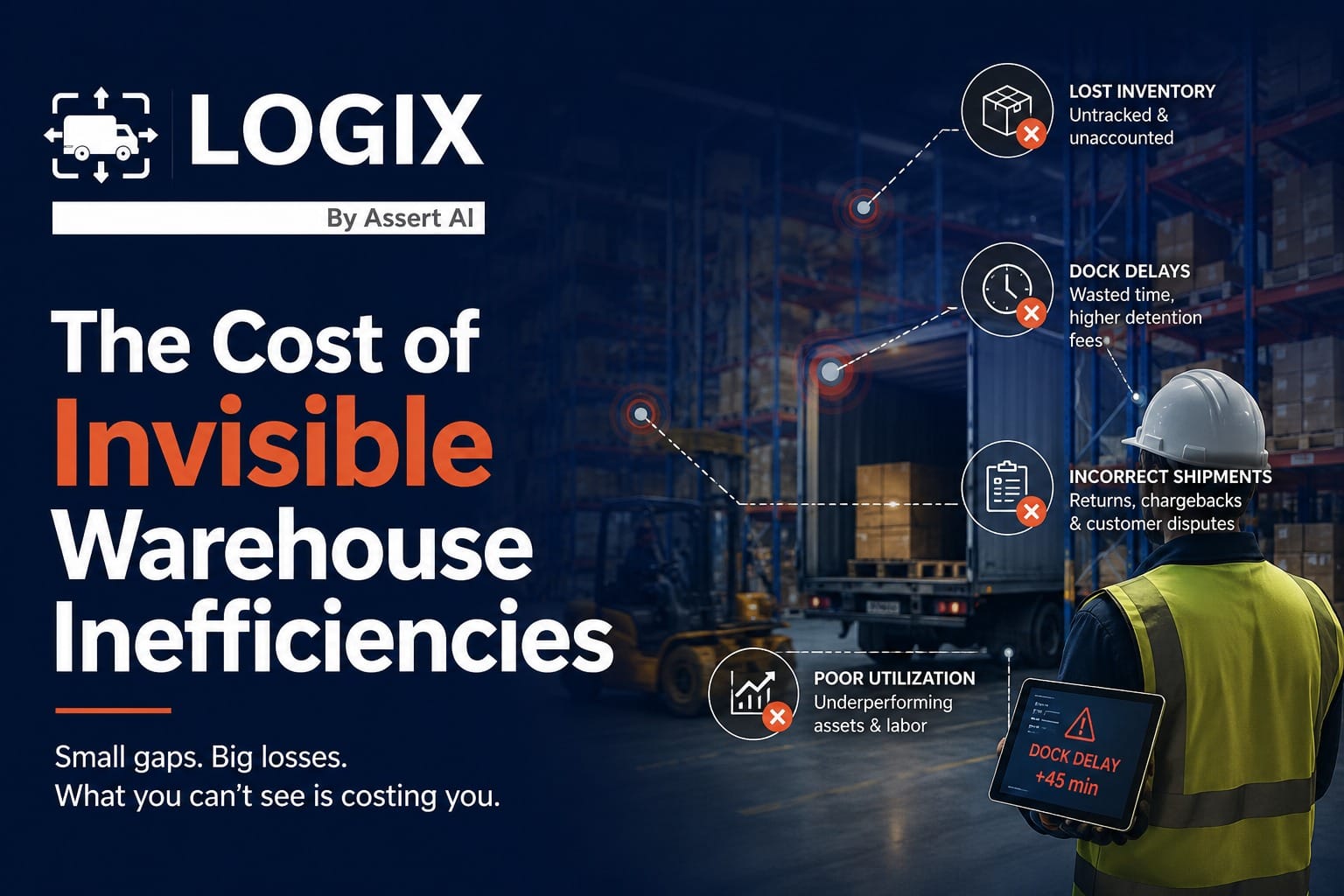
One of the biggest reasons warehouses are moving beyond basic monitoring toward advanced process compliance and execution assurance is because operational mistakes directly impact revenue. A single incorrect shipment or process deviation may appear manageable in isolation, but at scale, repeated execution inconsistencies quietly erode profitability and operational efficiency. Incorrect loading, missed SOP steps, dispatch delays, handling issues, or staging bottlenecks can lead to retailer deductions, rejected shipments, higher reverse logistics costs, reduced warehouse throughput, and ultimately damaged customer relationships. For logistics leadership, the challenge is no longer just operational visibility, but ensuring execution happens correctly and consistently across every dock, shift, operator, and shipment before small process deviations turn into large financial losses.
This is why existing warehouse clients who initially adopted AI for safety monitoring are now expanding deployments toward operational compliance and process assurance.
The focus is shifting from:
“Can AI detect violations?”
to:
“Can AI continuously ensure warehouse execution happens correctly?”
That is a very different operational mindset.
And it is rapidly becoming one of the most strategic applications of logistics technology.
The Real Value of Computer Vision Is Consistency at Scale
Warehouses today are extremely dynamic environments with multiple docks, shifts, operators, forklifts, staging zones, loading teams, and dispatch schedules running simultaneously. Maintaining process consistency across such complexity using only manual supervision is almost impossible.
This is where computer vision creates value that extends beyond human capability.
Not because humans cannot supervise operations, but because humans cannot continuously monitor every operational activity across every zone, every shift, and every process simultaneously without fatigue, inconsistency, or missed deviations. AI systems can.
They can continuously observe, validate, alert, and enforce operational standards in real time across warehouse operations at a scale that manual monitoring simply cannot achieve consistently.
That is why warehouse computer vision is becoming one of the most important operational layers inside modern warehousing.
Warehouses Using AI Today Are Already Moving Beyond Basic Visibility
The most advanced warehouse operators are no longer using AI merely for monitoring or surveillance.
They are using it to improve operational correctness, enforce process discipline, reduce revenue leakage, strengthen dispatch accuracy, improve throughput, and ensure warehouse execution remains consistent at scale.
And this is where many warehouses are still missing the larger opportunity.
The real value of AI in logistics is not simply knowing what happened.
It is ensuring that:
- the right shipment leaves every time
- the right process is followed consistently
- the right handling standards are maintained
- the right operational actions happen before mistakes become losses
That is the shift already happening across modern warehousing operations.
And the warehouses embracing this transition today are building a level of operational control and execution consistency that traditional systems alone were never designed to deliver.