Your team picks the order perfectly. Every case is scanned, every pallet is wrapped, the trailer pulls away right on schedule. High fives all around. Then, three weeks later, a deduction shows up on your Walmart remittance. Shortage. Late delivery. Bad label. Something.
Nobody in your warehouse remembers anything going wrong, because, most of the time, nothing did. What actually broke down is the paper trail between what your systems say happened and what Walmart’s receiving dock says happened. Somewhere between your dock door and their dock door, the story stopped matching up.
This is the quiet, expensive problem behind most Walmart chargebacks: it’s rarely a warehouse failure. It’s a documentation gap. And it’s exactly the gap that modern logistics technology was built to close.
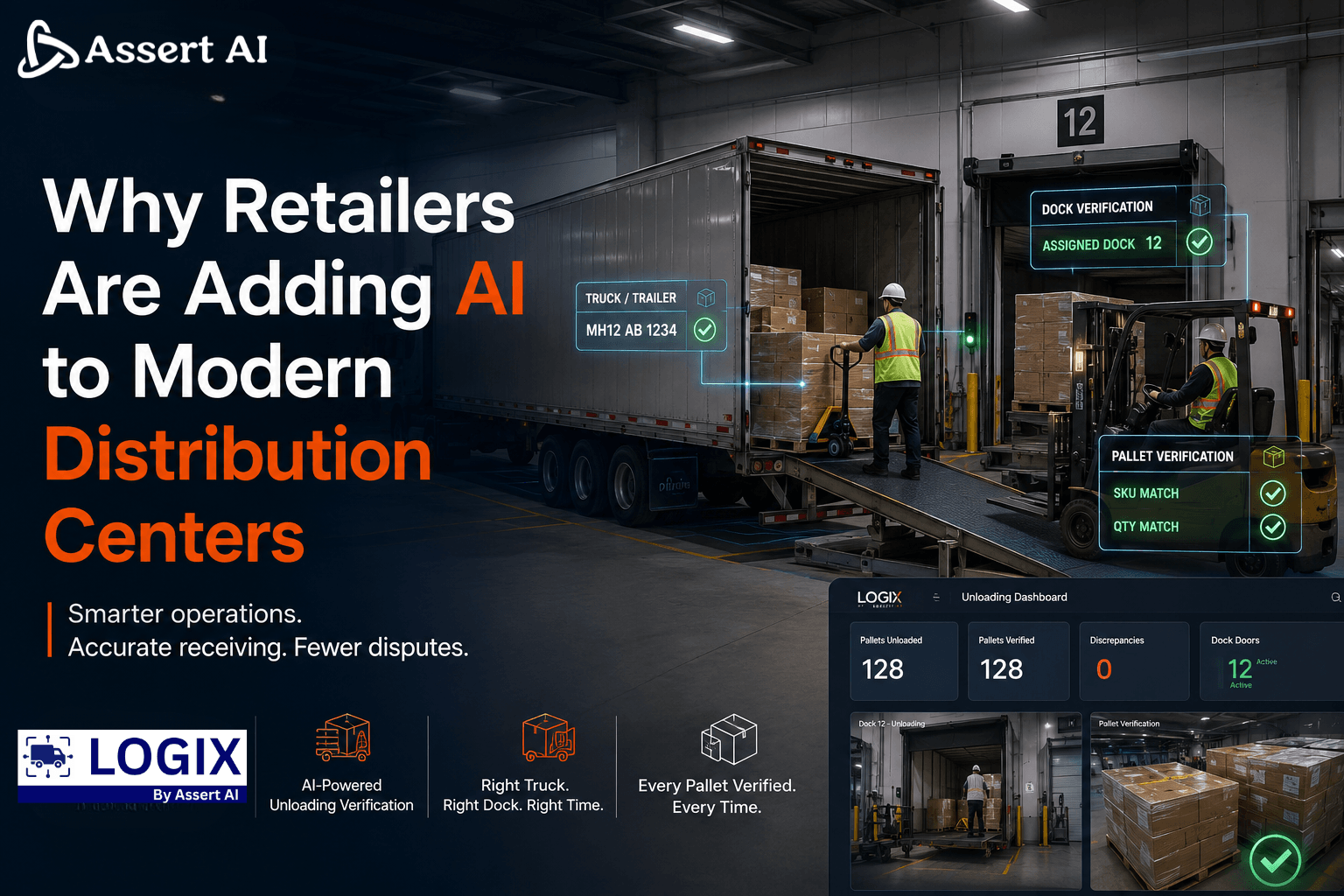
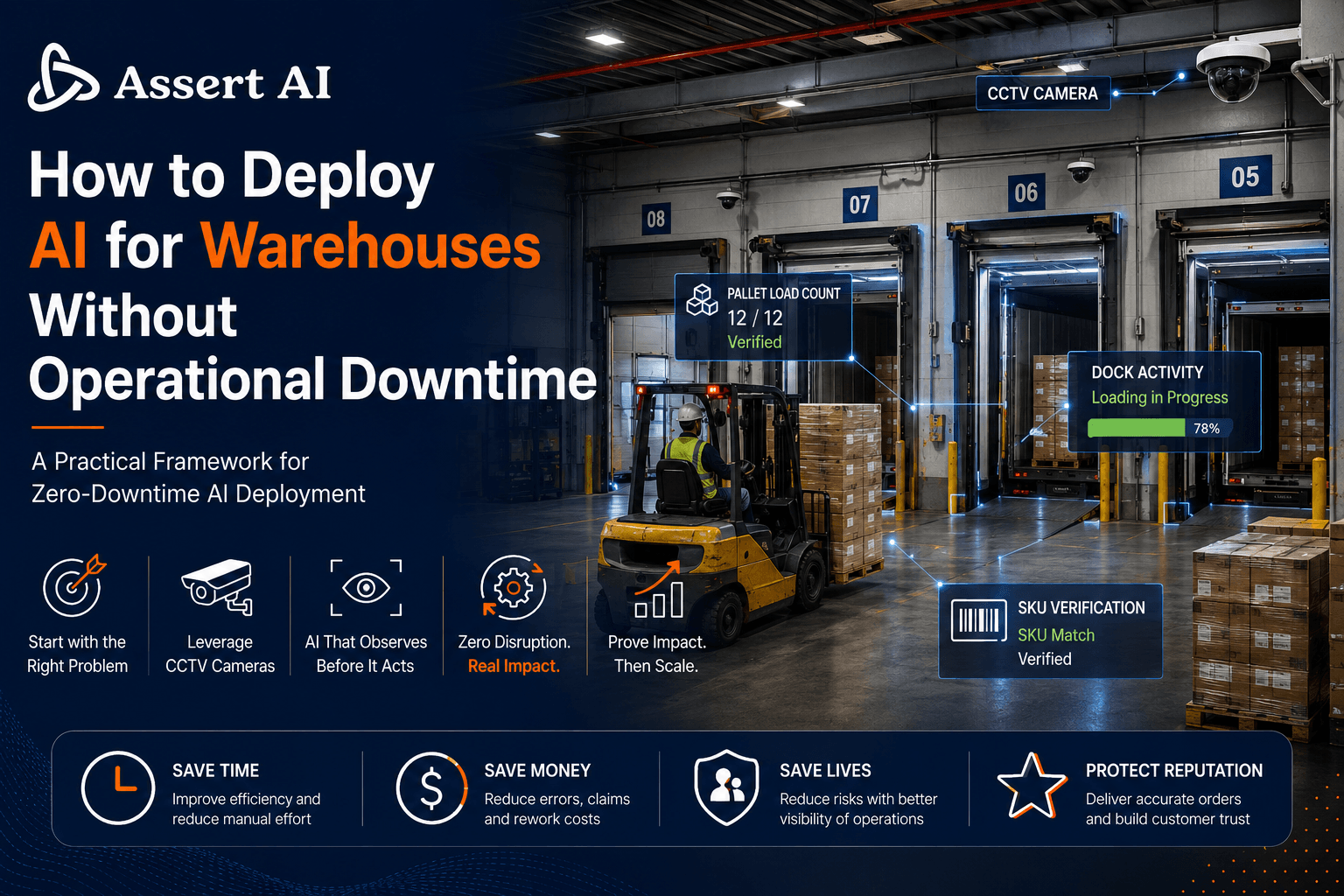
Instead of relying only on scans and system transactions after the fact, suppliers can now pair their existing WMS, ERP, and EDI records with camera-verified activity at the gate, dock, trailer, and the physical moment goods actually leave the building. Used well, AI for supply chain operations doesn’t only help you fight deductions after they land, but also help you catch the error before the trailer door ever closes.
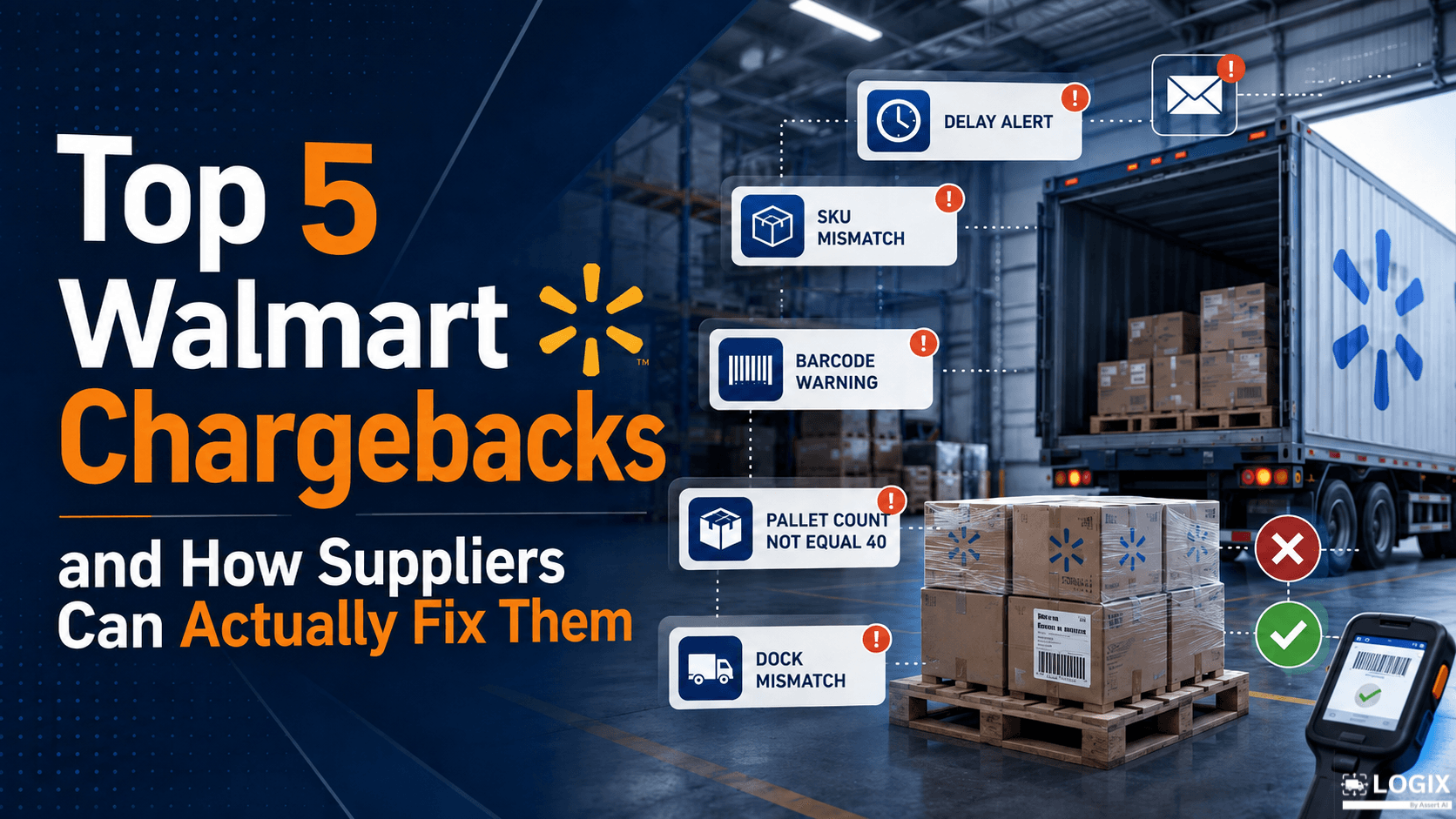
Below are the five chargeback categories that show up most often on supplier scorecards, why they’re so hard to dispute, and how a verification layer like LOGIX by Assert AI helps at each step.
A quick disclaimer before we dive in: deduction codes, fee structures, and program rules change. Always confirm current requirements through Walmart Supplier One, Retail Link, and your supplier agreement.
The Five Usual Suspects
- OTIF chargebacks — shipments that arrive outside the delivery window or don’t match the ordered quantity.
- Code 22, Goods Billed Not Shipped — invoiced merchandise that doesn’t show up in Walmart’s receiving records.
- SQEP labeling and barcode defects — missing, damaged, or unreadable labels on cartons and pallets.
- Shortage and damage deductions — missing cartons, missing units, or products reported damaged on arrival.
- Routing and shipping violations — the wrong carrier, dock, freight terms, or route was used.
Let’s take them one at a time.
1. OTIF Chargebacks: When “On Time” and “In Full” Don’t Agree With Each Other
Walmart’s On-Time In-Full program checks whether the right quantity arrived at the right place in the right window. Miss any part of that, and the deduction lands automatically.. no debate, no nuance.
Why it’s so hard to dispute: Your WMS says the order was picked complete. Your bill of lading says the carrier picked it up on schedule. Neither one proves that every single pallet actually rolled into the correct trailer. And if the carrier hits a delay after handoff, Walmart still just sees a late receipt. You see an on-time dispatch. Both of you are right, and both of you are stuck arguing from incomplete evidence.
How suppliers fix it: Connect the purchase order, the loading plan, and the physical loading event into one timeline.
This is where LOGIX earns its keep. It records which pallets entered the trailer, whether each one matched the expected order, when loading started and finished, when the trailer was sealed, and the exact moment the vehicle exited the yard. That’s an AI for supply chain application in its purest form- turning a loading dock into a source of timestamped, defensible truth.
LOGIX can’t fix a traffic jam on I-40. What it can do is prove, beyond argument, that the delay didn’t start on your dock.
2. Code 22: Goods Billed, but Apparently Never Shipped
Code 22 shows up when Walmart’s official supplier requirements are not met, and Walmart’s records say invoiced goods never arrived, even when you’re fairly confident they did.
Why it happens: An ASN transmitted a little late. A last-minute pallet swap that never made it into the paperwork. A pallet scanned into the system but physically loaded onto the wrong trailer. Multiple POs consolidated without clear labeling. A pallet staged, then somehow never actually loaded. Individually, these are small slips. Collectively, they’re the entire reason Code 22 exists.
The EDI transaction can be technically flawless while the physical shipment tells a different story or the shipment can be perfect while the supplier simply has no clean way to prove it.
How suppliers fix it: Keep the WMS and EDI platform doing what they do- generating and transmitting the ASN. Then add a layer that compares that ASN against what physically entered the trailer.
LOGIX, as a piece of logistics technology, integrates with your ERP to match each pallet’s SKU and barcode against the purchase order in real time, cross-checking observed pallet movements against the ASN, trailer, and loading timestamp, and it flags a missing or mismatched pallet before the doors get sealed, not after the deduction shows up. It also compiles the PO, ASN, loading events, and visual evidence into one searchable shipment record, so when a Code 22 dispute lands on your desk, you’re not reconstructing history from memory.
3. SQEP Labeling and Barcode Defects: Small Sticker, Big Headache
Walmart’s Supplier Quality Excellence Program covers barcode quality, carton labeling, packaging, and load compliance. Printing the label is the easy part. Proving it stayed correct, legible, and attached to the right carton is the part that trips people up.
Why it slips through: A label gets slapped on the wrong carton. It’s linked to the wrong PO. It’s damaged during staging or, embarrassingly often, covered by the stretch wrap meant to protect it. One pallet in an otherwise perfect load is missing its label entirely. Your WMS logs a successful scan, but a successful scan doesn’t guarantee a readable label made it onto the truck.
How suppliers fix it: Add label verification right at staging or the dock, where the label actually meets the pallet.
Camera-based AI for supply chain monitoring, the kind LOGIX runs, associates each observed barcode with its expected pallet, PO, dock, and trailer, flagging anything missing or unreadable before load-out. It doesn’t replace your label-printing software. It verifies that the physical label leaving the building actually matches the digital record describing it, and it keeps an image of the pallet and label as evidence if a labeling deduction shows up weeks later.
4. Shortage and Damage Deductions: The Ones You Can Practically Never Win Without Proof
Shortage claims involve missing cartons or missing units. Damage claims involve goods reported crushed, wet, or otherwise unsellable. Once a shipment crosses into the carrier network and lands at a retailer’s dock, figuring out where it went wrong becomes genuinely difficult.
Why it’s so hard to dispute: Standard CCTV might show the loading dock, sure, but finding the right pallet, on the right trailer, at the right timestamp, buried in hours of unindexed footage, is a special kind of miserable. Suppliers usually know, in their gut, that the shipment left intact. Knowing it and proving it are very different things.
How suppliers fix it: Build pallet-level evidence before the shipment ever leaves the building.
LOGIX captures images and short video clips at load time, verifies visible pallet or case counts, and ties that evidence directly to the PO, trailer, and dispatch timestamp. Through this kind of AI for supply chain monitoring, suppliers get a documented record of the pallet’s condition, the loading event, the assigned trailer, and the shipment’s condition at carrier handoff. It can’t peer inside a sealed master carton. That’s still a job for your packing and case-count controls, but it can prove the pallet left your dock intact, correctly counted, and correctly handled. That distinction alone turns a lot of “he said, she said” disputes into open-and-shut cases.
5. Routing and Shipping Compliance Violations: When the Plan and the Truck Disagree
Routing deductions happen when a shipment uses the wrong carrier, arrives at the wrong location, moves under incorrect freight terms, misses an appointment, or otherwise ignores current routing instructions. The specific deduction code depends on the exact violation, so it’s worth resisting the urge to lump every routing issue into one bucket.
Why it happens: The correct route lives in the TMS just fine; the physical execution is where it drifts. The wrong truck shows up at the dock. A trailer gets assigned to the wrong shipment. A load ships out with an unauthorized carrier. The dock crew is still working off yesterday’s routing sheet.
How suppliers fix it: Validate the actual vehicle, trailer, dock, and shipment against the active plan before loading starts, not after the truck is gone.
LOGIX runs a real-time truck-and-dock match, confirming the vehicle at the dock is actually the one assigned to that route, alongside vehicle and trailer identity, arrival and departure times, planned carrier, and gate-exit timestamp, connecting gate activity straight through to dispatch. When the truck, trailer, or dock doesn’t match the plan, the system alerts the team on the spot, so the load gets stopped or redirected before it becomes a compliance violation on someone’s scorecard, not after.
Why Your Digital Records Alone Aren’t Enough
Your EDI, WMS, ERP, and TMS platforms aren’t going anywhere, and they shouldn’t. They’re essential for managing orders, inventory, ASNs, and transportation plans.
But here’s the catch: these systems describe what was planned, scanned, or digitally recorded. They don’t independently confirm what physically rolled onto the trailer, whether the pallet made it into the correct one, whether the label was actually readable at the moment of dispatch, or what condition the shipment was in when the carrier took control.
That’s the gap between digital records and physical reality. And it’s exactly the gap that logistics technology built around visual verification is designed to close. By connecting camera-observed dock and gate activity with shipment data, suppliers get a fuller, more defensible record of what actually happened, not just what the system expected to happen.
This is where AI for supply chain tools deliver value that goes beyond forecasting or network planning by verifying execution at the precise moment goods move from warehouse to trailer to open road.
From Preventing Mistakes to Recovering Revenue
The primary goal isn’t fighting deductions after the fact. It’s making sure the mistake never happens in the first place. LOGIX flags anomalies in real time, right at the moment of loading, so the dock team catches a mismatched pallet before it ever rolls into the wrong trailer. That’s the whole point: fewer genuine errors, not more paperwork to dispute them.
But mistakes are only half the battle. The other half is the retailer’s own receiving errors and misreads, and that’s where the secondary goal kicks in. LOGIX by Assert AI sits alongside your existing WMS, TMS, and EDI systems as a physical verification layer, not a replacement for them. Through ERP integration, it matches the truck and dock assignment against the routing plan and checks each pallet’s SKU and barcode against the purchase order in real time, flagging wrong pallets, missing loads, labeling mismatches, incorrect vehicles, and dispatch delays while there’s still time to act.
Every one of those verified events like pallet-to-PO matches, dispatch timing, load condition etc rolls up into a digital shipping certificate: timestamped snapshots and short video clips that prove the shipment was correct, complete, and dispatched on time.
That means when a deduction lands on your desk that isn’t legitimate, you’re not spending an afternoon scrubbing through CCTV footage looking for one pallet. You’re pulling up the certificate and hitting send.
Frequently Asked Questions
What are the most common Walmart chargebacks?
The big five are OTIF chargebacks, Code 22 deductions, SQEP labeling or barcode defects, shortage and damage claims, and routing or shipping compliance violations.
How can suppliers reduce Walmart deductions?
Compare the purchase order, ASN, and shipping plan against the physical load before dispatch, and resolve any mismatch before the trailer gets sealed, not after the deduction arrives.
How can a supplier prove an order shipped in full?
A LOGIX digital shipping certificate is the strongest evidence. It documents every dock activity for that order, from pallet-to-PO barcode matches through truck and dock assignment, loading, sealing, and dispatch timestamp, backed by timestamped snapshots and short video clips.
Can AI actually help with retailer deduction disputes?
Yes — AI for supply chain systems like LOGIX detect physical shipment mismatches, organize searchable loading evidence, and connect dock activity with digital order records so disputes are backed by proof, not memory.
What role does logistics technology play in chargeback prevention?
It verifies loading accuracy, vehicle assignment, dispatch timing, and shipment condition at the physical level, instead of relying solely on system transactions that only describe what was planned.
Does LOGIX replace an ERP, WMS, or EDI platform?
No. LOGIX works alongside those platforms as a physical verification and evidence layer. Your existing systems keep doing their job; LOGIX proves the physical world matched them.
Fix the Shipment Before It Becomes a Deduction
Most retailer deductions start with a small gap between what your systems expected and what Walmart later recorded. The cheapest, fastest place to close that gap is before the truck ever leaves your dock.
By pairing logistics technology with AI for supply chain verification, suppliers can catch genuine errors early, build stronger proof of correct execution, and recover the revenue they were owed all along.