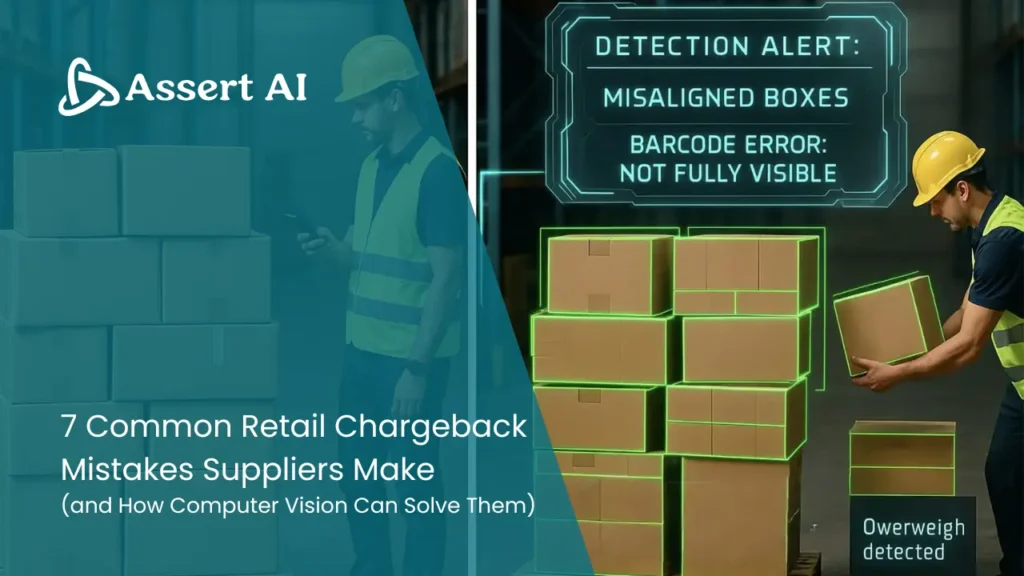
Retail chargebacks. Two words that can quietly erode margins, derail revenue targets, and frustrate even the most well-oiled supply chain teams. For many suppliers, chargebacks feel like death by a thousand cuts- not catastrophic failures, just a relentless stream of small operational errors that stack up into massive financial losses.
And the numbers back this up. According to Forrester, studies show that chargebacks can shave off up to 5% of supplier profits annually. All major retailers enforce these penalties through detailed routing guides, and they don’t hold back. Walmart’s OTIF program alone deducts 3% of item value for late or incomplete deliveries. Now, imagine a supplier shipping $80 million worth of products every year. Those seemingly minor deductions could balloon into $4 million in lost revenue.
It’s not hard to see how quickly this spirals. A slightly crooked label. A carton loaded at the wrong bay. A shipping notice that doesn’t perfectly match the truck’s contents. Each mistake triggers yet another deduction. And the real kicker? Most suppliers throw hours, people, and manual processes at this problem, and still lose.
Why? Because most solutions treat the symptoms, not the source.
Let’s dive deep into why chargebacks keep happening, why current chargeback reduction strategies barely scratch the surface, and how AI-powered computer vision can eliminate these errors before they even leave your facility.
Why Retail Chargebacks Happen and Why Traditional Solutions Just Don’t Work
Mistake 1: Label Compliance Errors That Go Undetected
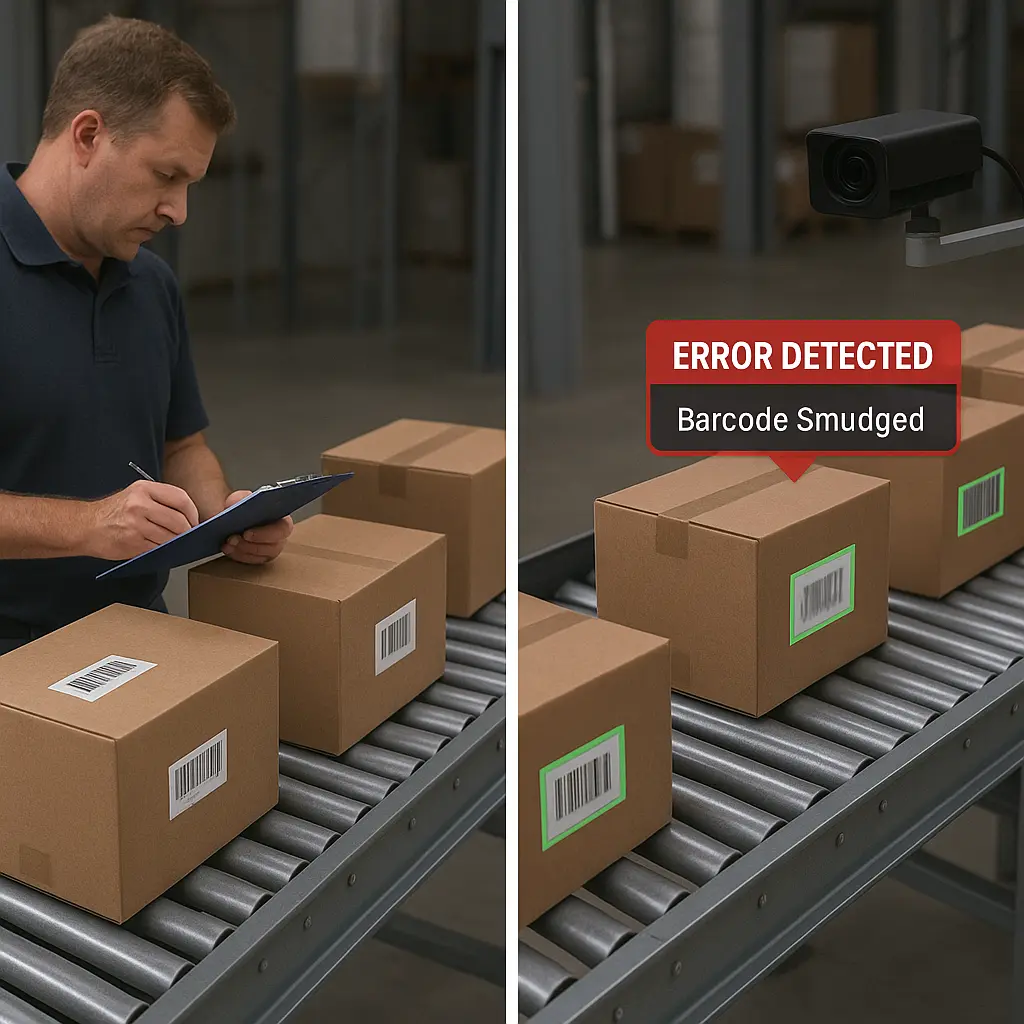
Ask any warehouse manager how they handle label compliance today, and they’ll probably point to someone standing next to a conveyor with a clipboard. If you’re lucky, there’s a scanner. But mostly, it’s still human eyeballs versus hundreds of outgoing cartons. And if one barcode prints poorly, or a label is placed at a slight tilt? That’s a chargeback waiting to happen. Especially with retailers like Walmart or Amazon, where robots (not humans) do the receiving. They don’t care if the operator was tired or it was raining that day; if the label won’t scan, you pay.
Now, imagine having a computer vision system over that conveyor, scanning every outgoing package in real time. No judgment, no fatigue- just instant detection of crooked labels, smudged barcodes, or misaligned stickers. It’s not only faster, it’s also accurate every single time.
Mistake 2: Damaged Goods Slipping Through the Cracks
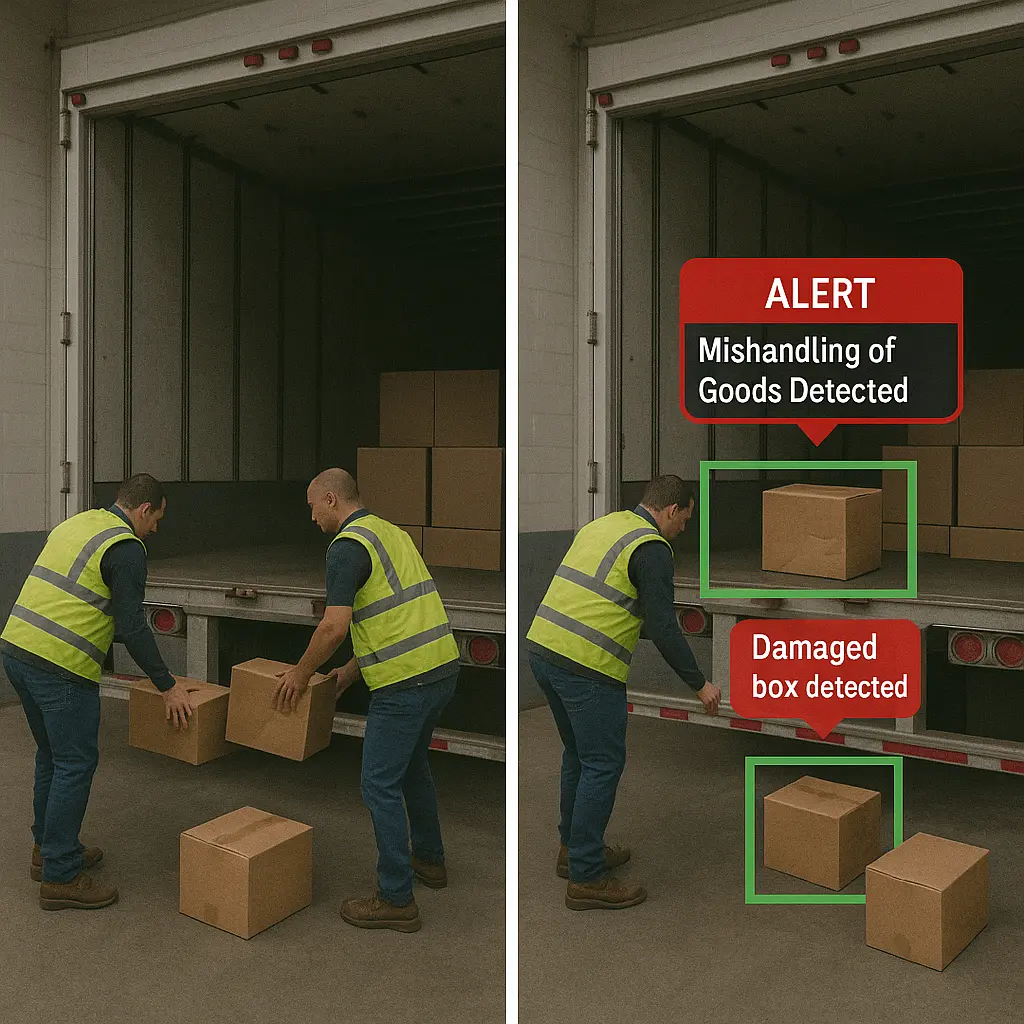
Another massive source of chargebacks is damaged goods. No one sends dented boxes on purpose, but in busy shipping seasons, rough handling is inevitable. What suppliers usually rely on is reactive: if a customer complains, they investigate. By then, it’s not just a chargeback. It’s brand damage. It’s poor ratings on retailer platforms. It’s spiraling customer service calls. Edge AI cameras can flag damaged cartons before they ever hit the dock. A bent corner, a tear in shrink wrap all caught and removed before loading.
Mistake 3: Late Shipments Due to Poor Dock Tracking
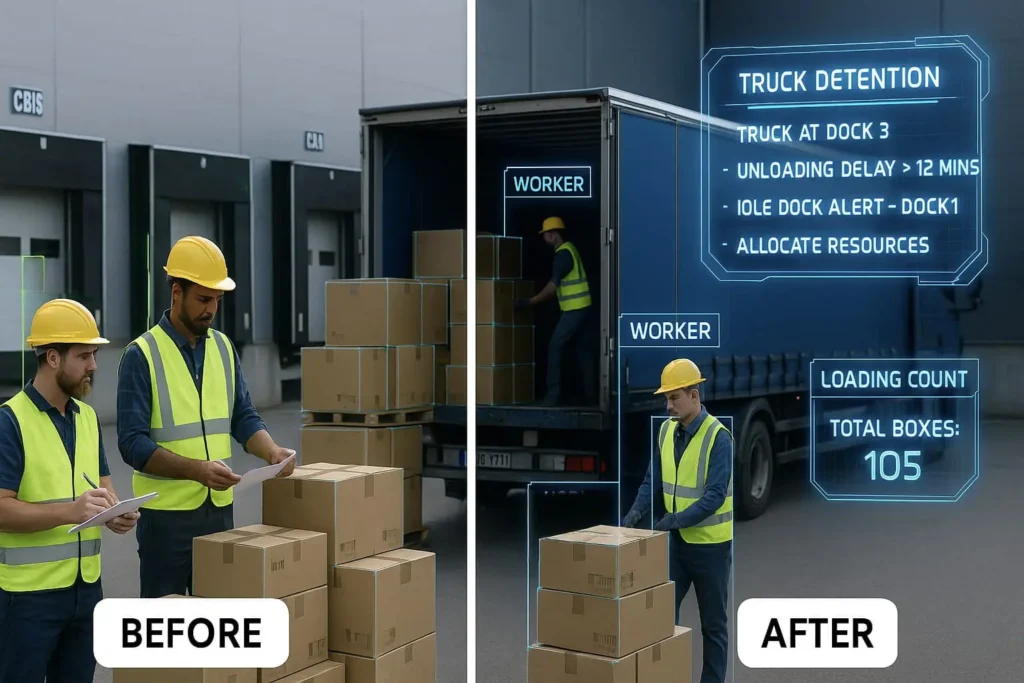
Most shipment delays don’t start on the highway; they start right at your dock. Trucks spend unnecessary time waiting because of outdated, manual, or semi-automatic processes. Paper logs, Excel sheets, verbal handovers, and someone physically noting down license plates- that’s still the reality at many facilities. Critical shipments get stuck because no one noticed the truck arrived, or confusion over which dock it was supposed to use delayed loading. Often, it’s only discovered at the end of the day when someone realizes a key order never left.
Visual AI systems can transform this entire process. By automatically timestamping each vehicle at entry and exit, identifying license plates, and mapping them to scheduled shipments, these systems eliminate ambiguity. Automated alerts are generated if a truck waits beyond an expected loading/unloading window. And here’s where it gets serious: if those alerts are not actioned within a set threshold time, the system escalates directly to senior or designated personnel, ensuring no truck is ever overlooked or left waiting beyond acceptable limits.
Mistake 4: Quantity Mismatches Causing Penalties
Quantity mismatches might be the most frustrating of all. The order said 500 cartons, the invoice says 500 cartons, but when the truck arrives at the retailer’s distribution center, they say it’s 497. What suppliers usually do is painful: post-dispatch reconciliation, begging for warehouse video footage, or absorbing the penalty because it’s cheaper than fighting it. Visual AI doesn’t only record boxes, it counts them in real time, matching each SKU to your ASN records. No mismatches, no after-the-fact scrambling.
Mistake 5: Incorrect Palletization Patterns Triggering Fines
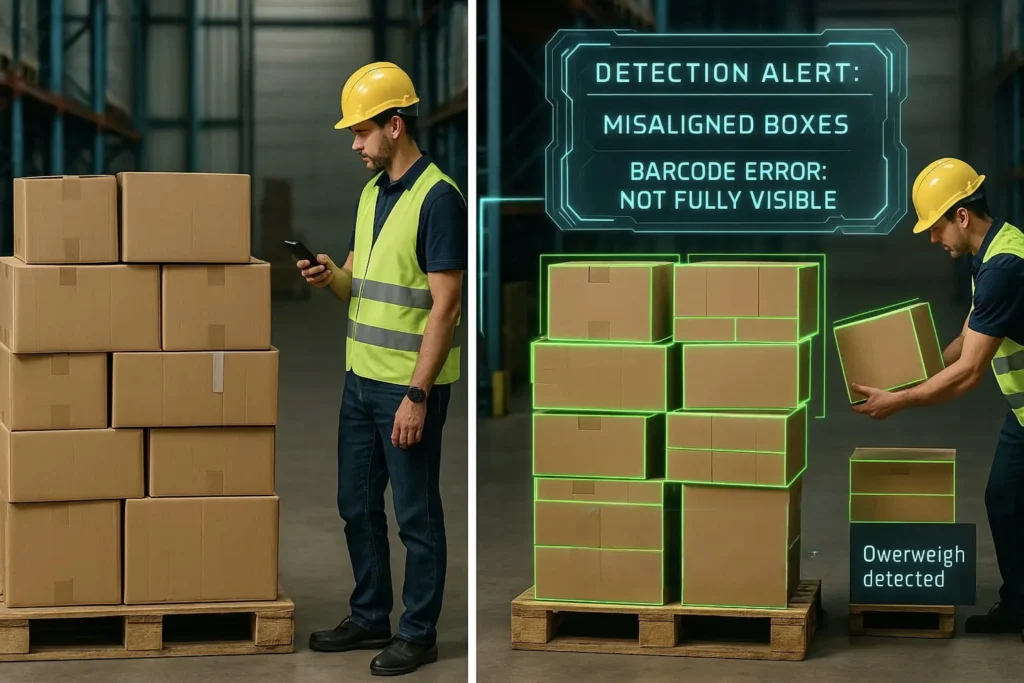
Let’s not even talk about palletization errors. If you’ve ever supplied to a large retailer, you know they often have specific pallet build patterns: where the heaviest boxes go, orientation of barcodes, even what kind of wrap to use. Mess it up, and you don’t just pay fines, your pallets get broken down and rebuilt at your expense. Manual photography documentation has been tried. Warehouse managers with smartphones trying to take quick photos before the truck leaves, uploading to shared drives… it’s a mess. Computer vision replaces all of that with automated pallet configuration validation, complete with visual records for audit trails.
Mistake 6: ASN Data Errors Leading to Avoidable Fines
And then there’s ASN errors. Anyone who’s worked in supplier operations knows the panic of realizing that the EDI submission doesn’t match what’s physically on the truck. And ASNs are unforgiving; retailers don’t wait to fine you. What happens today? Hours of human reconciliation, sometimes with entire teams pulled in to manually verify cartons against systems. Why not use vision-based verification to cross-check what’s really going on the truck against what your ASN says, while it’s happening?
Mistake 7: Missed Packaging Defects That Hurt Brand Image
Packaging compliance: now that’s the slow poison. Slight deviation in folding, or missing protective layers, can turn into instant rejections. Some suppliers try to manage this by putting extra people at the end of the line to inspect packaging, which works until the first shift change or when the rush season starts. Visual inspection by AI doesn’t miss folds, dents, or missing seals. It captures it before your product ever faces shelf rejection fines.
What makes all this not just helpful but transformative is that AI doesn’t get tired. AI doesn’t have “bad days.” AI doesn’t miss things because someone was rushing to catch a break.
With this level of control, proactive intervention, verifiable records, and faster vehicle onboarding with visual confirmation, suppliers can provide retailers with visual proof of compliance, slash detention-related delays, and build a dock operation that runs with precision, not assumptions, ditching the once-accepted Retail chargeback.
Why Assert AI? Not Just Chargeback Reduction, Total Supply Chain Visibility
With Assert AI’s computer vision for warehouse automation, you can integrate these systems seamlessly to automate compliance in logistics and warehousing. These aren’t futuristic concepts. They’re being used by leaders in logistics and manufacturing today. Just ask our partners like GE, Techtronic Industries, Aditya Birla Chemicals, or ITC– who use Assert AI to optimize their processes, streamline dispatches, reduce manual errors, and unlock entirely new efficiencies.
You don’t just reduce retail chargebacks, you build trust with retailers, run tighter operations, and shift your teams’ focus from firefighting to optimization.
And here’s the real win: You don’t just prevent chargeback penalties in supply chain using computer vision, you turn your operation into a data-driven, automated powerhouse. You’re not just avoiding fines, you’re positioning yourself as the supplier that retailers prefer to work with.
If you’re tired of treating chargebacks like an unsolvable cost of doing business, it’s time to change the game.
Also Read: Curious how traditional quality checks could be eating into your margins?
Read our detailed breakdown here → How Your Current Quality Control Process is Secretly Draining Your Profits

Book a free consultation with us at Assert AI today. Let’s build real-time visibility into your supply chain and turn chargebacks into competitive advantage.
Book a demo → Start reducing chargebacks today.