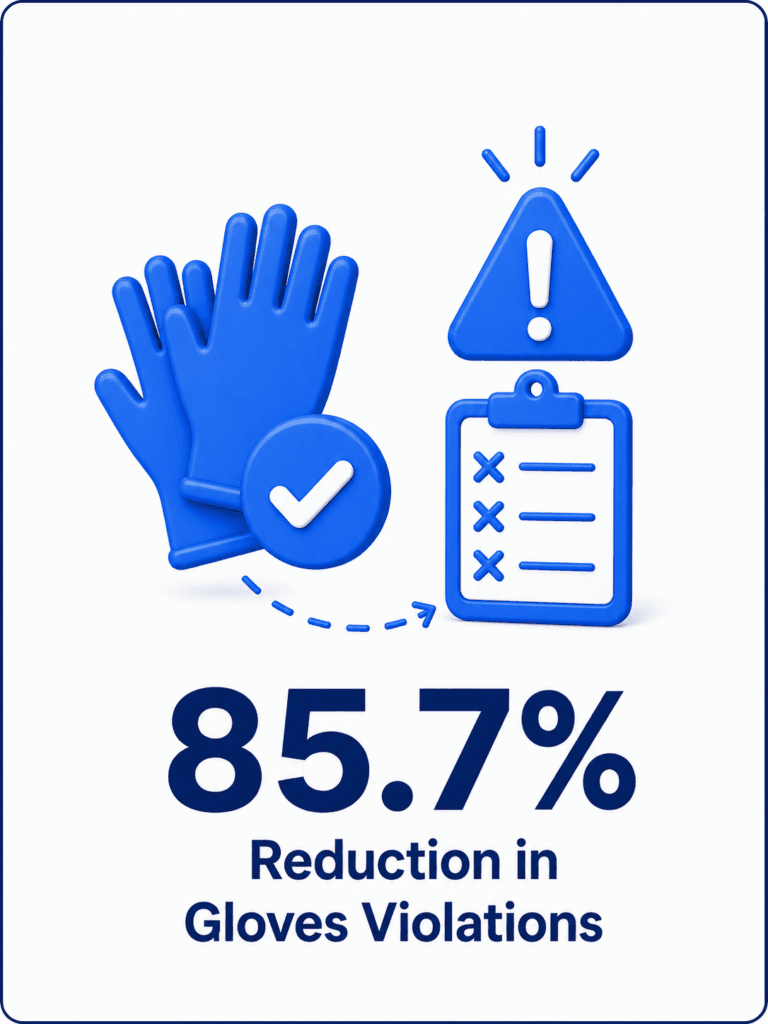
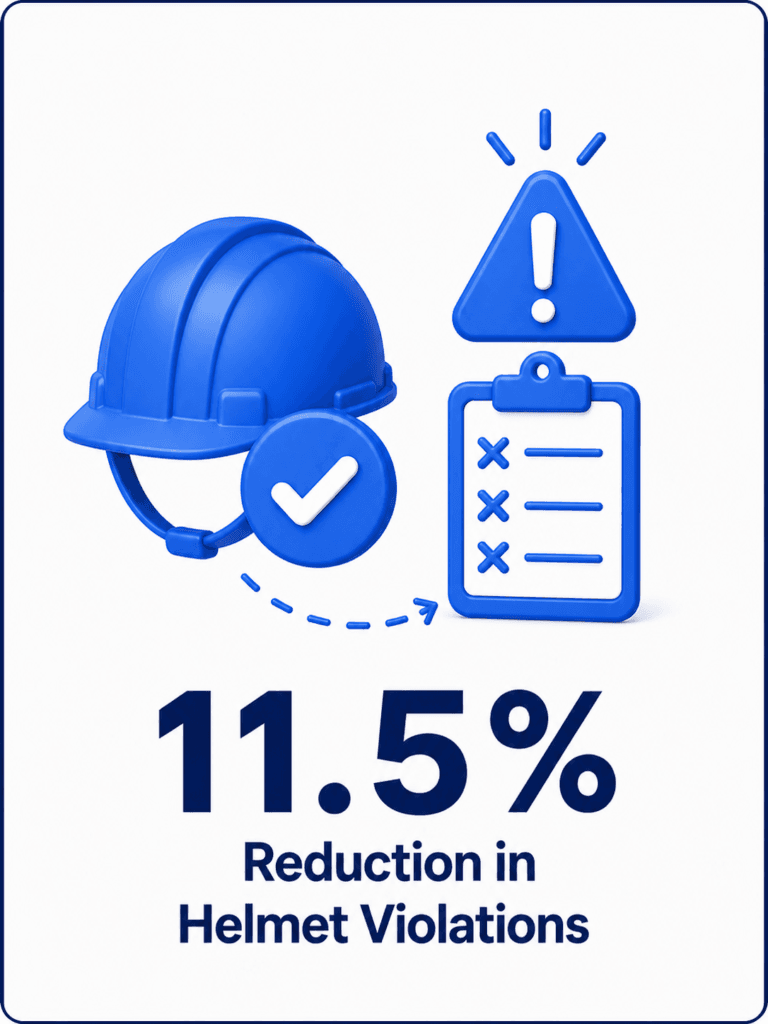
Case Study: Health & Safety Compliance
Strengthening Workplace Safety in Consumer Health Goods Manufacturing with Vision AI
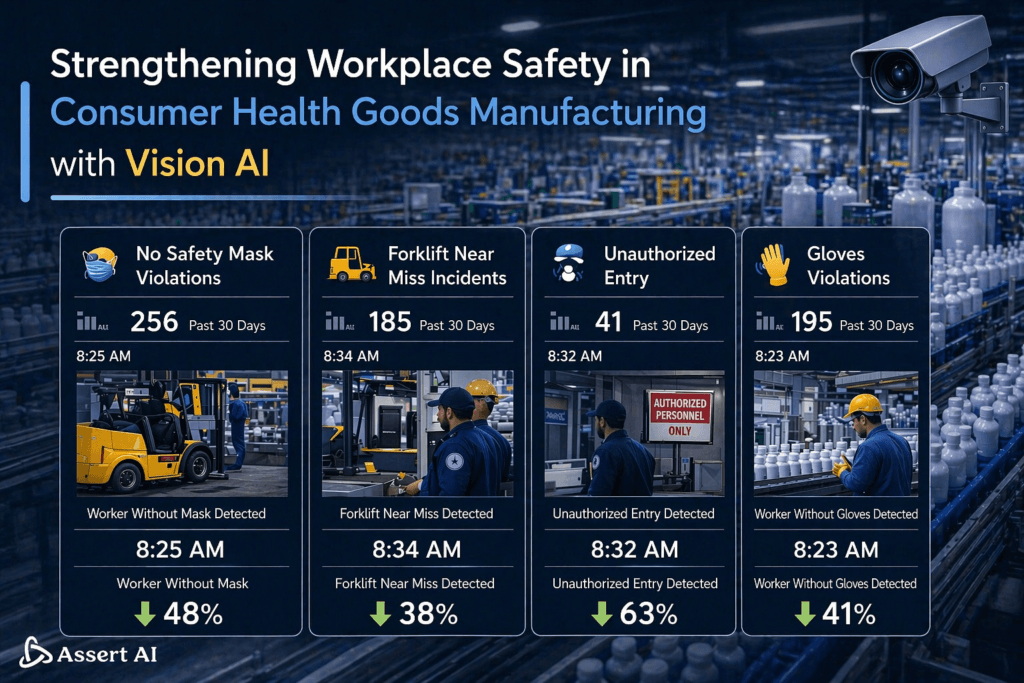
The client is a consumer health goods manufacturer operating in a highly regulated environment where safety, hygiene, and compliance are critical.
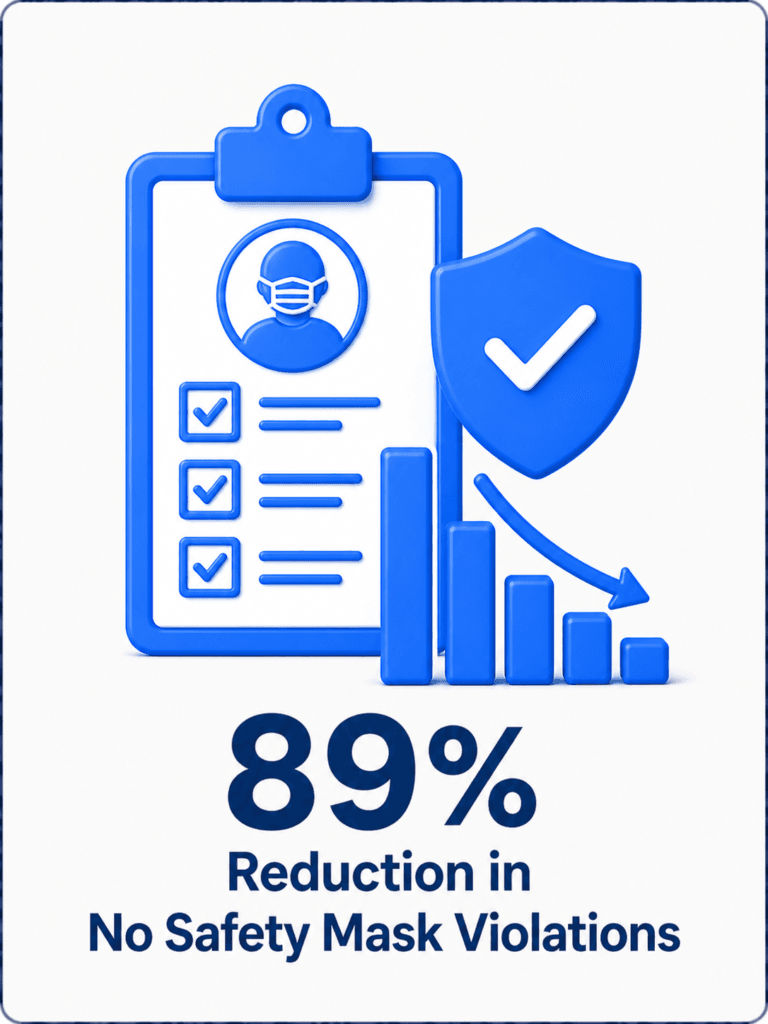
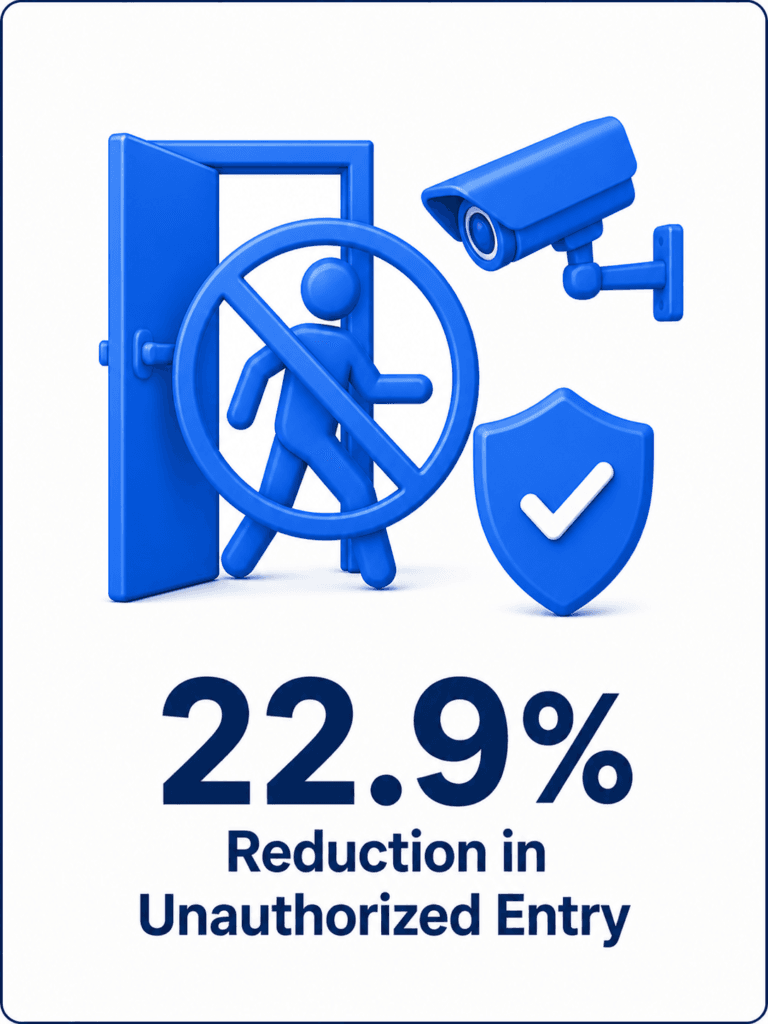
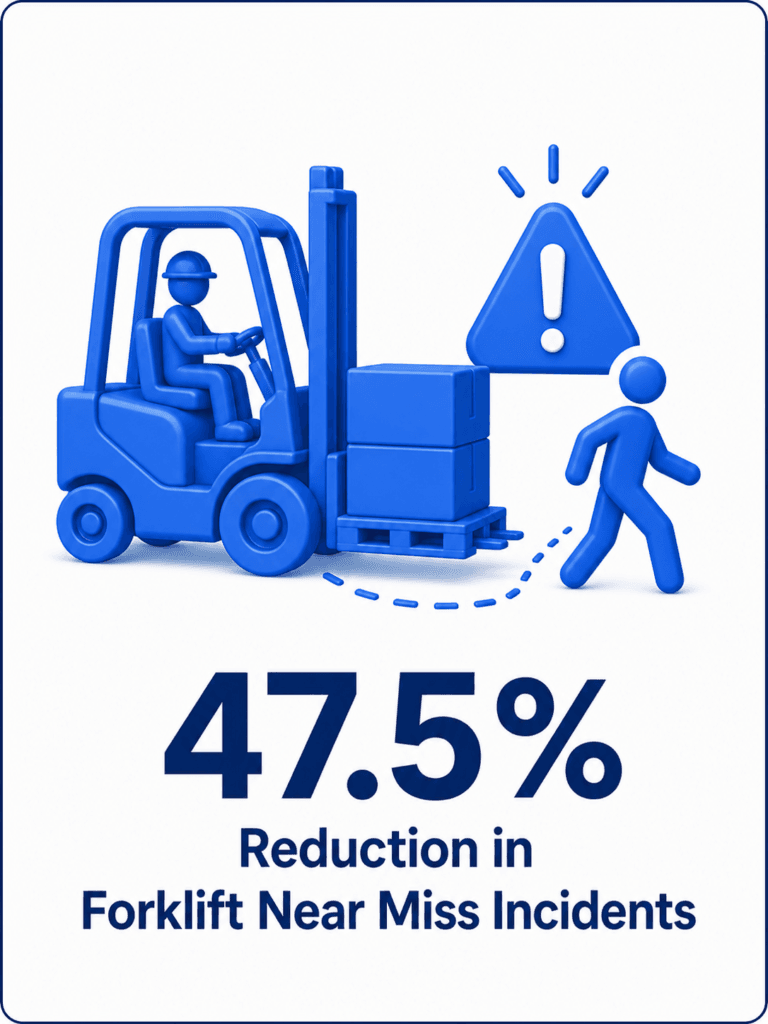
However, maintaining consistent adherence to safety protocols across the shop floor was a challenge. Issues such as missing safety masks, improper PPE usage, forklift near-miss incidents, unauthorized entry, and unsafe worker behavior posed significant risks to both worker safety and compliance standards.
Manual supervision and periodic audits were not sufficient to detect these violations in real time, leading to delayed response and increased risk exposure.
The Approach
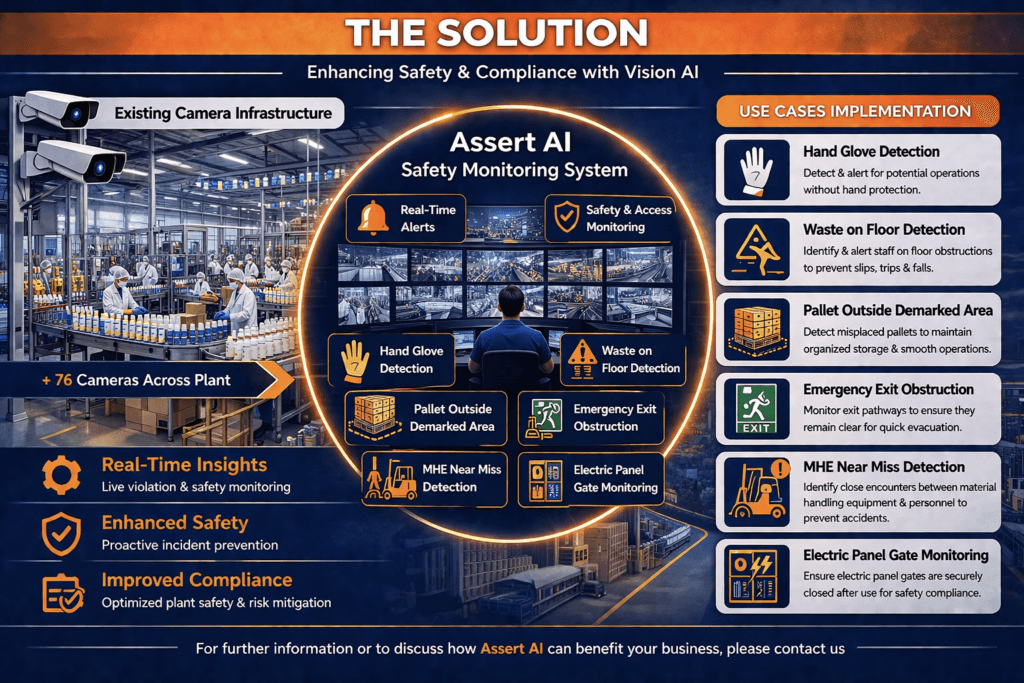
To strengthen on-ground safety enforcement, Assert AI introduced an AI-driven monitoring layer that continuously evaluates worker behavior and risk conditions across the facility.
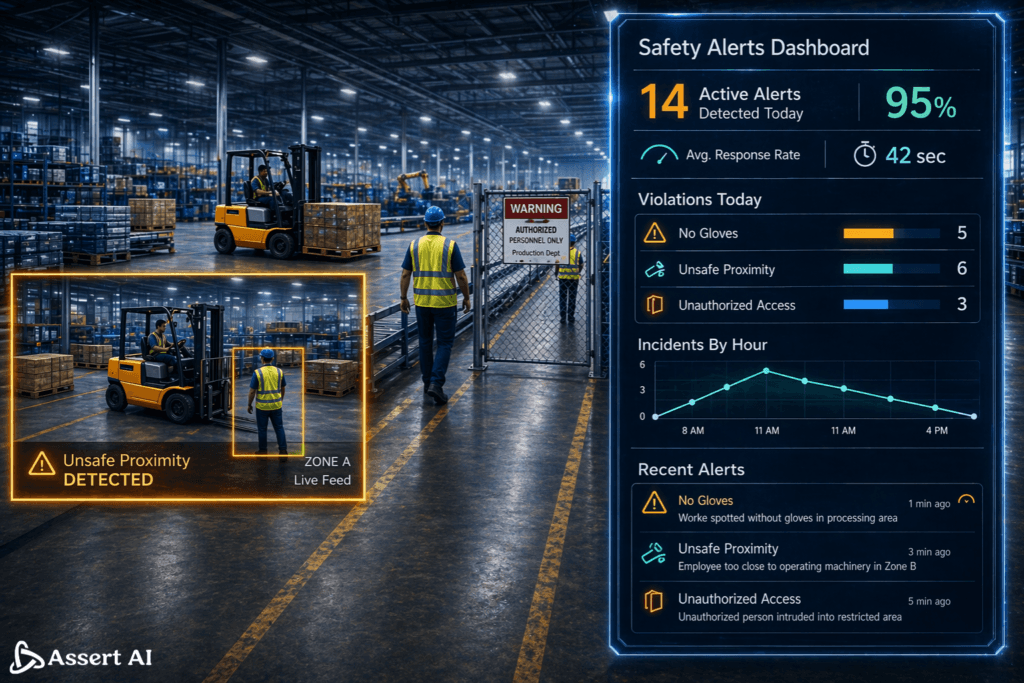
Instead of relying on manual checks, the system actively identified safety gaps such as missing PPE, unsafe proximity to equipment, forklift risks, and unauthorized access as they occurred. With real-time alerts and actionable insights, supervisors were able to respond instantly and ensure consistent compliance across shifts.
Achieving Continuous Safety Visibility Across Operations
One of the key challenges was the lack of continuous visibility into worker behavior and safety compliance across the facility. Manual monitoring created blind spots and delayed detection of violations.
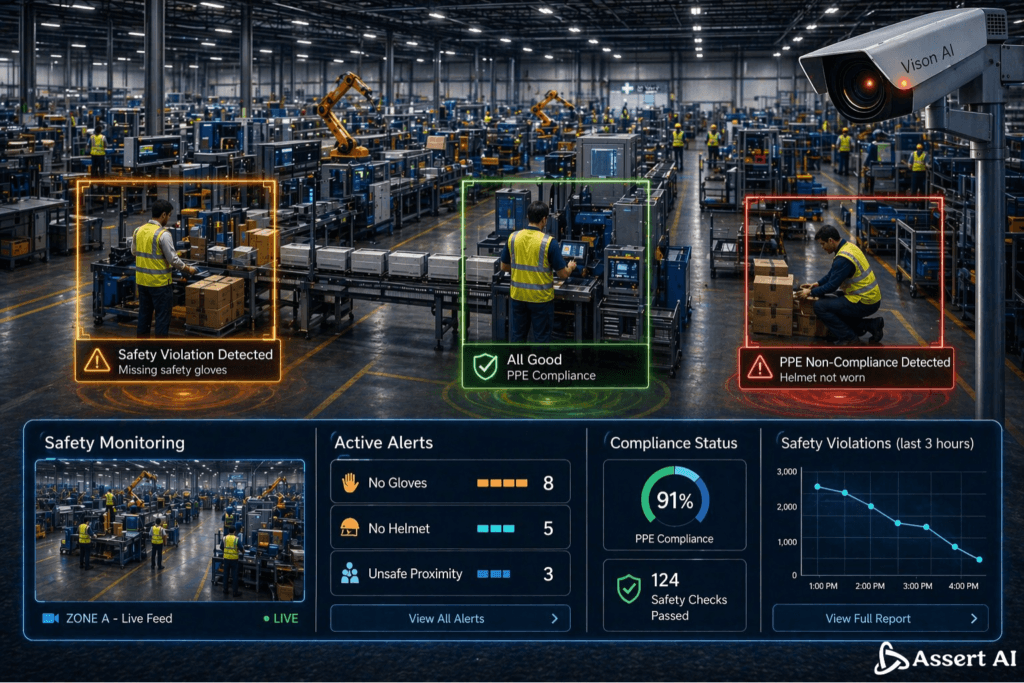
With Vision AI, the client gained real-time visibility into shop floor activities. Every movement and interaction was continuously monitored, ensuring that safety risks were identified instantly and addressed proactively.
Detecting and Preventing Safety Risks in Real Time
Traditional safety processes often identify issues only after incidents occur or during periodic audits. This reactive approach limits the ability to prevent risks effectively.
The AI-powered system enabled instant detection of unsafe behavior and compliance gaps. Whether it was missing PPE, unsafe proximity to machinery, or unauthorized access, alerts were triggered in real time allowing supervisors to intervene immediately and prevent potential incidents.
Building a Proactive Safety Culture
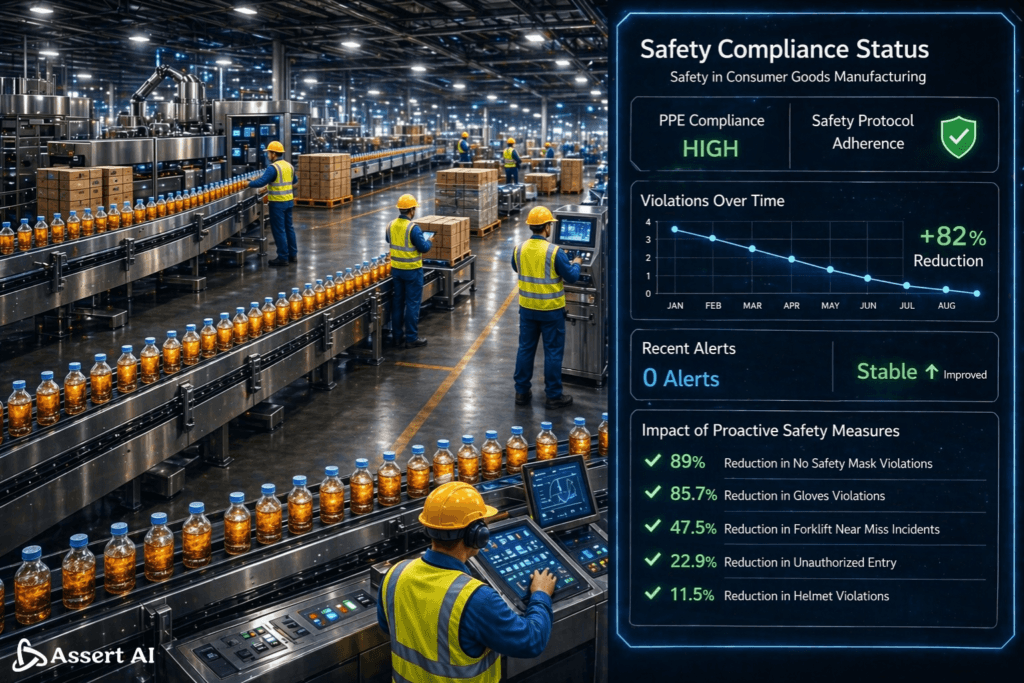
With continuous monitoring and data-driven insights, safety management evolved from reactive enforcement to proactive prevention.
The significant reduction in violations led to improved worker accountability, better adherence to safety protocols, and a stronger culture of compliance across the organization ensuring safer and more efficient operations.
THE SOLUTION